Loading...
This comparison has not been analyzed yet.
One-time AI generation (~1 minute). Scores and timeline are already available below.
Charles Helou vs Ferenc Deak
Ferenc Deak leads by 14.3 pts · 2 figures compared
…
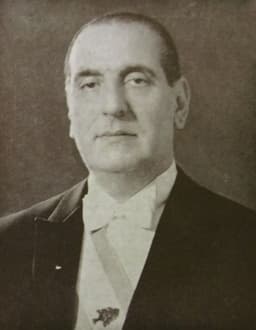
Charles Helou
Politician · Modern
44.2Total

Ferenc Deak
Politician · Modern
58.5Total
Basic Information
Born
1913
1803
Died
2001
1876
Era
Modern
Modern
Nationality
Lebanon
Hungary
Occupation
Politician
Politician
Civilization
Middle Eastern
Western
Score Comparison
Military (10%)
44.7
50.0
Political (20%)
37.9
62.7
Influence (20%)
47.9
61.0
Legacy (20%)
38.3
52.0
Leadership (15%)
51.9
78.0
Strategy (15%)
47.4
41.4
TOTAL
44.2
58.5
Charles Helou — Complete Timeline
1964 AD
Elected President of LebanonPolitical Action◆ Major
Charles Helou was elected President of Lebanon by the Lebanese Parliament on August 18, 1964, succeeding Fouad Chehab. His presidency began with a focus on administrative reform and economic development, continuing the Chehabist policies of state-building and modernization.
PresidencyElectionLebanon
Impact: nationalconstructive
1967 AD
Presided during the Six-Day WarWar◆ Major
As president during the June 1967 Six-Day War between Israel and Arab states, Charles Helou maintained Lebanon's official neutrality while the conflict raged. However, the war's aftermath brought increased Palestinian militant activity in southern Lebanon and refugee flows, destabilizing the country and straining sectarian relations.
Six-Day WarNeutralityPalestinian Refugees
Impact: regional
1969 AD
Signed the Cairo AgreementPolitical Action◆ Major
In November 1969, Charles Helou's government signed the Cairo Agreement with the Palestine Liberation Organization (PLO), mediated by Egypt. The agreement granted Palestinian factions autonomy over refugee camps in Lebanon and legitimized their armed presence, a decision that significantly contributed to the erosion of Lebanese state sovereignty and the outbreak of the civil war in 1975.
Cairo AgreementPLOSovereignty
Impact: nationaldestructive
1970 AD
End of presidential termPolitical Action
Charles Helou's six-year presidential term ended in 1970. He was succeeded by Suleiman Frangieh after a closely contested election. Helou's presidency left a mixed legacy of attempted reforms but also the Cairo Agreement, which many historians view as a pivotal step toward Lebanon's descent into civil war.
Term EndLegacyLebanon
Impact: national
Ferenc Deak — Complete Timeline
1848 AD
Drafted the April LawsReform◆ Major
Deak helped draft the April Laws, a series of liberal reforms passed by the Hungarian Diet. These laws abolished serfdom, established a parliamentary system, and granted civil liberties. The laws were later revoked by the Habsburgs after the Hungarian Revolution was suppressed.
April LawsLiberal ReformsHungarian Revolution
Impact: nationalprogressive
Served as Minister of JusticePolitical Action
Deak served as Minister of Justice in the first responsible Hungarian government under Prime Minister Lajos Batthyany. He worked to implement the April Laws and establish an independent judiciary. The government was short-lived due to the outbreak of war with Austria.
Minister of JusticeBatthyany GovernmentJudicial Reform
Impact: nationalconstructive
1849 AD
Withdrew from Public Life After RevolutionPolitical Action◆ Major
After the Hungarian Revolution was crushed by Austrian and Russian forces, Deak withdrew from public life. He refused to collaborate with the Habsburg absolutist regime and lived in seclusion for over a decade, becoming a symbol of passive resistance.
Passive ResistanceExileHungarian Revolution
Impact: nationaltragic
1865 AD
Published the Easter ArticlePolitical Action◆ Major
Deak published an article in the Pesti Naplo newspaper outlining his vision for a compromise with the Habsburgs. The article proposed that Hungary accept the Pragmatic Sanction and recognize the Habsburgs as hereditary kings in exchange for constitutional government. This became the basis for the 1867 Compromise.
Easter ArticleCompromise ProposalConstitutional Reform
Impact: nationalconstructive
1867 AD
Negotiated the Austro-Hungarian CompromisePolitical Action
Ferenc Deak led the negotiations that resulted in the Austro-Hungarian Compromise, which established the dual monarchy of Austria-Hungary. The compromise granted Hungary significant autonomy, including its own parliament and control over internal affairs, while maintaining the Habsburg emperor as king.
Austro-Hungarian CompromiseDual MonarchyHungarian Autonomy
Impact: regionalconstructive
This comparison has not been analyzed yet.
One-time AI generation (~1 minute). Scores and timeline are already available below.
Rankings
🥇
Ferenc DeakLeader
Mil: 50.0Pol: 62.7Inf: 61.0
58.5
🥈
Charles Helou
Mil: 44.7Pol: 37.9Inf: 47.9
44.2
+14.3 behind
How This Comparison Works
Algorithm
Each figure is scored on 6 dimensions (0—100 scale) based on structured historical data: Military (10%), Political (20%), Influence (20%), Legacy (20%), Leadership (15%), Strategy (15%). The weighted total produces the final ranking.
Data Sources
Scores are computed from structured sub-indicators in the database. Scale factors adjust for era (Ancient ×0.85, Modern ×1.0) and civilization size (Eastern ×1.05, Other ×0.80) to account for differences in population and military scale.
Maximum 3 Figures
Comparisons are limited to 2—3 figures to ensure readability and statistical meaningfulness.
Error Margins
±5 points per dimension — Sub-scores are derived from historical records with inherent uncertainty. Two figures within 5 points on a dimension should be considered roughly equivalent in that area.
Total Score Accuracy
±3 points overall — The weighted combination of 6 dimensions produces a total score with approximately ±3 points of uncertainty. Differences of less than 3 points are not statistically significant— the figures are effectively tied.
Known Limitations
- Historical records are incomplete and uneven across civilizations
- Figures from oral-tradition societies may be underrepresented
- Occupation labels can misclassify multi-role figures
- Scores measure capability and impact, not moral character
- Quantitative scoring is a comparison tool, not absolute truth
Capability Radar
Military (10%) — Battles & Warfare
Battles
20
29
Win Rate
24
30
Expansion
30
32
Political (20%) — Governance & Reform
Reform
20
85
Diplomacy
40
90
Economy
25
60
Influence (20%) — Cultural & Global Reach
Cultural
10
55
Global
15
50
Legacy (20%) — Historical Impact
Historical
20
70
Longevity
10
60
Leadership (15%) — Power & Stability
Tenure
30
65
Stability
15
80
Strategy (15%) — Tactics & Innovation
Strategy
28
38
Tactics
36
40
Reform
35
41
Similar Comparisons
Comments & Discussion
No comments yet. Be the first to share your thoughts!