Loading...
This comparison has not been analyzed yet.
One-time AI generation (~1 minute). Scores and timeline are already available below.
Charles Haughey vs George Curzon
George Curzon leads by 3.3 pts · 2 figures compared
…
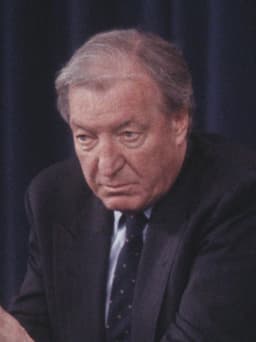
Charles Haughey
Politician · Modern
51.4Total

George Curzon
Politician · Modern
54.7Total
Basic Information
Born
1925
1859
Died
—
1925
Era
Modern
Modern
Nationality
Ireland
Great Britain
Occupation
Politician
Politician
Civilization
Western
Western
Score Comparison
Military (10%)
50.0
45.0
Political (20%)
68.0
55.0
Influence (20%)
56.4
60.0
Legacy (20%)
46.7
49.2
Leadership (15%)
40.0
72.0
Strategy (15%)
44.6
38.3
TOTAL
51.4
54.7
Charles Haughey — Complete Timeline
1961 AD
Appointed Minister for JusticePolitical Action◆ Major
Haughey was appointed Minister for Justice in 1961 under Taoiseach Se
Justice ReformFianna FáilLaw
Impact: nationalconstructive
1970 AD
Involved in the Arms CrisisPolitical Action◆ Major
Haughey was sacked as Minister for Finance by Taoiseach Jack Lynch in May 1970 for alleged involvement in a plot to import arms for the IRA. He was tried and acquitted in October 1970. The scandal damaged his reputation but he later returned to high office.
Arms CrisisIRAScandal
Impact: nationaldestructive
1979 AD
Became Taoiseach of IrelandPolitical Action◆ Major
Haughey became Taoiseach in December 1979 after a bitter leadership contest within Fianna F
LeadershipFianna FáilIrish Politics
Impact: national
1985 AD
Signed the Anglo-Irish AgreementPolitical Action
Haughey, as Taoiseach, signed the Anglo-Irish Agreement with British Prime Minister Margaret Thatcher on November 15, 1985. The agreement gave the Irish government a consultative role in Northern Ireland affairs. It was opposed by unionists but marked a step toward peace.
Anglo-Irish AgreementNorthern IrelandThatcher
Impact: regionalconstructive
1992 AD
Resigned as Taoiseach Amid ScandalsPolitical Action◆ Major
Haughey resigned as Taoiseach in January 1992 following revelations of a phone-tapping scandal involving journalist Bruce Arnold. His resignation ended his third term. Subsequent investigations revealed extensive corruption, including payments from businessmen, tarnishing his legacy.
ResignationScandalCorruption
Impact: nationaldestructive
George Curzon — Complete Timeline
1899 AD
Appointed Viceroy of IndiaPolitical Action◆ Major
George Curzon was appointed Viceroy of India. His tenure was marked by administrative reforms, including the partition of Bengal, and a focus on British imperial interests.
British IndiaViceroy
Impact: regional
1905 AD
Partition of BengalPolitical Action
Curzon ordered the partition of Bengal into two provinces, ostensibly for administrative efficiency. The move was widely seen as a divide-and-rule tactic, sparking widespread protests and the Swadeshi movement.
PartitionBengalSwadeshi
Impact: regionaldestructive
Resignation as ViceroyPolitical Action◆ Major
Curzon resigned as Viceroy after a policy dispute with the British government over the appointment of a military commander. His resignation marked the end of his active role in Indian affairs.
ResignationBritish India
Impact: regional
1919 AD
Appointed Foreign SecretaryPolitical Action◆ Major
Curzon was appointed British Foreign Secretary. He played a key role in post-World War I diplomacy, including the negotiation of the Treaty of Lausanne and the establishment of the League of Nations mandates.
Foreign SecretaryTreaty of Lausanne
Impact: global
This comparison has not been analyzed yet.
One-time AI generation (~1 minute). Scores and timeline are already available below.
Rankings
🥇
George CurzonLeader
Mil: 45.0Pol: 55.0Inf: 60.0
54.7
🥈
Charles Haughey
Mil: 50.0Pol: 68.0Inf: 56.4
51.4
+3.3 behind
How This Comparison Works
Algorithm
Each figure is scored on 6 dimensions (0—100 scale) based on structured historical data: Military (10%), Political (20%), Influence (20%), Legacy (20%), Leadership (15%), Strategy (15%). The weighted total produces the final ranking.
Data Sources
Scores are computed from structured sub-indicators in the database. Scale factors adjust for era (Ancient ×0.85, Modern ×1.0) and civilization size (Eastern ×1.05, Other ×0.80) to account for differences in population and military scale.
Maximum 3 Figures
Comparisons are limited to 2—3 figures to ensure readability and statistical meaningfulness.
Error Margins
±5 points per dimension — Sub-scores are derived from historical records with inherent uncertainty. Two figures within 5 points on a dimension should be considered roughly equivalent in that area.
Total Score Accuracy
±3 points overall — The weighted combination of 6 dimensions produces a total score with approximately ±3 points of uncertainty. Differences of less than 3 points are not statistically significant— the figures are effectively tied.
Known Limitations
- Historical records are incomplete and uneven across civilizations
- Figures from oral-tradition societies may be underrepresented
- Occupation labels can misclassify multi-role figures
- Scores measure capability and impact, not moral character
- Quantitative scoring is a comparison tool, not absolute truth
Capability Radar
Military (10%) — Battles & Warfare
Battles
28
0
Win Rate
31
0
Expansion
32
15
Political (20%) — Governance & Reform
Reform
55
75
Diplomacy
60
65
Economy
50
60
Influence (20%) — Cultural & Global Reach
Cultural
45
40
Global
35
50
Legacy (20%) — Historical Impact
Historical
50
55
Longevity
40
40
Leadership (15%) — Power & Stability
Tenure
65
70
Stability
30
55
Strategy (15%) — Tactics & Innovation
Strategy
40
0
Tactics
44
0
Reform
45
10
Similar Comparisons
Comments & Discussion
No comments yet. Be the first to share your thoughts!