Loading...
Analysis will be generated on first visit.
Scores and timeline are available below. The page will refresh automatically when ready.
Charles Alexander of Saxe-Weimar vs Napoleon Bonaparte
Napoleon Bonaparte leads by 19.7 pts · 2 figures compared
…

Charles Alexander of Saxe-Weimar
Emperor · Modern
62.7Total
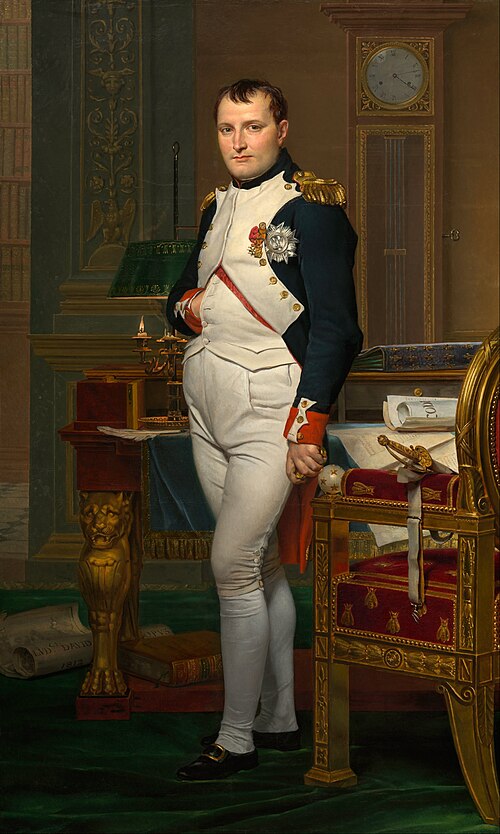
Napoleon Bonaparte
General · Modern
82.4Total
Basic Information
Born
1818
1769
Died
1901
1821
Era
Modern
Modern
Nationality
Saxe-Weimar
France
Occupation
Emperor
General
Civilization
Western
Western
Score Comparison
Military (10%)
45.0
94.0
Political (20%)
72.8
75.0
Influence (20%)
64.8
82.0
Legacy (20%)
47.7
78.0
Leadership (15%)
81.9
80.0
Strategy (15%)
58.9
93.0
TOTAL
62.7
82.4
Rankings
🥇
Napoleon BonaparteLeader
Mil: 94.0Pol: 75.0Inf: 82.0
82.4
🥈
Charles Alexander of Saxe-Weimar
Mil: 45.0Pol: 72.8Inf: 64.8
62.7
+19.7 behind
How This Comparison Works
Algorithm
Each figure is scored on 6 dimensions (0—100 scale) based on structured historical data: Military (10%), Political (20%), Influence (20%), Legacy (20%), Leadership (15%), Strategy (15%). The weighted total produces the final ranking.
Data Sources
Scores are computed from structured sub-indicators in the database. Scale factors adjust for era (Ancient ×0.85, Modern ×1.0) and civilization size (Eastern ×1.05, Other ×0.80) to account for differences in population and military scale.
Maximum 3 Figures
Comparisons are limited to 2—3 figures to ensure readability and statistical meaningfulness.
Error Margins
±5 points per dimension — Sub-scores are derived from historical records with inherent uncertainty. Two figures within 5 points on a dimension should be considered roughly equivalent in that area.
Total Score Accuracy
±3 points overall — The weighted combination of 6 dimensions produces a total score with approximately ±3 points of uncertainty. Differences of less than 3 points are not statistically significant— the figures are effectively tied.
Known Limitations
- Historical records are incomplete and uneven across civilizations
- Figures from oral-tradition societies may be underrepresented
- Occupation labels can misclassify multi-role figures
- Scores measure capability and impact, not moral character
- Quantitative scoring is a comparison tool, not absolute truth
Capability Radar
Military (10%) — Battles & Warfare
Battles
39
95
Win Rate
40
90
Expansion
41
95
Political (20%) — Governance & Reform
Reform
20
95
Diplomacy
25
80
Economy
20
85
Influence (20%) — Cultural & Global Reach
Cultural
15
85
Global
5
90
Legacy (20%) — Historical Impact
Historical
10
95
Longevity
10
90
Leadership (15%) — Power & Stability
Tenure
30
85
Stability
30
70
Strategy (15%) — Tactics & Innovation
Strategy
48
95
Tactics
47
98
Reform
49
92
Analysis will be generated on first visit.
Scores and timeline are available below. The page will refresh automatically when ready.
Charles Alexander of Saxe-Weimar — Complete Timeline
1850 AD
Patronage of Franz Liszt and Richard WagnerCultural◆ Major
Charles Alexander supported the composers Franz Liszt and Richard Wagner, hosting them in Weimar. He promoted the New German School of music, making Weimar a center for avant-garde musical innovation.
Music PatronageLisztWagnerNew German School
Impact: globalconstructive
1853 AD
Succeeded as Grand Duke of Saxe-Weimar-EisenachPolitical Action◆ Major
Charles Alexander inherited the grand duchy upon his father Charles Frederick's death. He ruled during a period of German unification and industrialization, navigating the duchy through the Austro-Prussian War and the founding of the German Empire.
SuccessionGerman Unification
Impact: national
1866 AD
Supported the German Confederation in the Austro-Prussian WarWar◆ Major
Charles Alexander sided with Austria in the Austro-Prussian War. After Prussia's victory, Saxe-Weimar was forced to join the North German Confederation under Prussian hegemony, losing some autonomy.
Austro-Prussian WarNorth German ConfederationPrussia
Impact: regional
1871 AD
Joined the German EmpirePolitical Action◆ Major
Charles Alexander integrated Saxe-Weimar-Eisenach into the newly proclaimed German Empire under Kaiser Wilhelm I. The grand duchy became a constituent state of the empire, with reduced sovereignty but continued internal autonomy.
German EmpireUnificationFederal State
Impact: national
Similar Comparisons
Comments & Discussion
No comments yet. Be the first to share your thoughts!