Loading...
Changling vs Pavel Rotmistrov
Changling leads by 2.5 pts · 2 figures compared
…

Changling
General · Modern
47.8Total
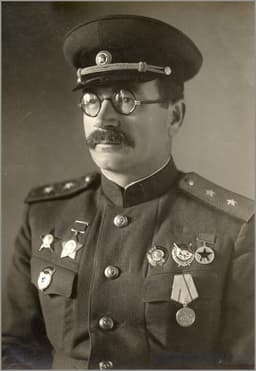
Pavel Rotmistrov
General · Modern
45.3Total
Basic Information
Born
1758
1901
Died
1838
1982
Era
Modern
Modern
Nationality
China
USSR
Occupation
General
General
Civilization
Eastern
Western
Score Comparison
Military (10%)
40.0
55.0
Political (20%)
36.5
29.3
Influence (20%)
48.6
51.8
Legacy (20%)
40.0
46.7
Leadership (15%)
68.0
36.9
Strategy (15%)
60.0
52.5
TOTAL
47.8
45.3
Changling — Complete Timeline
1795 AD
Led Campaign Against the Miao RebellionsWar◆ Major
Changling led Qing forces in suppressing Miao rebellions in the mountainous regions of Guizhou and Hunan. The campaigns were brutal and resulted in significant casualties, but ultimately restored Qing control over the area.
Military CampaignMiaoRebellion Suppression
Impact: regional
1796 AD
Suppressed the White Lotus RebellionWar◆ Major
Changling was appointed as a commander of Qing forces to suppress the White Lotus Rebellion, a massive peasant uprising in central China. The rebellion lasted until 1804, and Changling played a key role in coordinating military operations and implementing pacification strategies.
Military CampaignRebellion SuppressionWhite Lotus
Impact: national
1805 AD
Appointed Grand SecretaryPolitical Action◆ Major
Changling was appointed Grand Secretary of the Qing Empire in recognition of his military successes against the White Lotus Rebellion. He became a senior official in the Jiaqing Emperor's administration.
AppointmentGovernmentJiaqing Era
Impact: national
Pavel Rotmistrov — Complete Timeline
1943 AD
Battle of ProkhorovkaWar◆ Major
Rotmistrov commanded the 5th Guards Tank Army at the Battle of Prokhorovka on July 12, 1943, during the Battle of Kursk. His forces engaged the German II SS Panzer Corps in one of the largest tank battles in history, halting the German advance.
World War IIEastern FrontTank Battle
Impact: regional
1944 AD
Operation BagrationWar◆ Major
Rotmistrov commanded the 5th Guards Tank Army during Operation Bagration, the Soviet summer offensive in Belarus. His tank army exploited the breakthrough, advancing deep into German rear areas and contributing to the destruction of Army Group Center.
World War IIEastern FrontBelarus
Impact: regional
Appointed Chief Marshal of Armored ForcesPolitical Action◆ Major
Rotmistrov was promoted to Chief Marshal of the Armored Forces on April 28, 1944, the highest rank for Soviet armored troops. This recognized his expertise in tank warfare and his command of the 5th Guards Tank Army.
PromotionWorld War IISoviet Military
Impact: nationalconstructive
1952 AD
Published 'Tank Battles in the Great Patriotic War'Cultural
Rotmistrov published his memoirs 'Tank Battles in the Great Patriotic War' in 1952. The book provided a detailed account of Soviet tank operations during World War II, including the Battle of Prokhorovka, and became a standard reference for armored warfare.
MemoirMilitary HistoryTank Warfare
Impact: national
Expert Analysis
Origins
Changling (born 1753, died 1838) was a Manchu nobleman of the Qing dynasty. His early life was shaped by his family's military tradition; his father was a general. He entered the Qing bureaucracy through the imperial examination system and gained initial experience as a civil official before turning to military command. Rotmistrov (born 1901, died 1982) was born in the village of Skovorovo, Tver Governorate, into a peasant family. He joined the Red Army in 1919 and fought in the Russian Civil War. He received formal military education at the Frunze Military Academy, graduating in 1931, and specialized in armored warfare.
Rise to Power
Changling's rise came through his role in suppressing the White Lotus Rebellion (1796-1804), a massive peasant uprising in central China. He was appointed commander of Qing forces in 1799 and employed a strategy of fortified encampments and scorched-earth tactics. His success led to his appointment as Grand Secretary in 1802, one of the highest civil posts. Rotmistrov's rise was accelerated by World War II. He commanded the 5th Guards Tank Army at the Battle of Prokhorovka on July 12, 1943, the largest tank engagement in history. His forces suffered heavy losses but blunted the German offensive. In 1944, he was promoted to Chief Marshal of Armored Forces, the highest rank for Soviet armored troops.
Leadership & Governance
Changling's leadership style was methodical and ruthless. He focused on logistics and fortifications rather than decisive battles. His governance approach was conservative, upholding the Qing status quo. Rotmistrov's leadership was aggressive and innovative. He emphasized mobility and concentration of armor. At Prokhorovka, he committed his tanks in a frontal assault, which was criticized for high casualties. In contrast, Changling's campaigns were characterized by systematic destruction of villages and farmland to starve rebels.
Triumph & Tragedy
Changling's greatest success was suppressing the White Lotus Rebellion, which saved the Qing dynasty from collapse. His greatest failure was the brutal cost: the rebellion claimed over 100,000 lives and devastated central China. Rotmistrov's triumph was at Prokhorovka, where his army halted the German advance despite losing over 300 tanks. His tragedy was the high attrition: Soviet losses at Prokhorovka were 60% of his force. Later, during Operation Bagration (1944), his army performed well, but his reputation was tarnished by his memoirs, which exaggerated Soviet successes.
Character & Destiny
Changling was a cautious, bureaucratic general. His decision to avoid pitched battles prolonged the White Lotus conflict but minimized risk to his army. His character shaped his destiny: he died with honor as a Grand Secretary. Rotmistrov was bold and ambitious. His aggressive tactics at Prokhorovka nearly destroyed his army but achieved the strategic goal. His destiny was to become a Marshal and military theorist, but his historical reputation is mixed due to the debate over his tactics.
Legacy
Changling's legacy is as a suppressor of rebellion within a declining empire. He is remembered as a competent but brutal commander who extended the Qing's lifespan. Rotmistrov's legacy is as a pioneer of armored warfare. His book 'Tank Battles in the Great Patriotic War' influenced Soviet doctrine. He scored 46.7 in legacy compared to Changling's 40.0. However, Changling's influence score of 48.6 edges Rotmistrov's 51.8, indicating broader impact on Chinese history.
Conclusion
Changling had a higher total score (47.8 vs 45.3) and greater immediate impact on his nation's survival. Rotmistrov's tactical innovations influenced armored warfare globally, but his strategic influence was limited by Soviet secrecy. Changling's suppression of the White Lotus Rebellion directly preserved the Qing dynasty for another century, while Rotmistrov's victory at Prokhorovka was a single battle within a larger war. Therefore, Changling had greater historical impact, though Rotmistrov's military legacy is more studied in the West.
Rankings
🥇
ChanglingLeader
Mil: 40.0Pol: 36.5Inf: 48.6
47.8
🥈
Pavel Rotmistrov
Mil: 55.0Pol: 29.3Inf: 51.8
45.3
+2.5 behind
How This Comparison Works
Algorithm
Each figure is scored on 6 dimensions (0—100 scale) based on structured historical data: Military (10%), Political (20%), Influence (20%), Legacy (20%), Leadership (15%), Strategy (15%). The weighted total produces the final ranking.
Data Sources
Scores are computed from structured sub-indicators in the database. Scale factors adjust for era (Ancient ×0.85, Modern ×1.0) and civilization size (Eastern ×1.05, Other ×0.80) to account for differences in population and military scale.
Maximum 3 Figures
Comparisons are limited to 2—3 figures to ensure readability and statistical meaningfulness.
Error Margins
±5 points per dimension — Sub-scores are derived from historical records with inherent uncertainty. Two figures within 5 points on a dimension should be considered roughly equivalent in that area.
Total Score Accuracy
±3 points overall — The weighted combination of 6 dimensions produces a total score with approximately ±3 points of uncertainty. Differences of less than 3 points are not statistically significant— the figures are effectively tied.
Known Limitations
- Historical records are incomplete and uneven across civilizations
- Figures from oral-tradition societies may be underrepresented
- Occupation labels can misclassify multi-role figures
- Scores measure capability and impact, not moral character
- Quantitative scoring is a comparison tool, not absolute truth
Capability Radar
Military (10%) — Battles & Warfare
Battles
55
55
Win Rate
60
50
Expansion
10
30
Political (20%) — Governance & Reform
Reform
15
15
Diplomacy
30
15
Economy
20
10
Influence (20%) — Cultural & Global Reach
Cultural
15
20
Global
5
20
Legacy (20%) — Historical Impact
Historical
20
40
Longevity
10
30
Leadership (15%) — Power & Stability
Tenure
40
20
Stability
35
10
Strategy (15%) — Tactics & Innovation
Strategy
55
55
Tactics
50
60
Reform
20
40
Similar Comparisons
Comments & Discussion
No comments yet. Be the first to share your thoughts!