Loading...
This comparison has not been analyzed yet.
One-time AI generation (~1 minute). Scores and timeline are already available below.
Chan Chun Sing vs Kodandera M. Cariappa
Kodandera M. Cariappa leads by 0.8 pts · 2 figures compared
…

Chan Chun Sing
General · Modern
56.2Total
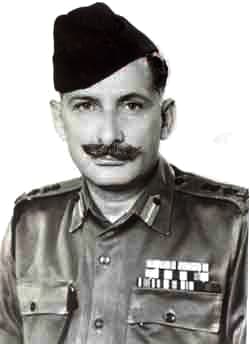
Kodandera M. Cariappa
General · Modern
57.0Total
Basic Information
Born
1969
1899
Died
—
1993
Era
Modern
Modern
Nationality
Singapore
India
Occupation
General
General
Civilization
Eastern
Indian
Score Comparison
Military (10%)
60.4
50.0
Political (20%)
68.0
62.7
Influence (20%)
49.4
55.0
Legacy (20%)
38.3
54.0
Leadership (15%)
74.0
62.0
Strategy (15%)
69.1
60.0
TOTAL
56.2
57.0
Chan Chun Sing — Complete Timeline
2010 AD
Appointed Chief of ArmyPolitical Action◆ Major
Chan Chun Sing was appointed Chief of the Singapore Army, serving until 2013. He oversaw the modernization of the army and the development of its capabilities.
ArmyMilitarySingapore
Impact: nationalconstructive
2011 AD
Elected to Parliament for Tanjong Pagar GRCPolitical Action
Chan Chun Sing was first elected to Parliament as a Member of Parliament for Tanjong Pagar GRC. This marked the start of his political career in the People's Action Party.
ElectionParliamentPAP
constructive
2015 AD
Appointed Minister for Social and Family DevelopmentPolitical Action◆ Major
Chan Chun Sing was appointed Minister for Social and Family Development, overseeing social welfare policies. He focused on supporting families, the elderly, and vulnerable groups.
Social PolicyFamilyWelfare
Impact: nationalconstructive
2018 AD
Appointed Minister for Trade and IndustryPolitical Action◆ Major
Chan was appointed Minister for Trade and Industry, overseeing Singapore's economic development and trade negotiations. He promoted innovation and international trade agreements.
TradeIndustryEconomy
Impact: nationalconstructive
2021 AD
Appointed Minister for EducationPolitical Action◆ Major
Chan Chun Sing was appointed Minister for Education, overseeing Singapore's education system. He has focused on lifelong learning and skills development, and managing the impact of COVID-19 on schools.
EducationReformSingapore
Impact: nationalconstructive
Kodandera M. Cariappa — Complete Timeline
1919 AD
Commissioned into Indian ArmyPolitical Action◆ Major
Kodandera M. Cariappa was commissioned as a temporary second lieutenant in the British Indian Army. He served in the 2nd Battalion, 88th Carnatic Infantry, beginning a long military career.
Indian ArmyCommissionMilitary career
Impact: national
1939 AD
Service in World War IIWar◆ Major
Cariappa served in the Middle East and Burma during World War II. He commanded the 7th Indian Infantry Brigade in the Burma Campaign, earning a reputation for leadership and tactical skill.
World War IIBurmaMilitary service
Impact: regional
1947 AD
Command in Indo-Pakistani War of 1947-48War◆ Major
Cariappa commanded Indian forces in the Kashmir operations during the Indo-Pakistani War of 1947-48. He led the successful defense of Srinagar and the capture of key positions in Jammu and Kashmir.
Kashmir1947 warMilitary operations
Impact: regionalconstructive
1949 AD
Appointment as first Indian Commander-in-ChiefPolitical Action
Cariappa was appointed as the first Indian Commander-in-Chief of the Indian Army in January 1949, succeeding General Sir Roy Bucher. He oversaw the Indianization of the army's officer corps.
Indian ArmyCommander-in-ChiefIndianization
Impact: nationalconstructive
1953 AD
Retirement and diplomatic servicePolitical Action
Cariappa retired from the Indian Army in 1953. He later served as High Commissioner to Australia and New Zealand from 1953 to 1956, representing India diplomatically.
RetirementDiplomacyHigh Commissioner
Impact: national
This comparison has not been analyzed yet.
One-time AI generation (~1 minute). Scores and timeline are already available below.
Rankings
🥇
Kodandera M. CariappaLeader
Mil: 50.0Pol: 62.7Inf: 55.0
57.0
🥈
Chan Chun Sing
Mil: 60.4Pol: 68.0Inf: 49.4
56.2
+0.8 behind
How This Comparison Works
Algorithm
Each figure is scored on 6 dimensions (0—100 scale) based on structured historical data: Military (10%), Political (20%), Influence (20%), Legacy (20%), Leadership (15%), Strategy (15%). The weighted total produces the final ranking.
Data Sources
Scores are computed from structured sub-indicators in the database. Scale factors adjust for era (Ancient ×0.85, Modern ×1.0) and civilization size (Eastern ×1.05, Other ×0.80) to account for differences in population and military scale.
Maximum 3 Figures
Comparisons are limited to 2—3 figures to ensure readability and statistical meaningfulness.
Error Margins
±5 points per dimension — Sub-scores are derived from historical records with inherent uncertainty. Two figures within 5 points on a dimension should be considered roughly equivalent in that area.
Total Score Accuracy
±3 points overall — The weighted combination of 6 dimensions produces a total score with approximately ±3 points of uncertainty. Differences of less than 3 points are not statistically significant— the figures are effectively tied.
Known Limitations
- Historical records are incomplete and uneven across civilizations
- Figures from oral-tradition societies may be underrepresented
- Occupation labels can misclassify multi-role figures
- Scores measure capability and impact, not moral character
- Quantitative scoring is a comparison tool, not absolute truth
Capability Radar
Military (10%) — Battles & Warfare
Battles
64
15
Win Rate
64
10
Expansion
72
10
Political (20%) — Governance & Reform
Reform
35
60
Diplomacy
40
65
Economy
45
30
Influence (20%) — Cultural & Global Reach
Cultural
15
40
Global
10
45
Legacy (20%) — Historical Impact
Historical
10
55
Longevity
10
50
Leadership (15%) — Power & Stability
Tenure
40
55
Stability
45
70
Strategy (15%) — Tactics & Innovation
Strategy
71
25
Tactics
78
20
Reform
81
70
Similar Comparisons
Comments & Discussion
No comments yet. Be the first to share your thoughts!