Loading...
This comparison has not been analyzed yet.
One-time AI generation (~1 minute). Scores and timeline are already available below.
Cezayirli Gazi Hasan vs Kikkawa Hiroie
Cezayirli Gazi Hasan leads by 4.6 pts · 2 figures compared
…

Cezayirli Gazi Hasan
General · Modern
53.4Total
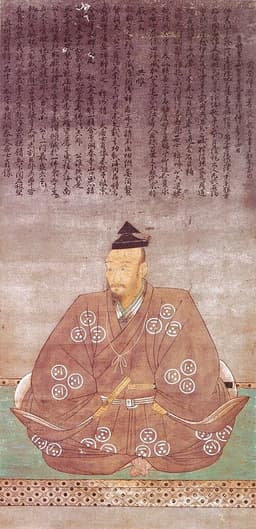
Kikkawa Hiroie
General · Modern
48.8Total
Basic Information
Born
1713
1561
Died
1790
1625
Era
Modern
Modern
Nationality
Ottoman Empire
Japan
Occupation
General
General
Civilization
Middle Eastern
Eastern
Score Comparison
Military (10%)
70.0
38.3
Political (20%)
45.0
46.6
Influence (20%)
57.2
51.0
Legacy (20%)
50.0
45.0
Leadership (15%)
48.8
64.5
Strategy (15%)
55.0
43.3
TOTAL
53.4
48.8
Cezayirli Gazi Hasan — Complete Timeline
1770 AD
Battle of Chesma (1770)War◆ Major
Cezayirli Gazi Hasan commanded the Ottoman fleet at the Battle of Chesma against the Russian navy. The battle ended in a catastrophic Ottoman defeat, with most of the fleet destroyed by Russian fireships in the Aegean Sea.
Naval BattleRusso-Turkish WarDefeat
Impact: regionaldestructive
Crocodile CompanionCultural
Cezayirli Gazi Hasan was known for keeping a pet crocodile, which he allegedly brought from Egypt. The crocodile became a symbol of his eccentricity and was often mentioned in contemporary accounts, adding to his legendary status.
EccentricityLegendPersonal Life
1789 AD
Grand Vizier AppointmentPolitical Action
Cezayirli Gazi Hasan was appointed grand vizier by Sultan Selim III. His tenure was brief but focused on naval reforms and strengthening the Ottoman fleet, drawing on his experience as an admiral.
AppointmentNaval ReformAdministration
Impact: nationalconstructive
Kikkawa Hiroie — Complete Timeline
1582 AD
Service under Mori TerumotoPolitical Action
Kikkawa Hiroie served as a senior retainer to Mori Terumoto, the head of the Mori clan. He participated in the clan's campaigns during the late Sengoku period, including conflicts with the Oda and Toyotomi forces, before the fateful Sekigahara campaign.
SengokuMori ClanRetainer
Impact: regional
1600 AD
Battle of SekigaharaWar◆ Major
Kikkawa Hiroie commanded a portion of the Mori clan forces at Sekigahara but ordered his troops to remain stationary due to his secret pact. His inaction prevented the Mori from aiding Ishida Mitsunari's western army, directly leading to Tokugawa's decisive victory.
SekigaharaBattleMori Clan
Impact: national
Secret Pact with Tokugawa IeyasuPolitical Action
Kikkawa Hiroie secretly negotiated with Tokugawa Ieyasu before the Battle of Sekigahara, promising that the Mori clan would not attack Tokugawa forces. This betrayal ensured that the Mori army remained largely inactive during the battle, contributing to Tokugawa's victory.
SekigaharaBetrayalMori Clan
Impact: national
This comparison has not been analyzed yet.
One-time AI generation (~1 minute). Scores and timeline are already available below.
Rankings
🥇
Cezayirli Gazi HasanLeader
Mil: 70.0Pol: 45.0Inf: 57.2
53.4
🥈
Kikkawa Hiroie
Mil: 38.3Pol: 46.6Inf: 51.0
48.8
+4.6 behind
How This Comparison Works
Algorithm
Each figure is scored on 6 dimensions (0—100 scale) based on structured historical data: Military (10%), Political (20%), Influence (20%), Legacy (20%), Leadership (15%), Strategy (15%). The weighted total produces the final ranking.
Data Sources
Scores are computed from structured sub-indicators in the database. Scale factors adjust for era (Ancient ×0.85, Modern ×1.0) and civilization size (Eastern ×1.05, Other ×0.80) to account for differences in population and military scale.
Maximum 3 Figures
Comparisons are limited to 2—3 figures to ensure readability and statistical meaningfulness.
Error Margins
±5 points per dimension — Sub-scores are derived from historical records with inherent uncertainty. Two figures within 5 points on a dimension should be considered roughly equivalent in that area.
Total Score Accuracy
±3 points overall — The weighted combination of 6 dimensions produces a total score with approximately ±3 points of uncertainty. Differences of less than 3 points are not statistically significant— the figures are effectively tied.
Known Limitations
- Historical records are incomplete and uneven across civilizations
- Figures from oral-tradition societies may be underrepresented
- Occupation labels can misclassify multi-role figures
- Scores measure capability and impact, not moral character
- Quantitative scoring is a comparison tool, not absolute truth
Capability Radar
Military (10%) — Battles & Warfare
Battles
65
30
Win Rate
60
35
Expansion
50
25
Political (20%) — Governance & Reform
Reform
55
20
Diplomacy
60
55
Economy
50
25
Influence (20%) — Cultural & Global Reach
Cultural
40
20
Global
35
15
Legacy (20%) — Historical Impact
Historical
50
35
Longevity
40
25
Leadership (15%) — Power & Stability
Tenure
60
40
Stability
45
30
Strategy (15%) — Tactics & Innovation
Strategy
65
45
Tactics
70
40
Reform
55
20
Similar Comparisons
Comments & Discussion
No comments yet. Be the first to share your thoughts!