Loading...
Analysis will be generated on first visit.
Scores and timeline are available below. The page will refresh automatically when ready.
Catherine I vs Julius Caesar
Julius Caesar leads by 32.1 pts · 2 figures compared
…

Catherine I
Emperor · Modern
51.2Total
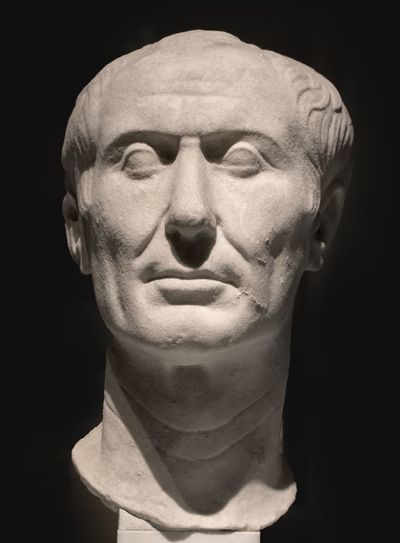
Julius Caesar
General · Ancient
83.3Total
Basic Information
Born
1684
-100
Died
1727
-44
Era
Modern
Ancient
Nationality
Russia
Roman Republic
Occupation
Emperor
General
Civilization
Western
Western
Score Comparison
Military (10%)
45.0
88.0
Political (20%)
42.1
78.0
Influence (20%)
67.1
85.0
Legacy (20%)
51.2
82.0
Leadership (15%)
38.8
82.0
Strategy (15%)
58.9
88.0
TOTAL
51.2
83.3
Rankings
🥇
Julius CaesarLeader
Mil: 88.0Pol: 78.0Inf: 85.0
83.3
🥈
Catherine I
Mil: 45.0Pol: 42.1Inf: 67.1
51.2
+32.1 behind
How This Comparison Works
Algorithm
Each figure is scored on 6 dimensions (0—100 scale) based on structured historical data: Military (10%), Political (20%), Influence (20%), Legacy (20%), Leadership (15%), Strategy (15%). The weighted total produces the final ranking.
Data Sources
Scores are computed from structured sub-indicators in the database. Scale factors adjust for era (Ancient ×0.85, Modern ×1.0) and civilization size (Eastern ×1.05, Other ×0.80) to account for differences in population and military scale.
Maximum 3 Figures
Comparisons are limited to 2—3 figures to ensure readability and statistical meaningfulness.
Error Margins
±5 points per dimension — Sub-scores are derived from historical records with inherent uncertainty. Two figures within 5 points on a dimension should be considered roughly equivalent in that area.
Total Score Accuracy
±3 points overall — The weighted combination of 6 dimensions produces a total score with approximately ±3 points of uncertainty. Differences of less than 3 points are not statistically significant— the figures are effectively tied.
Known Limitations
- Historical records are incomplete and uneven across civilizations
- Figures from oral-tradition societies may be underrepresented
- Occupation labels can misclassify multi-role figures
- Scores measure capability and impact, not moral character
- Quantitative scoring is a comparison tool, not absolute truth
Capability Radar
Military (10%) — Battles & Warfare
Battles
38
95
Win Rate
37
92
Expansion
43
97
Political (20%) — Governance & Reform
Reform
10
90
Diplomacy
20
85
Economy
10
82
Influence (20%) — Cultural & Global Reach
Cultural
10
88
Global
10
94
Legacy (20%) — Historical Impact
Historical
15
95
Longevity
10
96
Leadership (15%) — Power & Stability
Tenure
15
75
Stability
15
60
Strategy (15%) — Tactics & Innovation
Strategy
47
94
Tactics
49
96
Reform
50
88
Analysis will be generated on first visit.
Scores and timeline are available below. The page will refresh automatically when ready.
Catherine I — Complete Timeline
1707 AD
Marriage to Peter the GreatPolitical Action◆ Major
Catherine I, born Marta Skowro
MarriageSocial MobilityRoyal Court
Impact: national
1724 AD
Coronation as Empress ConsortPolitical Action◆ Major
Peter the Great crowned Catherine as empress consort in a formal ceremony at the Dormition Cathedral in Moscow. This was a rare honor for a tsar's wife and signaled Peter's intention to make her his successor. The coronation established her as a legitimate ruler.
CoronationSuccessionLegitimacy
Impact: nationalconstructive
1725 AD
Accession as Empress of RussiaPolitical Action◆ Major
After Peter the Great's death without naming a clear successor, Catherine I seized power with the support of the Imperial Guard and key nobles, becoming the first woman to rule Russia in her own right. Her accession marked a shift in succession practices and established a precedent for female rule.
SuccessionFemale RuleImperial Guard
Impact: nationalconstructive
1726 AD
Establishment of the Supreme Privy CouncilPolitical Action◆ Major
Catherine I created the Supreme Privy Council, a body of advisors that effectively governed Russia during her reign. The council, dominated by Alexander Menshikov, reduced the power of the Senate and concentrated authority in a small group of nobles, shaping Russian governance.
Government ReformCouncilMenshikov
Impact: national
Alliance with Austria (Treaty of Vienna)Political Action
Catherine I's government signed the Treaty of Vienna with the Holy Roman Empire, forming an alliance against the Ottoman Empire and Spain. This agreement aligned Russia with the Habsburgs and marked a shift in European diplomacy, though it had limited practical impact during her short reign.
TreatyAllianceDiplomacy
Impact: regional
Similar Comparisons
Comments & Discussion
No comments yet. Be the first to share your thoughts!