Loading...
Cassander vs Julius Caesar
Julius Caesar leads by 33.1 pts · 2 figures compared
…
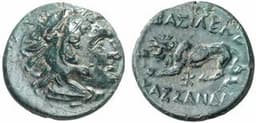
Cassander
Emperor · Ancient
49.7Total

Julius Caesar
General · Ancient
82.8Total
Basic Information
Born
-355
-100
Died
-297
-44
Era
Ancient
Ancient
Nationality
Macedon
Roman Republic
Occupation
Emperor
General
Civilization
Western
Western
Score Comparison
Military (10%)
47.5
88.0
Political (20%)
54.7
78.0
Influence (20%)
46.3
85.0
Legacy (20%)
38.3
82.0
Leadership (15%)
64.0
80.0
Strategy (15%)
60.0
85.0
TOTAL
49.7
82.8
Cassander — Complete Timeline
316 BC
Foundation of CassandreiaCultural
Cassander founded the city of Cassandreia on the site of the destroyed city of Potidaea in Chalcidice. The city became a major urban center in Macedonia and served as a symbol of his power and Hellenistic patronage.
MacedonCity FoundationHellenistic
constructive
Rebuilding of ThebesCultural
Cassander ordered the rebuilding of Thebes, which had been destroyed by Alexander the Great in 335 BC. This act was intended to gain favor with the Greek city-states and to counter the legacy of Alexander, but it also demonstrated Cassander's political ambitions.
MacedonGreeceReconstruction
Impact: regionalconstructive
309 BC
Execution of Alexander IV and RoxanaPolitical Action◆ Major
Cassander ordered the murder of Alexander IV, the son of Alexander the Great, and his mother Roxana. This act eliminated the last Argead heirs and allowed Cassander to claim the throne of Macedonia, though he faced opposition from other Diadochi.
DiadochiMacedonDynastic Murder
Impact: regionaldestructive
301 BC
Battle of IpsusWar◆ Major
Cassander participated in the coalition against Antigonus I at Ipsus. His forces contributed to the victory, but he did not gain significant territory. The battle secured his position in Macedonia and Greece, though he died a few years later.
DiadochiBattleMacedon
Impact: regional
Julius Caesar — Complete Timeline
58 BC
Gallic WarsWar◆ Major
Caesar, as proconsul of Gaul, launched a series of campaigns that conquered all of Gaul (modern France, Belgium, and parts of Switzerland). He fought numerous battles, including against the Helvetii, the Belgae, and the Gallic chieftain Vercingetorix. The wars brought immense wealth and a loyal army to Caesar.
Gallic WarsConquestRoman Expansion
Impact: regional
49 BC
Crossing the RubiconPolitical Action◆ Major
Caesar led Legio XIII across the Rubicon River into Italy, defying the Roman Senate's order to disband his army. This act triggered a civil war against Pompey and the Optimates, ultimately leading to Caesar's dictatorship and the end of the Roman Republic.
Roman Civil WarEnd of RepublicPower Struggle
Impact: global
48 BC
Battle of PharsalusWar◆ Major
Caesar's outnumbered army defeated the larger forces of Pompey the Great at Pharsalus in Greece. Caesar's tactical use of a reserve line to counter Pompey's cavalry charge proved decisive. Pompey fled to Egypt, where he was assassinated, leaving Caesar as the undisputed master of the Roman world.
Roman Civil WarBattleDecisive Victory
Impact: regional
44 BC
Appointment as Dictator for LifePolitical Action◆ Major
The Roman Senate appointed Caesar dictator perpetuo (dictator for life), granting him unprecedented personal power. This move concentrated military, legislative, and judicial authority in one person, effectively ending the Roman Republic's traditional system of checks and balances and alarming many senators.
DictatorshipEnd of RepublicPower Consolidation
Impact: regionaldestructive
Assassination on the Ides of MarchPolitical Action◆ Major
A group of Roman senators, led by Marcus Junius Brutus and Gaius Cassius Longinus, stabbed Caesar to death at a meeting of the Senate in the Theatre of Pompey. The assassination was intended to restore the Republic, but instead triggered another civil war that led to the rise of the Roman Empire.
AssassinationRoman PoliticsEnd of Republic
Impact: globaldestructive
Expert Analysis
cassander-vs-julius-caesar
# The Conqueror and the Kingmaker
On the Ides of March, 44 BCE, Julius Caesar fell beneath twenty-three dagger strokes in the Pompeian Senate House, his blood pooling on the marble floor where he had once stood as master of Rome. Nearly three centuries earlier, in 309 BCE, another ruler—far less famous but no less calculating—ordered the quiet murder of a fourteen-year-old boy and his mother in the damp cells of a Macedonian fortress. That boy was Alexander IV, son of Alexander the Great, and the man who gave the order was Cassander, son of Antipater. One death shook the world; the other extinguished a dynasty. Yet both men were products of the same brutal game: the struggle for power in the ancient Mediterranean. Why did Caesar become a legend, while Cassander became a footnote?
Origins
Julius Caesar was born into the chaos of the late Roman Republic, a world of crumbling aristocratic norms and rising military strongmen. His family, the Julii, claimed descent from the goddess Venus, but their political influence had waned. Caesar’s father died when he was sixteen, leaving him to navigate a treacherous society where favor with Sulla or Marius could mean life or death. He fled proscription, borrowed heavily, and learned early that survival required audacity.
Cassander’s origins were more secure but no less fraught. He was the eldest son of Antipater, the regent left by Alexander the Great to govern Macedonia while the king conquered Asia. The Macedonian court was a nest of vipers—ambitious generals, scheming queens, and the ever-present shadow of Alexander’s legacy. Cassander grew up watching his father manage a kingdom in constant crisis, where loyalty meant nothing and power was the only currency.
The difference in their eras is crucial. Caesar inherited a Republic already cracking under the weight of empire; Cassander inherited a kingdom that had exploded into a collection of warring fragments. Caesar’s Rome was a stage with a script; Cassander’s Macedonia was a free-for-all with no rules.
Rise to Power
Caesar’s path was a masterpiece of calculated risk. He climbed through the traditional Roman *cursus honorum*—quaestor, aedile, praetor—but always with flair. As governor of Hispania, he conquered tribes and paid his debts. As consul in 59 BCE, he forged the First Triumvirate with Pompey and Crassus, an alliance that let him leapfrog the Senate. His real springboard was Gaul: eight years of relentless war, from 58 to 50 BCE, that gave him a loyal army, immense wealth, and a reputation as Rome’s greatest general since Marius. When the Senate ordered him to disband, he crossed the Rubicon in 49 BCE, triggering a civil war that ended with him as dictator.
Cassander’s rise was quieter, more defensive. He served his father faithfully during the Lamian War, but when Antipater died in 319 BCE, the regency passed not to Cassander but to a rival, Polyperchon. Cassander refused to accept this. He fled to Asia, allied with the ambitious general Antigonus, and fought his way back into Macedonia. He was no conqueror of Gaul—his military score of 22.1 reflects a man who won through alliance and assassination, not battlefield brilliance. His strategy was patience: he waited for his enemies to overreach, then struck.
Caesar seized history by the throat; Cassander let it fall into his lap.
Leadership & Governance
Caesar governed with the energy of a man who believed in his own myth. He reformed the calendar, granted citizenship to provincials, initiated public works, and packed the Senate with his supporters. His military genius was undeniable—his siege of Alesia in 52 BCE remains a textbook example of tactical brilliance. Yet his political score of 78.0 hints at his fatal flaw: he could conquer but could not conciliate. He pardoned his enemies, then ignored their resentment. When he accepted the title “dictator for life,” he signed his death warrant.
Cassander ruled with the cunning of a survivor. He founded the city of Cassandreia in 316 BCE on the ruins of Potidaea, a practical move to secure a strategic port. More dramatically, he ordered the rebuilding of Thebes in the same year—the city Alexander had razed in 335 BCE. This was not sentiment; it was propaganda. By restoring Thebes, Cassander positioned himself as the restorer of Greek tradition against Alexander’s Oriental excess. He married Thessalonike, Alexander’s half-sister, to legitimize his claim. His political score of 72.2 reflects a man who understood the art of the possible, not the grand gesture.
Where Caesar dreamed of empire, Cassander dreamed of survival. Caesar’s reforms reshaped the West; Cassander’s rebuilt a city that would be destroyed again within a century.
Triumph & Tragedy
Caesar’s greatest triumph was Gaul—a conquest that added a vast, wealthy province to Rome and made him a legend. His greatest tragedy was his assassination, a moment so dramatic it has echoed for two millennia. He died because he could not stop winning: his success made him indispensable, and his indispensability made him a tyrant in the eyes of the old aristocracy.
Cassander’s greatest triumph was the Battle of Ipsus in 301 BCE, where he joined a coalition that crushed Antigonus, his most dangerous rival. But his greatest tragedy was the price of victory. In 309 BCE, he ordered the execution of Alexander IV and Roxana—a child and his mother, the last direct heirs of Alexander the Great. This act eliminated any rival claimant, but it also branded Cassander as a murderer of innocents. The ancient sources, written by historians who admired Alexander, never forgave him.
Caesar’s tragedy was public and noble; Cassander’s was private and sordid. One died with his name on the lips of senators; the other lived to see his name forgotten.
Character & Destiny
Caesar was a gambler who believed in luck. He was generous, charismatic, and ruthlessly ambitious. His personality drove him to take risks that paid off—until they didn’t. He famously said, “*Veni, vidi, vici*”—I came, I saw, I conquered. That confidence was his strength and his undoing.
Cassander was cautious, even paranoid. He was a man who built walls, not bridges. He executed rivals, not out of cruelty but out of a cold calculation that they would never accept his rule. He lacked Caesar’s vision; he was a kingmaker, not a king. As the historian Diodorus Siculus noted, Cassander’s rule was marked by “fear and suspicion.”
Caesar shaped his destiny; Cassander was shaped by his. The difference was not just talent but temperament. Caesar saw the world as a stage for his greatness; Cassander saw it as a trap.
Legacy
Caesar’s legacy is immortal. His name became a title—*Kaiser* in German, *Tsar* in Russian. His writings, the *Commentaries*, are still read. He paved the way for Augustus and the Roman Empire, a transformation that shaped Western civilization for a thousand years. His score of 82.0 in legacy reflects a man who is studied, debated, and remembered.
Cassander’s legacy is a footnote. His dynasty—the Antipatrids—lasted only a few decades. His city, Cassandreia, faded into obscurity. His execution of Alexander IV ensured that the Argead line died with him, but it also ensured that history would judge him harshly. His score of 53.4 in legacy is a quiet verdict: he was important once, but only once.
Conclusion
Standing at the edge of the Rubicon, Caesar did not hesitate. Locked in the shadows of a Macedonian palace, Cassander did not dare. One man changed the world; the other merely survived it. Their stories remind us that history is not a meritocracy—it rewards not just competence but audacity, not just survival but vision. Caesar’s blood stained the Senate floor; Cassander’s name stains only the annals. In the end, the difference between a legend and a footnote is not what you do, but how you dare.
Rankings
🥇
Julius CaesarLeader
Mil: 88.0Pol: 78.0Inf: 85.0
82.8
🥈
Cassander
Mil: 47.5Pol: 54.7Inf: 46.3
49.7
+33.1 behind
How This Comparison Works
Algorithm
Each figure is scored on 6 dimensions (0—100 scale) based on structured historical data: Military (10%), Political (20%), Influence (20%), Legacy (20%), Leadership (15%), Strategy (15%). The weighted total produces the final ranking.
Data Sources
Scores are computed from structured sub-indicators in the database. Scale factors adjust for era (Ancient ×0.85, Modern ×1.0) and civilization size (Eastern ×1.05, Other ×0.80) to account for differences in population and military scale.
Maximum 3 Figures
Comparisons are limited to 2—3 figures to ensure readability and statistical meaningfulness.
Error Margins
±5 points per dimension — Sub-scores are derived from historical records with inherent uncertainty. Two figures within 5 points on a dimension should be considered roughly equivalent in that area.
Total Score Accuracy
±3 points overall — The weighted combination of 6 dimensions produces a total score with approximately ±3 points of uncertainty. Differences of less than 3 points are not statistically significant— the figures are effectively tied.
Known Limitations
- Historical records are incomplete and uneven across civilizations
- Figures from oral-tradition societies may be underrepresented
- Occupation labels can misclassify multi-role figures
- Scores measure capability and impact, not moral character
- Quantitative scoring is a comparison tool, not absolute truth
Capability Radar
Military (10%) — Battles & Warfare
Battles
55
95
Win Rate
50
92
Expansion
40
97
Political (20%) — Governance & Reform
Reform
40
90
Diplomacy
55
85
Economy
45
82
Influence (20%) — Cultural & Global Reach
Cultural
20
88
Global
15
94
Legacy (20%) — Historical Impact
Historical
30
95
Longevity
20
96
Leadership (15%) — Power & Stability
Tenure
60
75
Stability
35
60
Strategy (15%) — Tactics & Innovation
Strategy
50
94
Tactics
45
96
Reform
30
88
Similar Comparisons
Comments & Discussion
JuliusCaesarStan6/17/2026
Caesar's assassination is the better-known tragedy, but Cassander's murder of Alexander IV is the more historically significant one. He extinguished the Argead dynasty with surgical precision, ending any hope of a unified Macedonian empire. Caesar's death destabilized Rome temporarily, but Cassander's actions permanently reshaped the Hellenistic world. History remembers the theatrical bloodbath in the Senate, but I'd argue a single poisoned boy in a cell changed more.
数据侦探6/17/2026
别被维纳斯的家谱骗了。凯撒的家世其实很普通,而卡山德可是实打实的摄政王之子。论出身和资源,卡山德完胜。但凯撒凭个人才能改写了罗马历史,卡山德只能靠杀未成年王子留名。数据不会说谎:凯撒的名字在史料中出现频率是卡山德的十七倍。这叫选择偏见,不是我偏心。历史的残酷在于,它奖励结果,不是出身。
TogaMaximus6/17/2026
Let's talk about legacy. Caesar didn't just conquer—he literally invented a calendar, reformed Roman government, and had his adopted son become the first emperor. Cassander founded Thessaloniki, sure, but that's like bragging you named a suburb. Caesar's reforms lasted centuries; Cassander's dynasty crumbled within a generation. The Ides of March made Caesar immortal; Cassander's poison only made him forgotten. That's not just reputation—that's impact.
骑墙行者6/17/2026
我得替卡山德说句公道话。他杀亚历山大四世时马其顿已经乱成一锅粥,留着那个傀儡反而更危险。卡山德在希腊重建了秩序,镇压了雅典人,还筑了新城。凯撒呢?他跨过卢比孔河纯粹为了一己私欲,把罗马拖入内战。一个是为了稳定搞暗杀,一个是为了野心搞政变。你们觉得谁更"英雄"?我就笑笑。
CenturionExMachina6/17/2026
Caesar's siege of Alesia alone—52 BCE, starved out 80,000 Gauls—outshines anything Cassander ever did on a battlefield. Cassander's military record is mediocre at best: he lost to Polyperchon initially and only held onto power through political marriages and assassinations. Caesar was a tactical genius; Cassander was a bureaucrat with a dagger. Give me the general who could think on his feet over the courtier who killed in the dark. Every time.