Loading...
This comparison has not been analyzed yet.
One-time AI generation (~1 minute). Scores and timeline are already available below.
Carol II of Romania vs Vakhtang VI of Kartli
Vakhtang VI of Kartli leads by 3.1 pts · 2 figures compared
…
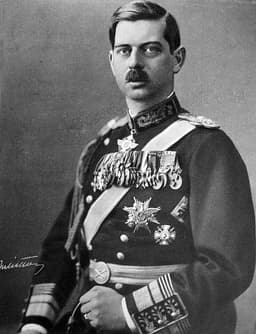
Carol II of Romania
Emperor · Modern
46.3Total

Vakhtang VI of Kartli
Emperor · Modern
49.4Total
Basic Information
Born
1893
1675
Died
1953
1737
Era
Modern
Modern
Nationality
Romania
Georgia
Occupation
Emperor
Emperor
Civilization
Western
Western
Score Comparison
Military (10%)
43.3
50.0
Political (20%)
40.8
45.0
Influence (20%)
46.3
60.0
Legacy (20%)
40.0
50.0
Leadership (15%)
65.0
40.0
Strategy (15%)
45.0
41.7
TOTAL
46.3
49.4
Carol II of Romania — Complete Timeline
1930 AD
Ascended to the Throne of RomaniaPolitical Action◆ Major
Carol II became King of Romania on June 8, 1930, after returning from exile. He had renounced his rights to the throne in 1925, but his son Michael's regency was overthrown, and Carol was invited back by a political faction.
AccessionExileMonarchy
Impact: national
1938 AD
Established the Royal DictatorshipPolitical Action
Carol II abolished the constitution and established a royal dictatorship on February 10, 1938. He banned all political parties, created the National Renaissance Front as the sole legal party, and concentrated power in his own hands, aiming to counter the rise of the Iron Guard.
DictatorshipAuthoritarianismIron Guard
Impact: nationaldestructive
1940 AD
Lost Northern Transylvania to Hungary via the Second Vienna AwardPolitical Action
Under pressure from Nazi Germany and Fascist Italy, Carol II accepted the Second Vienna Award on August 30, 1940, ceding Northern Transylvania to Hungary. This territorial loss caused widespread outrage and severely weakened his regime.
Territorial LossVienna AwardWorld War II
Impact: regionaltragic
Forced to Abdicate and ExiledPolitical Action◆ Major
On September 6, 1940, Carol II was forced to abdicate by General Ion Antonescu, who took power with support from the Iron Guard. Carol fled Romania, spending the rest of his life in exile in Portugal, Mexico, and Brazil.
AbdicationExileAntonescu
Impact: nationaltragic
Vakhtang VI of Kartli — Complete Timeline
1703 AD
Appointment as Regent of KartliPolitical Action◆ Major
Vakhtang VI was appointed regent of the Kingdom of Kartli for his absent brother, King George XI, who was campaigning with the Safavid Persians. This began his effective rule over Kartli, during which he initiated administrative and cultural reforms.
RegencyKartliPolitical Leadership
Impact: national
1707 AD
Codification of the Law Code of Vakhtang VIReform◆ Major
Vakhtang VI oversaw the compilation and publication of a comprehensive legal code for Kartli, known as the Law Code of Vakhtang VI. This code systematized existing Georgian customary law and royal decrees, aiming to centralize royal authority and standardize judicial procedures across the kingdom.
Legal ReformGeorgian LawCodification
Impact: nationalconstructive
1709 AD
Establishment of the First Georgian Printing PressCultural◆ Major
Vakhtang VI established the first printing press in Georgia in Tbilisi. This press published religious texts, legal codes, and historical works, significantly advancing Georgian literacy and cultural preservation. It marked a turning point in the dissemination of Georgian literature and law.
Printing PressGeorgian CultureLiteracy
Impact: nationalconstructive
1724 AD
Exile to RussiaPolitical Action◆ Major
After the Ottoman invasion of Kartli and the failure of his alliance with Russia, Vakhtang VI fled to the Russian Empire. He settled in Moscow with his family and retinue, where he lived under the protection of Tsar Peter II until his death in 1737.
ExileRussiaOttoman Invasion
Impact: nationaltragic
Negotiation of the Treaty of Constantinople (1724)Political Action
Vakhtang VI attempted to negotiate a treaty with the Ottoman Empire to preserve Kartli's autonomy, but the resulting Treaty of Constantinople recognized Ottoman suzerainty over eastern Georgia. This failure to secure independence led directly to his decision to go into Russian exile.
TreatyOttoman EmpireDiplomacy
Impact: regionaldestructive
This comparison has not been analyzed yet.
One-time AI generation (~1 minute). Scores and timeline are already available below.
Rankings
🥇
Vakhtang VI of KartliLeader
Mil: 50.0Pol: 45.0Inf: 60.0
49.4
🥈
Carol II of Romania
Mil: 43.3Pol: 40.8Inf: 46.3
46.3
+3.1 behind
How This Comparison Works
Algorithm
Each figure is scored on 6 dimensions (0—100 scale) based on structured historical data: Military (10%), Political (20%), Influence (20%), Legacy (20%), Leadership (15%), Strategy (15%). The weighted total produces the final ranking.
Data Sources
Scores are computed from structured sub-indicators in the database. Scale factors adjust for era (Ancient ×0.85, Modern ×1.0) and civilization size (Eastern ×1.05, Other ×0.80) to account for differences in population and military scale.
Maximum 3 Figures
Comparisons are limited to 2—3 figures to ensure readability and statistical meaningfulness.
Error Margins
±5 points per dimension — Sub-scores are derived from historical records with inherent uncertainty. Two figures within 5 points on a dimension should be considered roughly equivalent in that area.
Total Score Accuracy
±3 points overall — The weighted combination of 6 dimensions produces a total score with approximately ±3 points of uncertainty. Differences of less than 3 points are not statistically significant— the figures are effectively tied.
Known Limitations
- Historical records are incomplete and uneven across civilizations
- Figures from oral-tradition societies may be underrepresented
- Occupation labels can misclassify multi-role figures
- Scores measure capability and impact, not moral character
- Quantitative scoring is a comparison tool, not absolute truth
Capability Radar
Military (10%) — Battles & Warfare
Battles
5
25
Win Rate
5
20
Expansion
5
15
Political (20%) — Governance & Reform
Reform
40
70
Diplomacy
30
50
Economy
25
45
Influence (20%) — Cultural & Global Reach
Cultural
20
60
Global
15
30
Legacy (20%) — Historical Impact
Historical
30
55
Longevity
20
50
Leadership (15%) — Power & Stability
Tenure
60
55
Stability
20
40
Strategy (15%) — Tactics & Innovation
Strategy
5
25
Tactics
5
30
Reform
20
35
Similar Comparisons
Comments & Discussion
No comments yet. Be the first to share your thoughts!