Loading...
This comparison has not been analyzed yet.
One-time AI generation (~1 minute). Scores and timeline are already available below.
Carles Puigdemont vs Fazlul Huq
Fazlul Huq leads by 13.5 pts · 2 figures compared
…
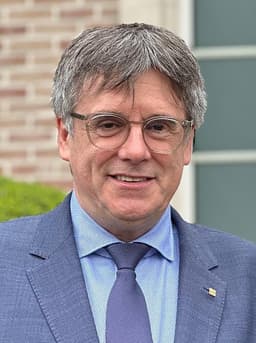
Carles Puigdemont
Politician · Modern
45.8Total

Fazlul Huq
Politician · Modern
59.3Total
Basic Information
Born
1962
1873
Died
—
1962
Era
Modern
Modern
Nationality
Spain
Bangladesh
Occupation
Politician
Politician
Civilization
Western
Indian
Score Comparison
Military (10%)
50.0
52.0
Political (20%)
40.8
65.0
Influence (20%)
52.5
58.3
Legacy (20%)
40.8
52.0
Leadership (15%)
48.4
72.0
Strategy (15%)
41.3
60.0
TOTAL
45.8
59.3
Carles Puigdemont — Complete Timeline
2016 AD
Elected President of the Government of CataloniaPolitical Action◆ Major
Puigdemont was elected as the 130th President of the Government of Catalonia, succeeding Artur Mas. He led a pro-independence coalition government and pledged to continue the process toward a referendum on Catalan independence.
Catalan PoliticsElectionIndependence
Impact: regionalconstructive
2017 AD
Held the 2017 Catalan Independence ReferendumPolitical Action
Puigdemont's government held a unilateral independence referendum on October 1, 2017, despite a Spanish constitutional court ban and police crackdown. The referendum resulted in a 'Yes' vote but was not recognized internationally and led to a political crisis.
Catalan PoliticsReferendumCrisis
Impact: regionaldestructive
Declared Catalan Independence and Suspended ItPolitical Action
On October 10, 2017, Puigdemont declared independence from Spain but immediately suspended its implementation to allow for negotiations. This ambiguous move was rejected by the Spanish government and deepened the political standoff.
Catalan PoliticsIndependenceNegotiation
Impact: regionaldestructive
Fled to Belgium After Spanish Government InterventionPolitical Action◆ Major
After the Spanish government invoked Article 155 to impose direct rule on Catalonia and dismissed his government, Puigdemont fled to Belgium to avoid prosecution for rebellion and sedition. He remained in self-imposed exile, leading the independence movement from abroad.
Catalan PoliticsExileLegal Conflict
Impact: regionaltragic
2018 AD
Arrested in Germany on European Arrest WarrantPolitical Action◆ Major
Puigdemont was arrested in Germany while traveling from Finland, based on a European Arrest Warrant issued by Spain for rebellion. A German court refused extradition on the rebellion charge but allowed it for misuse of public funds. He was later released on bail.
Catalan PoliticsLegal ConflictExtradition
Impact: regionaltragic
2019 AD
Elected to European ParliamentPolitical Action◆ Major
Puigdemont was elected as a Member of the European Parliament (MEP) for the Junts party. His election provided him with parliamentary immunity, though it was later challenged by Spanish authorities, leading to legal battles in the European Court of Justice.
Catalan PoliticsEuropean PoliticsImmunity
Impact: regionalconstructive
Fazlul Huq — Complete Timeline
1929 AD
Formed the Krishak Praja PartyPolitical Action◆ Major
Fazlul Huq founded the Krishak Praja Party (KPP) in Bengal, representing peasant and tenant interests. The party advocated for land reforms, debt relief, and reduced landlord power, becoming a major force in Bengal politics.
KPPPeasant PartyLand Reform
Impact: regionalconstructive
1937 AD
Served as Premier of BengalPolitical Action◆ Major
Fazlul Huq became the first Premier of Bengal under the Government of India Act 1935, leading a coalition government. His tenure focused on agrarian reforms, education, and Muslim interests, but was marked by political instability.
PremierBengalCoalition Government
Impact: regionalconstructive
1940 AD
Moved the Pakistan Resolution in 1940Political Action
Fazlul Huq, as Premier of Bengal, moved the Lahore Resolution (later Pakistan Resolution) at the All-India Muslim League session. The resolution demanded separate states for Muslims in northwestern and eastern zones of India, laying the foundation for Pakistan.
Pakistan ResolutionMuslim LeaguePartition
Impact: global
1956 AD
Served as Governor of East PakistanPolitical Action
Fazlul Huq was appointed Governor of East Pakistan, a ceremonial role. His tenure was brief and marked by political tensions between the central government and provincial leaders, reflecting the instability of the era.
GovernorEast PakistanCeremonial Role
Impact: regional
This comparison has not been analyzed yet.
One-time AI generation (~1 minute). Scores and timeline are already available below.
Rankings
🥇
Fazlul HuqLeader
Mil: 52.0Pol: 65.0Inf: 58.3
59.3
🥈
Carles Puigdemont
Mil: 50.0Pol: 40.8Inf: 52.5
45.8
+13.5 behind
How This Comparison Works
Algorithm
Each figure is scored on 6 dimensions (0—100 scale) based on structured historical data: Military (10%), Political (20%), Influence (20%), Legacy (20%), Leadership (15%), Strategy (15%). The weighted total produces the final ranking.
Data Sources
Scores are computed from structured sub-indicators in the database. Scale factors adjust for era (Ancient ×0.85, Modern ×1.0) and civilization size (Eastern ×1.05, Other ×0.80) to account for differences in population and military scale.
Maximum 3 Figures
Comparisons are limited to 2—3 figures to ensure readability and statistical meaningfulness.
Error Margins
±5 points per dimension — Sub-scores are derived from historical records with inherent uncertainty. Two figures within 5 points on a dimension should be considered roughly equivalent in that area.
Total Score Accuracy
±3 points overall — The weighted combination of 6 dimensions produces a total score with approximately ±3 points of uncertainty. Differences of less than 3 points are not statistically significant— the figures are effectively tied.
Known Limitations
- Historical records are incomplete and uneven across civilizations
- Figures from oral-tradition societies may be underrepresented
- Occupation labels can misclassify multi-role figures
- Scores measure capability and impact, not moral character
- Quantitative scoring is a comparison tool, not absolute truth
Capability Radar
Military (10%) — Battles & Warfare
Battles
28
40
Win Rate
30
45
Expansion
33
51
Political (20%) — Governance & Reform
Reform
40
70
Diplomacy
35
75
Economy
20
60
Influence (20%) — Cultural & Global Reach
Cultural
30
65
Global
25
55
Legacy (20%) — Historical Impact
Historical
25
70
Longevity
20
60
Leadership (15%) — Power & Stability
Tenure
30
65
Stability
10
55
Strategy (15%) — Tactics & Innovation
Strategy
36
54
Tactics
39
58
Reform
45
61
Similar Comparisons
Comments & Discussion
No comments yet. Be the first to share your thoughts!