Loading...
This comparison has not been analyzed yet.
One-time AI generation (~1 minute). Scores and timeline are already available below.
Cao Xiu vs Cassivellaunus
Cassivellaunus leads by 8.9 pts · 2 figures compared
…
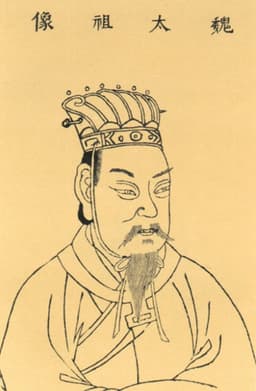
Cao Xiu
General · Ancient
36.3Total

Cassivellaunus
General · Ancient
45.2Total
Basic Information
Born
175
-80
Died
228
-40
Era
Ancient
Ancient
Nationality
China
Britannia
Occupation
General
General
Civilization
Eastern
Western
Score Comparison
Military (10%)
25.0
46.7
Political (20%)
35.0
35.0
Influence (20%)
43.2
47.9
Legacy (20%)
35.8
40.8
Leadership (15%)
30.0
57.1
Strategy (15%)
43.3
45.0
TOTAL
36.3
45.2
Cao Xiu — Complete Timeline
220 AD
Appointed General of the VanguardPolitical Action
Cao Xiu was appointed General of the Vanguard by Emperor Cao Pi, tasked with leading the elite vanguard forces. This position gave him command of the most prestigious unit in Wei's army, reflecting his close relationship with the emperor.
Three KingdomsWei PoliticsMilitary Appointment
Impact: nationalconstructive
222 AD
Battle of DongkouWar
Cao Xiu commanded Wei naval forces against Wu at Dongkou. He attempted to cross the Yangtze River but was repelled by Wu defenses under L
Three KingdomsWei-Wu WarNaval Battle
Impact: regional
228 AD
Battle of ShitingWar◆ Major
Cao Xiu led Wei forces against Wu at Shiting. Wu commander Lu Xun feigned retreat, luring Cao Xiu into an ambush. Wei forces were decisively defeated, suffering heavy casualties. Cao Xiu died shortly after from shame and illness.
Three KingdomsWei-Wu WarDefeat
Impact: regionaltragic
Cassivellaunus — Complete Timeline
54 BC
Resistance to Caesar's Second InvasionWar◆ Major
Cassivellaunus led the British resistance against Julius Caesar's second invasion of Britain. He organized a coalition of British tribes and used guerrilla tactics, including chariot warfare, to harass Roman forces.
ResistanceRoman InvasionBritain
Impact: regionaldestructive
Battle of the ThamesWar◆ Major
Cassivellaunus attempted to defend the River Thames crossing against Caesar's advancing legions. The Romans forced a crossing using a fortified bridge, and Cassivellaunus's forces were defeated, forcing him to retreat inland.
BattleRoman InvasionBritish Defeat
Impact: regionaltragic
Siege of Cassivellaunus's StrongholdWar◆ Major
Caesar besieged Cassivellaunus's hillfort, likely located near modern-day St. Albans. The stronghold was captured after a fierce assault, and Cassivellaunus was forced to negotiate a surrender.
SiegeRoman InvasionBritish Defeat
Impact: regionaltragic
Surrender to CaesarPolitical Action◆ Major
Cassivellaunus surrendered to Caesar after the fall of his stronghold. He agreed to pay tribute and provide hostages, ending the British resistance. Caesar then withdrew from Britain, leaving Cassivellaunus in power as a client king.
SurrenderRoman InvasionTreaty
Impact: regional
This comparison has not been analyzed yet.
One-time AI generation (~1 minute). Scores and timeline are already available below.
Rankings
🥇
CassivellaunusLeader
Mil: 46.7Pol: 35.0Inf: 47.9
45.2
🥈
Cao Xiu
Mil: 25.0Pol: 35.0Inf: 43.2
36.3
+8.9 behind
How This Comparison Works
Algorithm
Each figure is scored on 6 dimensions (0—100 scale) based on structured historical data: Military (10%), Political (20%), Influence (20%), Legacy (20%), Leadership (15%), Strategy (15%). The weighted total produces the final ranking.
Data Sources
Scores are computed from structured sub-indicators in the database. Scale factors adjust for era (Ancient ×0.85, Modern ×1.0) and civilization size (Eastern ×1.05, Other ×0.80) to account for differences in population and military scale.
Maximum 3 Figures
Comparisons are limited to 2—3 figures to ensure readability and statistical meaningfulness.
Error Margins
±5 points per dimension — Sub-scores are derived from historical records with inherent uncertainty. Two figures within 5 points on a dimension should be considered roughly equivalent in that area.
Total Score Accuracy
±3 points overall — The weighted combination of 6 dimensions produces a total score with approximately ±3 points of uncertainty. Differences of less than 3 points are not statistically significant— the figures are effectively tied.
Known Limitations
- Historical records are incomplete and uneven across civilizations
- Figures from oral-tradition societies may be underrepresented
- Occupation labels can misclassify multi-role figures
- Scores measure capability and impact, not moral character
- Quantitative scoring is a comparison tool, not absolute truth
Capability Radar
Military (10%) — Battles & Warfare
Battles
30
15
Win Rate
25
20
Expansion
20
10
Political (20%) — Governance & Reform
Reform
10
5
Diplomacy
20
25
Economy
15
10
Influence (20%) — Cultural & Global Reach
Cultural
10
15
Global
5
10
Legacy (20%) — Historical Impact
Historical
15
25
Longevity
10
20
Leadership (15%) — Power & Stability
Tenure
40
20
Stability
20
15
Strategy (15%) — Tactics & Innovation
Strategy
30
20
Tactics
35
30
Reform
10
5
Similar Comparisons
Comments & Discussion
No comments yet. Be the first to share your thoughts!