Loading...
This comparison has not been analyzed yet.
One-time AI generation (~1 minute). Scores and timeline are already available below.
Cao Jixiang vs Nagabhata I
Nagabhata I leads by 6.7 pts · 2 figures compared
…

Cao Jixiang
General · Medieval
40.5Total
Nagabhata I
General · Medieval
47.2Total
Basic Information
Born
1400
730
Died
1461
760
Era
Medieval
Medieval
Nationality
China
India
Occupation
General
General
Civilization
Eastern
Indian
Score Comparison
Military (10%)
50.0
60.0
Political (20%)
35.0
32.2
Influence (20%)
40.9
48.6
Legacy (20%)
31.7
42.5
Leadership (15%)
51.7
57.6
Strategy (15%)
43.7
50.0
TOTAL
40.5
47.2
Cao Jixiang — Complete Timeline
1457 AD
Led Coup Attempt Against Jingtai EmperorPolitical Action
Cao Jixiang, a powerful eunuch, conspired with General Shi Heng to overthrow the Jingtai Emperor and restore the imprisoned Zhengtong Emperor. The coup succeeded, placing Zhengtong back on the throne as the Tianshun Emperor.
Ming DynastyCoupEunuch Power
Impact: nationaldestructive
1461 AD
Executed for TreasonPolitical Action◆ Major
Cao Jixiang attempted another coup against the Tianshun Emperor but failed. He was executed, and his faction was purged. This event reduced eunuch influence temporarily and reinforced imperial authority.
Ming DynastyExecutionEunuch Purge
Impact: nationaldestructive
Nagabhata I — Complete Timeline
730 AD
Foundation of the Pratihara DynastyPolitical Action
Nagabhata I established the Pratihara dynasty in the Malwa region after the decline of the Gurjara kingdom. He consolidated control over parts of Rajasthan and Gujarat, laying the foundation for the later Pratihara Empire.
FoundationPratihara DynastyMalwa
Impact: regionalconstructive
735 AD
Consolidation of Malwa and GujaratWar◆ Major
Nagabhata I conquered and consolidated the regions of Malwa and Gujarat, defeating local rulers and establishing Pratihara authority. He built fortifications and administrative centers to secure his new territories.
ConquestMalwaGujarat
Impact: regional
738 AD
Defeat of the Arab InvasionWar◆ Major
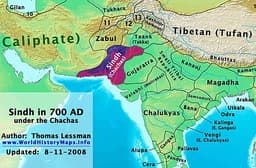
Nagabhata I defeated an Arab army led by the Umayyad governor of Sindh, Junaid ibn Abd al-Rahman al-Murri. This victory at the Battle of Rajasthan halted Arab expansion into central India and protected the Hindu kingdoms.
BattleArab InvasionUmayyad
Impact: national
This comparison has not been analyzed yet.
One-time AI generation (~1 minute). Scores and timeline are already available below.
Rankings
🥇
Nagabhata ILeader
Mil: 60.0Pol: 32.2Inf: 48.6
47.2
🥈
Cao Jixiang
Mil: 50.0Pol: 35.0Inf: 40.9
40.5
+6.7 behind
How This Comparison Works
Algorithm
Each figure is scored on 6 dimensions (0—100 scale) based on structured historical data: Military (10%), Political (20%), Influence (20%), Legacy (20%), Leadership (15%), Strategy (15%). The weighted total produces the final ranking.
Data Sources
Scores are computed from structured sub-indicators in the database. Scale factors adjust for era (Ancient ×0.85, Modern ×1.0) and civilization size (Eastern ×1.05, Other ×0.80) to account for differences in population and military scale.
Maximum 3 Figures
Comparisons are limited to 2—3 figures to ensure readability and statistical meaningfulness.
Error Margins
±5 points per dimension — Sub-scores are derived from historical records with inherent uncertainty. Two figures within 5 points on a dimension should be considered roughly equivalent in that area.
Total Score Accuracy
±3 points overall — The weighted combination of 6 dimensions produces a total score with approximately ±3 points of uncertainty. Differences of less than 3 points are not statistically significant— the figures are effectively tied.
Known Limitations
- Historical records are incomplete and uneven across civilizations
- Figures from oral-tradition societies may be underrepresented
- Occupation labels can misclassify multi-role figures
- Scores measure capability and impact, not moral character
- Quantitative scoring is a comparison tool, not absolute truth
Capability Radar
Military (10%) — Battles & Warfare
Battles
5
45
Win Rate
5
50
Expansion
5
45
Political (20%) — Governance & Reform
Reform
5
30
Diplomacy
10
35
Economy
5
30
Influence (20%) — Cultural & Global Reach
Cultural
5
30
Global
5
20
Legacy (20%) — Historical Impact
Historical
15
40
Longevity
5
35
Leadership (15%) — Power & Stability
Tenure
15
40
Stability
5
40
Strategy (15%) — Tactics & Innovation
Strategy
10
50
Tactics
10
55
Reform
5
30
Similar Comparisons
Comments & Discussion
No comments yet. Be the first to share your thoughts!