Loading...
This comparison has not been analyzed yet.
One-time AI generation (~1 minute). Scores and timeline are already available below.
Cao Fang vs Takelot II
Cao Fang leads by 9.1 pts · 2 figures compared
…

Cao Fang
Emperor · Ancient
44.1Total
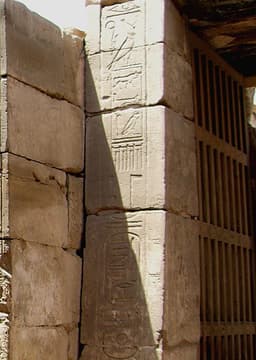
Takelot II
Emperor · Ancient
35.0Total
Basic Information
Born
232
-850
Died
274
-825
Era
Ancient
Ancient
Nationality
China
Third Intermediate Egypt
Occupation
Emperor
Emperor
Civilization
Eastern
Middle Eastern
Score Comparison
Military (10%)
14.0
25.9
Political (20%)
39.4
32.1
Influence (20%)
54.9
41.6
Legacy (20%)
39.2
34.2
Leadership (15%)
48.4
31.2
Strategy (15%)
60.0
39.6
TOTAL
44.1
35.0
Cao Fang — Complete Timeline
239 AD
Accession as Emperor of WeiPolitical Action◆ Major
Cao Fang ascended the throne of Cao Wei at age 7 after the death of his adoptive father Cao Rui. He was placed under the regency of Cao Shuang and Sima Yi, beginning a period of factional struggle that would define his reign.
AccessionThree KingdomsWei Dynasty
Impact: national
249 AD
Coup of Cao Shuang's FallPolitical Action
During Cao Fang's reign, Sima Yi staged a coup at the Gaoping Tombs, seizing power from regent Cao Shuang. Cao Shuang was executed, and the Sima clan gained effective control of Wei, reducing Cao Fang to a puppet ruler.
CoupThree KingdomsPower Shift
Impact: nationaldestructive
254 AD
Deposition by Sima ShiPolitical Action◆ Major
Cao Fang was deposed as emperor of Cao Wei by the regent Sima Shi, who accused him of plotting rebellion. Cao Fang was reduced to the rank of Prince of Qi and replaced by Cao Mao, marking a further consolidation of Sima clan power.
CoupThree KingdomsWei Dynasty
Impact: nationaldestructive
Takelot II — Complete Timeline
845 BC
Appointment of Osorkon as High Priest of AmunPolitical Action◆ Major
Takelot II appointed his son Osorkon (later Osorkon III) as High Priest of Amun at Thebes, hoping to assert control over the south. This move sparked resistance from local Theban factions, escalating into open conflict.
PriesthoodThebesAppointment
Impact: nationaldestructive
840 BC
Civil War between North and SouthWar
Takelot II's reign was marked by a prolonged civil war between his forces in the north (Tanis) and the Theban priesthood in the south. The conflict, recorded in the Chronicle of Prince Osorkon, resulted in widespread destruction and weakened the 22nd Dynasty.
Civil WarThebesTanis
Impact: nationaldestructive
Siege of ThebesWar◆ Major
During the civil war, Takelot II's forces besieged Thebes, attempting to crush the rebellion of the Theban priesthood. The siege lasted several months and resulted in the capture of the city, but the conflict continued for years.
SiegeThebesCivil War
Impact: regionaldestructive
This comparison has not been analyzed yet.
One-time AI generation (~1 minute). Scores and timeline are already available below.
Rankings
🥇
Cao FangLeader
Mil: 14.0Pol: 39.4Inf: 54.9
44.1
🥈
Takelot II
Mil: 25.9Pol: 32.1Inf: 41.6
35.0
+9.1 behind
How This Comparison Works
Algorithm
Each figure is scored on 6 dimensions (0—100 scale) based on structured historical data: Military (10%), Political (20%), Influence (20%), Legacy (20%), Leadership (15%), Strategy (15%). The weighted total produces the final ranking.
Data Sources
Scores are computed from structured sub-indicators in the database. Scale factors adjust for era (Ancient ×0.85, Modern ×1.0) and civilization size (Eastern ×1.05, Other ×0.80) to account for differences in population and military scale.
Maximum 3 Figures
Comparisons are limited to 2—3 figures to ensure readability and statistical meaningfulness.
Error Margins
±5 points per dimension — Sub-scores are derived from historical records with inherent uncertainty. Two figures within 5 points on a dimension should be considered roughly equivalent in that area.
Total Score Accuracy
±3 points overall — The weighted combination of 6 dimensions produces a total score with approximately ±3 points of uncertainty. Differences of less than 3 points are not statistically significant— the figures are effectively tied.
Known Limitations
- Historical records are incomplete and uneven across civilizations
- Figures from oral-tradition societies may be underrepresented
- Occupation labels can misclassify multi-role figures
- Scores measure capability and impact, not moral character
- Quantitative scoring is a comparison tool, not absolute truth
Capability Radar
Military (10%) — Battles & Warfare
Battles
35
15
Win Rate
37
10
Expansion
40
5
Political (20%) — Governance & Reform
Reform
0
10
Diplomacy
5
10
Economy
0
10
Influence (20%) — Cultural & Global Reach
Cultural
0
10
Global
0
5
Legacy (20%) — Historical Impact
Historical
5
15
Longevity
0
10
Leadership (15%) — Power & Stability
Tenure
10
30
Stability
0
5
Strategy (15%) — Tactics & Innovation
Strategy
40
10
Tactics
43
10
Reform
49
5
Similar Comparisons
Comments & Discussion
No comments yet. Be the first to share your thoughts!