Loading...
Camillo Benso Count of Cavour vs P. W. Botha
Camillo Benso Count of Cavour leads by 10.2 pts · 2 figures compared
…

Camillo Benso Count of Cavour
Politician · Modern
63.0Total
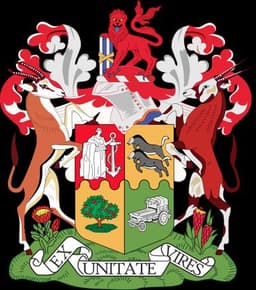
P. W. Botha
Politician · Modern
52.8Total
Basic Information
Born
1810
1916
Died
1861
2006
Era
Modern
Modern
Nationality
Italy
South Africa
Occupation
Politician
Politician
Civilization
Western
Other
Score Comparison
Military (10%)
14.9
50.0
Political (20%)
82.0
40.8
Influence (20%)
68.0
55.7
Legacy (20%)
65.0
49.2
Leadership (15%)
79.8
74.0
Strategy (15%)
39.6
43.9
TOTAL
63.0
52.8
Camillo Benso Count of Cavour — Complete Timeline
1852 AD
Appointed Prime Minister of Piedmont-SardiniaPolitical Action◆ Major
Cavour was appointed Prime Minister of the Kingdom of Piedmont-Sardinia by King Victor Emmanuel II. He implemented economic reforms, modernized the army, and pursued a policy of diplomatic maneuvering to unify Italy under Piedmontese leadership.
Italian UnificationPoliticsPiedmont
Impact: nationalconstructive
1855 AD
Crimean War ParticipationWar◆ Major
Cavour sent Piedmontese troops to fight alongside Britain and France in the Crimean War. This participation gained Piedmont-Sardinia a seat at the Congress of Paris, where Cavour raised the Italian question, gaining international sympathy for unification.
DiplomacyCrimean WarItalian Unification
Impact: regional
1858 AD
Plombières Agreement with Napoleon IIIPolitical Action◆ Major
Cavour secretly met with French Emperor Napoleon III at Plombi
DiplomacyAllianceItalian Unification
Impact: regional
1859 AD
Second Italian War of IndependenceWar
Cavour provoked Austria into declaring war, leading to the Second Italian War of Independence. Franco-Piedmontese forces won key battles at Magenta and Solferino, resulting in the annexation of Lombardy and the unification of central Italian states under Piedmont.
WarItalian UnificationAustria
Impact: regionalconstructive
1861 AD
Proclamation of the Kingdom of ItalyPolitical Action
Cavour oversaw the proclamation of the Kingdom of Italy under King Victor Emmanuel II, with the first Italian parliament meeting in Turin. He died shortly after, but his diplomatic and political efforts had largely achieved Italian unification.
Italian UnificationKingdom of ItalyPolitics
Impact: globalconstructive
P. W. Botha — Complete Timeline
1978 AD
Appointment as Prime MinisterPolitical Action◆ Major
P.W. Botha became Prime Minister of South Africa, succeeding John Vorster. He represented the hardline wing of the National Party and pursued a policy of 'total strategy' to counter what he saw as a 'total onslaught' against apartheid by communist forces.
Prime MinisterTotal StrategyApartheid
Impact: nationaldestructive
1984 AD
Introduction of the Tricameral ParliamentReform◆ Major
Botha introduced a new constitution creating a Tricameral Parliament, giving limited representation to Coloureds and Indians but excluding the black majority. This reform was rejected by anti-apartheid movements and sparked widespread protests and violence.
Constitutional ReformTricameral ParliamentExclusion
Impact: nationaldestructive
1985 AD
State of Emergency and CrackdownPolitical Action◆ Major
Botha declared a State of Emergency in response to growing anti-apartheid unrest, giving security forces sweeping powers. Thousands were detained without trial, and the military was deployed to townships. The crackdown intensified international sanctions and isolation.
State of EmergencyRepressionSanctions
Impact: nationaldestructive
Rubicon SpeechPolitical Action◆ Major
In a highly anticipated speech, Botha refused to implement major reforms, including the release of Nelson Mandela. The speech dashed hopes for peaceful change, led to a collapse in the rand, and accelerated international sanctions against South Africa.
Rubicon SpeechReform RefusalSanctions
Impact: globaldestructive
1989 AD
Resignation as PresidentPolitical Action◆ Major
Botha resigned as State President after suffering a stroke and losing a power struggle within the National Party. He was succeeded by F.W. de Klerk, who reversed Botha's policies and began negotiations to end apartheid. Botha later refused to testify before the Truth and Reconciliation Commission.
ResignationDe KlerkEnd of Era
Impact: national
Expert Analysis
Origins
Camillo Benso, Count of Cavour, was born in 1810 in Turin, Piedmont, into an aristocratic family. His father was a marquis and his mother a countess. Educated at the Military Academy of Turin, he later traveled widely, absorbing liberal ideas from France and England. He entered politics in 1848, serving in the Piedmontese parliament.
Pieter Willem Botha was born in 1916 in Paul Roux, Orange Free State, South Africa. His father was a farmer and a Boer War veteran. Botha studied law at the University of the Orange Free State but left early to pursue politics. He joined the National Party in the 1930s, aligning with Afrikaner nationalism.
Rise to Power
Cavour rose through the Piedmontese government, becoming Minister of Agriculture and Commerce in 1850, and Minister of Finance in 1851. He became Prime Minister in 1852. His key turning point was the Crimean War (1853-1856): by sending Piedmontese troops to aid Britain and France, he secured a seat at the Congress of Paris, raising Piedmont's international stature. In 1858, he secretly negotiated the Plombières Agreement with Napoleon III, securing French military support against Austria. This led to the Second Italian War of Independence (1859), where victories at Magenta and Solferino forced Austria to cede Lombardy.
Botha rose within the National Party, serving as Minister of Defence from 1966 to 1978. He modernized the South African military and expanded its role in enforcing apartheid. He became Prime Minister in 1978 after John Vorster's resignation. Botha represented the hardline "securocrat" faction, prioritizing security over reform. His rise was marked by increasing repression and the militarization of state policy.
Leadership & Governance
Cavour's leadership was pragmatic and diplomatic. He modernized Piedmont's economy, building railways, reforming tariffs, and promoting free trade. He skillfully used alliances (France, Britain) to isolate Austria. His governance included press freedom and parliamentary debate, though limited to a property-owning elite. He orchestrated Garibaldi's expedition to Sicily while maintaining royal control, ensuring unification under the Piedmontese monarchy. Cavour's political score of 82.0 reflects his adept maneuvering.
Botha's leadership was authoritarian. He introduced the Tricameral Parliament in 1984, giving limited representation to Coloureds and Indians but excluding the black majority, which sparked widespread protests. He declared a State of Emergency in 1985, deploying the military to townships. His "Total Strategy" sought to co-opt moderate non-whites while crushing dissent. Botha's political score of 40.8 indicates his failure to achieve lasting political stability. His leadership score of 74.0 reflects strong control but flawed strategy.
Triumph & Tragedy
Cavour's greatest triumph was the Proclamation of the Kingdom of Italy in March 1861, uniting most Italian states under King Victor Emmanuel II. He died shortly after, aged 51, but his vision was realized. His tragedy was that he did not live to see the completion of unification (Venetia and Rome were added later). Some criticized his realpolitik for sacrificing democratic ideals and accepting a monarchist state.
Botha's triumph was maintaining white minority rule for a decade through military and political repression. He also modernized the South African economy in some respects. His tragedy was the Rubicon Speech in 1985, where he refused to release Nelson Mandela or dismantle apartheid, leading to international sanctions and internal insurrection. He resigned in 1989 after a stroke, his policies discredited.
Character & Destiny
Cavour was pragmatic, calculating, and diplomatic. He believed in gradual reform and strategic compromise. His character allowed him to navigate between republicans (Mazzini) and monarchists, and between great powers. He died before seeing the full consequences of his actions, but his destiny was to be the architect of a unified Italy.
Botha was stubborn, secretive, and confrontational. He saw himself as a defender of Western civilization against communism. His character led him to double down on apartheid rather than reform. His destiny was to be the last hardline apartheid leader, handing over to F.W. de Klerk, who negotiated the end of apartheid.
Legacy
Cavour is remembered as the "Brain of Italian Unification." His methods of diplomacy and realpolitik set a precedent for nation-building. Italy's political structure—a centralized monarchy—reflected his design. His economic reforms modernized northern Italy, contributing to its industrial growth. His legacy score of 65.0 is moderate but enduring.
Botha's legacy is overwhelmingly negative: he entrenched apartheid, caused immense suffering, and left South Africa isolated. The Tricameral Parliament was a failed attempt at reform. His security state tactics were discredited. However, he is sometimes credited with recognizing that apartheid could not survive forever, though he refused to change. His legacy score of 49.2 reflects his destructive impact.
Conclusion
Cavour had a greater impact on history. His total score of 63.0 outranks Botha's 52.8 by 10.2 points. Cavour's political skill (82.0 vs. 40.8) and strategy (39.6 vs. 43.9) were more effective in achieving long-term goals. While Botha's leadership (74.0) was strong, it was misdirected. Cavour unified a nation that became a major European power; Botha presided over a system that collapsed under its own weight. Cavour's legacy is positive and lasting; Botha's is a cautionary tale. Thus, Cavour stands as the more significant historical figure.
Rankings
🥇
Camillo Benso Count of CavourLeader
Mil: 14.9Pol: 82.0Inf: 68.0
63.0
🥈
P. W. Botha
Mil: 50.0Pol: 40.8Inf: 55.7
52.8
+10.2 behind
How This Comparison Works
Algorithm
Each figure is scored on 6 dimensions (0—100 scale) based on structured historical data: Military (10%), Political (20%), Influence (20%), Legacy (20%), Leadership (15%), Strategy (15%). The weighted total produces the final ranking.
Data Sources
Scores are computed from structured sub-indicators in the database. Scale factors adjust for era (Ancient ×0.85, Modern ×1.0) and civilization size (Eastern ×1.05, Other ×0.80) to account for differences in population and military scale.
Maximum 3 Figures
Comparisons are limited to 2—3 figures to ensure readability and statistical meaningfulness.
Error Margins
±5 points per dimension — Sub-scores are derived from historical records with inherent uncertainty. Two figures within 5 points on a dimension should be considered roughly equivalent in that area.
Total Score Accuracy
±3 points overall — The weighted combination of 6 dimensions produces a total score with approximately ±3 points of uncertainty. Differences of less than 3 points are not statistically significant— the figures are effectively tied.
Known Limitations
- Historical records are incomplete and uneven across civilizations
- Figures from oral-tradition societies may be underrepresented
- Occupation labels can misclassify multi-role figures
- Scores measure capability and impact, not moral character
- Quantitative scoring is a comparison tool, not absolute truth
Capability Radar
Military (10%) — Battles & Warfare
Battles
5
24
Win Rate
5
23
Expansion
40
30
Political (20%) — Governance & Reform
Reform
85
10
Diplomacy
90
30
Economy
80
40
Influence (20%) — Cultural & Global Reach
Cultural
60
20
Global
70
45
Legacy (20%) — Historical Impact
Historical
80
55
Longevity
75
30
Leadership (15%) — Power & Stability
Tenure
60
65
Stability
70
20
Strategy (15%) — Tactics & Innovation
Strategy
35
31
Tactics
5
32
Reform
30
37
Similar Comparisons
Comments & Discussion
No comments yet. Be the first to share your thoughts!