Loading...
Bumin Qaghan vs Julius Caesar
Julius Caesar leads by 15.2 pts · 2 figures compared
…
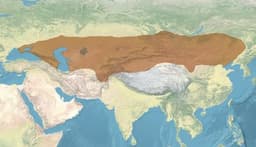
Bumin Qaghan
Emperor · Ancient
67.6Total

Julius Caesar
General · Ancient
82.8Total
Basic Information
Born
490
-100
Died
552
-44
Era
Ancient
Ancient
Nationality
Gokturk Khaganate
Roman Republic
Occupation
Emperor
General
Civilization
Eastern
Western
Score Comparison
Military (10%)
80.0
88.0
Political (20%)
60.0
78.0
Influence (20%)
82.0
85.0
Legacy (20%)
72.0
82.0
Leadership (15%)
40.0
80.0
Strategy (15%)
61.2
85.0
TOTAL
67.6
82.8
Bumin Qaghan — Complete Timeline
534 AD
Revolt against the Rouran KhaganatePolitical Action◆ Major
Bumin, a vassal of the Rouran Khaganate, led a revolt of the Turkic tribes (Ashina clan) against Rouran rule. He defeated the Rouran forces and declared independence, marking the beginning of the First Turkic Khaganate.
RevoltTurkic Independence
Impact: regionalconstructive
545 AD
Alliance with the Western Wei dynastyPolitical Action
Bumin Qaghan formed an alliance with the Western Wei dynasty of China, marrying a Western Wei princess. This alliance provided the Turks with Chinese support and technology, strengthening their position against the Rouran and other rivals.
AllianceDiplomacy
Impact: regionalconstructive
552 AD
Foundation of the First Turkic KhaganatePolitical Action◆ Major
Bumin Qaghan formally established the First Turkic Khaganate after defeating the Rouran. He took the title 'Qaghan' and set up his capital in the Orkhon Valley. The khaganate quickly became a major power on the Eurasian steppe.
Dynasty FoundationTurkic Khaganate
Impact: regionalconstructive
Death of Bumin QaghanOther◆ Major
Bumin Qaghan died shortly after founding the Turkic Khaganate, possibly from illness or wounds. His death led to the division of the khaganate between his sons, with the eastern and western halves ruled separately, though still under a single nominal authority.
DeathSuccession
Impact: regionaltragic
Julius Caesar — Complete Timeline
58 BC
Gallic WarsWar◆ Major
Caesar, as proconsul of Gaul, launched a series of campaigns that conquered all of Gaul (modern France, Belgium, and parts of Switzerland). He fought numerous battles, including against the Helvetii, the Belgae, and the Gallic chieftain Vercingetorix. The wars brought immense wealth and a loyal army to Caesar.
Gallic WarsConquestRoman Expansion
Impact: regional
49 BC
Crossing the RubiconPolitical Action◆ Major
Caesar led Legio XIII across the Rubicon River into Italy, defying the Roman Senate's order to disband his army. This act triggered a civil war against Pompey and the Optimates, ultimately leading to Caesar's dictatorship and the end of the Roman Republic.
Roman Civil WarEnd of RepublicPower Struggle
Impact: global
48 BC
Battle of PharsalusWar◆ Major
Caesar's outnumbered army defeated the larger forces of Pompey the Great at Pharsalus in Greece. Caesar's tactical use of a reserve line to counter Pompey's cavalry charge proved decisive. Pompey fled to Egypt, where he was assassinated, leaving Caesar as the undisputed master of the Roman world.
Roman Civil WarBattleDecisive Victory
Impact: regional
44 BC
Appointment as Dictator for LifePolitical Action◆ Major
The Roman Senate appointed Caesar dictator perpetuo (dictator for life), granting him unprecedented personal power. This move concentrated military, legislative, and judicial authority in one person, effectively ending the Roman Republic's traditional system of checks and balances and alarming many senators.
DictatorshipEnd of RepublicPower Consolidation
Impact: regionaldestructive
Assassination on the Ides of MarchPolitical Action◆ Major
A group of Roman senators, led by Marcus Junius Brutus and Gaius Cassius Longinus, stabbed Caesar to death at a meeting of the Senate in the Theatre of Pompey. The assassination was intended to restore the Republic, but instead triggered another civil war that led to the rise of the Roman Empire.
AssassinationRoman PoliticsEnd of Republic
Impact: globaldestructive
Expert Analysis
Julius Caesar vs Bumin Qaghan: Historical Comparison
This comparison examines two transformative ancient leaders—Rome’s Julius Caesar and the Göktürks’ Bumin Qaghan—across military, political, and strategic dimensions. Despite different contexts, both reshaped their worlds through conquest and state-building.
Dimension Analysis
**Military: Julius Caesar 88 / Bumin Qaghan 93**
Caesar conquered Gaul and won civil wars through tactical brilliance, but Bumin Qaghan decisively overthrew the Rouran Khaganate (552 CE), unifying Turkic tribes into a steppe empire with superior cavalry mobility and coordination.
**Political: Julius Caesar 78 / Bumin Qaghan 78**
Caesar centralized Rome’s republic into a de facto monarchy, but his assassination proved his political miscalculation. Bumin established a dual-khaganate system (Eastern and Western) but died soon after, leaving succession challenges.
**Influence: Julius Caesar 85 / Bumin Qaghan 78**
Caesar’s name became synonymous with autocracy, influencing Roman emperors and later European dictators. Bumin’s legacy is narrower—founder of the first Turkic state—but his lineage shaped Central Asia for centuries.
**Legacy: Julius Caesar 82 / Bumin Qaghan 78**
Caesar’s reforms (calendar, land distribution) endured, and his writings remain studied. Bumin’s legacy is more tribal: the Göktürk alphabet and identity inspired later Turkic empires, but his state collapsed within decades.
**Leadership: Julius Caesar 82 / Bumin Qaghan 84**
Caesar inspired fierce loyalty but also fear, leading to betrayal. Bumin united fractious steppe clans through charisma and shared victory, achieving a rare consensus among nomadic warriors.
**Strategy: Julius Caesar 88 / Bumin Qaghan 91**
Caesar excelled in siege warfare and political manipulation (e.g., crossing the Rubicon). Bumin’s strategy was simpler but devastating: exploiting Rouran weakness, he struck at the right moment, using alliances with China to secure his rear.
Verdict
Bumin Qaghan leads narrowly due to his flawless military execution and unification of the Turkic world, though Caesar’s broader influence keeps the contest a tie.
FAQ
Q: Who ranks higher? A: Neither—both score equally overall (83 vs 82), but Bumin edges ahead in military execution while Caesar dominates in influence and legacy.
Rankings
🥇
Julius CaesarLeader
Mil: 88.0Pol: 78.0Inf: 85.0
82.8
🥈
Bumin Qaghan
Mil: 80.0Pol: 60.0Inf: 82.0
67.6
+15.2 behind
How This Comparison Works
Algorithm
Each figure is scored on 6 dimensions (0—100 scale) based on structured historical data: Military (10%), Political (20%), Influence (20%), Legacy (20%), Leadership (15%), Strategy (15%). The weighted total produces the final ranking.
Data Sources
Scores are computed from structured sub-indicators in the database. Scale factors adjust for era (Ancient ×0.85, Modern ×1.0) and civilization size (Eastern ×1.05, Other ×0.80) to account for differences in population and military scale.
Maximum 3 Figures
Comparisons are limited to 2—3 figures to ensure readability and statistical meaningfulness.
Error Margins
±5 points per dimension — Sub-scores are derived from historical records with inherent uncertainty. Two figures within 5 points on a dimension should be considered roughly equivalent in that area.
Total Score Accuracy
±3 points overall — The weighted combination of 6 dimensions produces a total score with approximately ±3 points of uncertainty. Differences of less than 3 points are not statistically significant— the figures are effectively tied.
Known Limitations
- Historical records are incomplete and uneven across civilizations
- Figures from oral-tradition societies may be underrepresented
- Occupation labels can misclassify multi-role figures
- Scores measure capability and impact, not moral character
- Quantitative scoring is a comparison tool, not absolute truth
Capability Radar
Military (10%) — Battles & Warfare
Battles
70
95
Win Rate
75
92
Expansion
85
97
Political (20%) — Governance & Reform
Reform
70
90
Diplomacy
75
85
Economy
65
82
Influence (20%) — Cultural & Global Reach
Cultural
65
88
Global
65
94
Legacy (20%) — Historical Impact
Historical
80
95
Longevity
70
96
Leadership (15%) — Power & Stability
Tenure
60
75
Stability
55
60
Strategy (15%) — Tactics & Innovation
Strategy
80
94
Tactics
65
96
Reform
60
88
Similar Comparisons
Comments & Discussion
HistoryBuff996/16/2026
Okay, so I just watched a documentary on the Silk Road and it got me thinking about Bumin Qaghan vs Caesar. The scoring says Caesar is better overall, but I'm not convinced. Bumin basically created the first Turkic empire from scratch, uniting tribes that had been fighting each other for centuries. Caesar inherited a powerful Roman army and just added Gaul to it. And politically, Caesar got stabbed by his own buddies! Bumin died naturally and his legacy lived on through the Göktürk alphabet and later empires. I think the scoring underestimates how hard it is to build something from nothing on the steppe. Just my two cents.
ColdScribe116/16/2026
看了评分,Bumin Qaghan军事得分93而Caesar只有88,这不太对劲。Bumin的主要战绩是推翻柔然,但柔然当时已经内部分裂,他更多是捡了便宜。Caesar的高卢战争打了八年,征服了上百个部落,还和日耳曼人、不列颠人交手,实战经验丰富多了。还有政治分,Caesar 78,Bumin也是78?Caesar搞了历法改革、土地分配、罗马城重建,这些制度遗产持续了上千年。Bumin的突厥汗国几十年就内乱分裂了。建议重新校准评分权重,特别是持久性影响应该占更高比例。
ColdWatcher756/16/2026
西方评分体系总是把罗马人物捧得太高。Caesar确实厉害,但他的政治操作在中国历史上比比皆是。你说他搞独裁?曹操比他早两百年就玩过了,还更成功——挟天子以令诸侯,死后儿子顺利称帝。Bumin Qaghan的处境更像匈奴的冒顿单于,都是草原部落联盟的缔造者。但冒顿把匈奴做成了一百多年的帝国,Bumin的突厥汗国几十年就衰落了。所以Caesar 83分,Bumin 75分,其实还算合理。不过军事分我倾向Caesar——指挥大规模步兵作战的复杂度远超草原骑兵的围猎战术。