Loading...
This comparison has not been analyzed yet.
One-time AI generation (~1 minute). Scores and timeline are already available below.
Boutros Boutros-Ghali vs Inukai Tsuyoshi
Boutros Boutros-Ghali leads by 7.0 pts · 2 figures compared
…
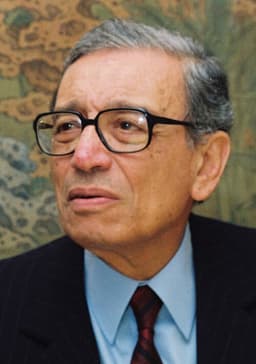
Boutros Boutros-Ghali
Politician · Modern
53.0Total
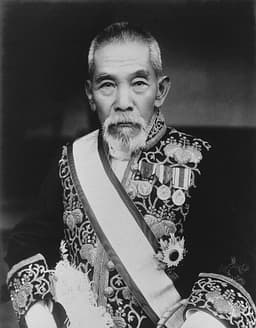
Inukai Tsuyoshi
Politician · Modern
46.0Total
Basic Information
Born
1922
1855
Died
—
1932
Era
Modern
Modern
Nationality
Egypt
Japan
Occupation
Politician
Politician
Civilization
Middle Eastern
Eastern
Score Comparison
Military (10%)
50.0
16.1
Political (20%)
45.0
48.0
Influence (20%)
55.0
51.8
Legacy (20%)
49.2
44.2
Leadership (15%)
72.0
64.0
Strategy (15%)
44.4
35.7
TOTAL
53.0
46.0
Boutros Boutros-Ghali — Complete Timeline
1992 AD
Elected Secretary-General of the United NationsPolitical Action◆ Major
Boutros Boutros-Ghali became the sixth Secretary-General of the United Nations, the first from Africa. His election came during a period of post-Cold War transition, and he focused on peacekeeping and conflict resolution.
UN Secretary-GeneralPeacekeepingPost-Cold War
Impact: globalconstructive
Published An Agenda for PeacePolitical Action◆ Major
Boutros-Ghali released An Agenda for Peace, a landmark report outlining preventive diplomacy, peacemaking, and peacekeeping strategies. The report influenced UN operations in conflicts like Somalia, Bosnia, and Rwanda.
PeacekeepingUN ReformDiplomacy
Impact: globalconstructive
1994 AD
Oversaw UN peacekeeping in the Rwandan GenocideWar◆ Major
During the Rwandan Genocide, Boutros-Ghali's UN peacekeeping mission failed to prevent the killing of an estimated 800,000 Tutsis and moderate Hutus. The UN's inaction drew widespread criticism and led to calls for reform.
RwandaGenocideUN Failure
Impact: globaltragic
1996 AD
Vetoed by the United States for a second termPolitical Action◆ Major
The United States vetoed Boutros-Ghali's bid for a second term as UN Secretary-General, citing disagreements over UN reform and peacekeeping operations. He was succeeded by Kofi Annan.
UN PoliticsUS VetoLeadership
Impact: globaldestructive
1997 AD
Served as Secretary-General of the FrancophoniePolitical Action
After leaving the UN, Boutros-Ghali became the first Secretary-General of the International Organisation of the Francophonie, promoting French language and cultural cooperation among member states.
FrancophonieCultural DiplomacyPost-UN
Impact: regionalconstructive
Inukai Tsuyoshi — Complete Timeline
1931 AD
Appointed Prime MinisterPolitical Action◆ Major
Inukai Tsuyoshi became Prime Minister of Japan during a period of rising militarism and economic crisis. He sought to restrain the military's influence and resolve the Manchurian crisis diplomatically.
Prime MinisterJapan1930s
Impact: national
1932 AD
Assassinated in the May 15 IncidentPolitical Action
Inukai Tsuyoshi was assassinated by a group of young naval officers and army cadets in the May 15 Incident. His murder marked the end of party cabinets in pre-war Japan and accelerated the shift toward military-dominated government.
AssassinationMay 15 IncidentMilitarism
Impact: nationaltragic
This comparison has not been analyzed yet.
One-time AI generation (~1 minute). Scores and timeline are already available below.
Rankings
🥇
Boutros Boutros-GhaliLeader
Mil: 50.0Pol: 45.0Inf: 55.0
53.0
🥈
Inukai Tsuyoshi
Mil: 16.1Pol: 48.0Inf: 51.8
46.0
+7.0 behind
How This Comparison Works
Algorithm
Each figure is scored on 6 dimensions (0—100 scale) based on structured historical data: Military (10%), Political (20%), Influence (20%), Legacy (20%), Leadership (15%), Strategy (15%). The weighted total produces the final ranking.
Data Sources
Scores are computed from structured sub-indicators in the database. Scale factors adjust for era (Ancient ×0.85, Modern ×1.0) and civilization size (Eastern ×1.05, Other ×0.80) to account for differences in population and military scale.
Maximum 3 Figures
Comparisons are limited to 2—3 figures to ensure readability and statistical meaningfulness.
Error Margins
±5 points per dimension — Sub-scores are derived from historical records with inherent uncertainty. Two figures within 5 points on a dimension should be considered roughly equivalent in that area.
Total Score Accuracy
±3 points overall — The weighted combination of 6 dimensions produces a total score with approximately ±3 points of uncertainty. Differences of less than 3 points are not statistically significant— the figures are effectively tied.
Known Limitations
- Historical records are incomplete and uneven across civilizations
- Figures from oral-tradition societies may be underrepresented
- Occupation labels can misclassify multi-role figures
- Scores measure capability and impact, not moral character
- Quantitative scoring is a comparison tool, not absolute truth
Capability Radar
Military (10%) — Battles & Warfare
Battles
24
15
Win Rate
24
16
Expansion
28
18
Political (20%) — Governance & Reform
Reform
55
40
Diplomacy
85
45
Economy
40
35
Influence (20%) — Cultural & Global Reach
Cultural
40
30
Global
65
20
Legacy (20%) — Historical Impact
Historical
55
40
Longevity
40
25
Leadership (15%) — Power & Stability
Tenure
60
55
Stability
50
20
Strategy (15%) — Tactics & Innovation
Strategy
31
21
Tactics
32
26
Reform
34
30
Similar Comparisons
Comments & Discussion
No comments yet. Be the first to share your thoughts!