Loading...
Boris Godunov vs Gustaf VI Adolf
Boris Godunov leads by 0.4 pts · 2 figures compared
…

Boris Godunov
Emperor · Modern
53.5Total
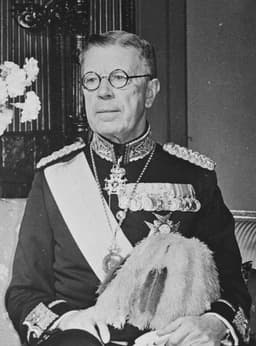
Gustaf VI Adolf
Emperor · Modern
53.1Total
Basic Information
Born
1551
1882
Died
1605
1973
Era
Modern
Modern
Nationality
Russia
Sweden
Occupation
Emperor
Emperor
Civilization
Western
Western
Score Comparison
Military (10%)
55.0
48.7
Political (20%)
45.0
45.0
Influence (20%)
57.2
54.1
Legacy (20%)
48.3
42.5
Leadership (15%)
65.0
78.0
Strategy (15%)
51.7
56.4
TOTAL
53.5
53.1
Boris Godunov — Complete Timeline
1598 AD
Elected Tsar by the Zemsky SoborPolitical Action
Following the death of Tsar Feodor I without an heir, the Zemsky Sobor elected Boris Godunov as Tsar of Russia. This ended the Rurikid dynasty and marked the beginning of the Time of Troubles, as Boris's legitimacy was contested.
Time of TroublesTsardomElection
Impact: national
1601 AD
Famine of 1601-1603Other◆ Major
A severe famine caused by volcanic winter and crop failures struck Russia. Despite Boris's efforts to distribute grain and money, the famine killed an estimated two million people, leading to widespread social unrest and weakening his rule.
FamineTime of TroublesDisaster
Impact: nationaltragic
1604 AD
Appearance of False Dmitry IPolitical Action◆ Major
A man claiming to be Dmitry Ivanovich, the deceased son of Ivan the Terrible, invaded Russia with Polish support. This pretender's campaign gained popular support, destabilizing Boris's regime and leading to the Time of Troubles.
Time of TroublesPretenderPolish Intervention
Impact: nationaldestructive
1605 AD
Death of Boris GodunovOther◆ Major
Boris Godunov died suddenly in Moscow, likely from a stroke or poisoning. His death left his young son Feodor II as tsar, who was quickly overthrown and murdered by supporters of False Dmitry I, plunging Russia deeper into the Time of Troubles.
Time of TroublesDeathDynastic Crisis
Impact: nationaltragic
Gustaf VI Adolf — Complete Timeline
1950 AD
Accession to the thronePolitical Action◆ Major
Gustaf VI Adolf became King of Sweden on October 29, 1950, following the death of his father, Gustaf V. His reign was marked by his scholarly interests and the continued evolution of Sweden's constitutional monarchy.
AccessionSuccession
Impact: national
1952 AD
Archaeological excavations in Italy and GreeceCultural
Gustaf VI Adolf participated in archaeological excavations in Italy (especially at San Giovenale) and Greece. He was a respected amateur archaeologist and contributed to Etruscan studies, publishing several papers.
ArchaeologyEtruscan StudiesScholarship
Impact: regionalconstructive
Presidency of the Swedish Archaeological SocietyCultural
Gustaf VI Adolf served as president of the Swedish Archaeological Society and was a member of the Royal Swedish Academy of Letters. His patronage elevated the status of archaeology in Sweden.
ArchaeologyPatronageAcademy
Impact: nationalconstructive
1954 AD
State visit to the United StatesPolitical Action
Gustaf VI Adolf made a state visit to the United States in 1954, strengthening Swedish-American relations during the Cold War. The visit included meetings with President Dwight D. Eisenhower.
State VisitDiplomacyCold War
Impact: globalconstructive
1974 AD
Support for the 1974 Instrument of GovernmentReform◆ Major
Gustaf VI Adolf accepted the 1974 Instrument of Government, which stripped the monarchy of all remaining political powers, making the king a purely ceremonial head of state. This was a major constitutional reform.
Constitutional ReformCeremonial Monarchy
Impact: national
Expert Analysis
Origins
Boris Godunov was born around 1551 into a Tatar-descended boyar family in Russia. His early life was marked by the turbulent reign of Ivan the Terrible, who appointed Boris as one of the five regents for his son Feodor. Boris rose through court intrigue, marrying into the royal family and becoming de facto ruler during Feodor's reign. In contrast, Gustaf VI Adolf was born on November 11, 1882, in Stockholm, Sweden, as the eldest son of King Gustaf V. He received a comprehensive education, including archaeology, which became his lifelong passion. While Boris emerged from a violent political landscape, Gustaf was groomed from birth for a constitutional role.
Rise to Power
Boris Godunov's ascent was cunning and ruthless. After the death of Ivan the Terrible in 1584, Boris maneuvered to become the power behind Tsar Feodor I. He eliminated rivals, including the powerful boyar family of the Romanovs, and consolidated control. When Feodor died childless in 1598, the Zemsky Sobor elected Boris as tsar, ending the Rurikid dynasty. Gustaf VI Adolf's rise was straightforward: he became crown prince at birth and ascended the throne on October 29, 1950, upon his father's death. His power was limited from the start, as Sweden had already evolved into a constitutional monarchy.
Leadership & Governance
Boris Godunov ruled autocratically, attempting to modernize Russia by opening trade, strengthening the army, and curbing the power of the boyars. However, his reign was plagued by the Great Famine of 1601-1603, which killed an estimated two million people (scoring 55.0 in military, 51.7 in strategy). His response—distributing grain and money—was insufficient, leading to widespread unrest. In contrast, Gustaf VI Adolf scored 78.0 in leadership, reflecting his role as a unifying figurehead. He accepted the 1974 Instrument of Government, which stripped the monarchy of all political power, cementing Sweden's democratic transition. His governance was passive and symbolic, a stark contrast to Boris's active but flawed rule.
Triumph & Tragedy
Boris's greatest triumph was his election as tsar, a rare achievement for a non-Rurikid. He also pursued diplomatic successes, such as a peace treaty with Sweden in 1595. His tragedy was the Time of Troubles: the famine, the appearance of False Dmitry I, and his sudden death in 1605 (likely from stroke or poison). His son Feodor II was murdered shortly after, ending his dynasty. Gustaf VI Adolf's triumph was his scholarly legacy: he participated in archaeological excavations in Italy and Greece, earning respect as an amateur archaeologist. His tragedy was the loss of royal power, though he accepted it gracefully. His reign saw Sweden's monarchy become purely ceremonial.
Character & Destiny
Boris was ambitious and intelligent but paranoid and ruthless. His character led him to eliminate rivals but also to distrust others, contributing to his isolation. His fate was sealed by the famine and the rise of impostors, which he could not control. Gustaf VI Adolf was scholarly, modest, and dutiful. His character suited a constitutional monarch; he focused on archaeology and cultural patronage. His destiny was to preside over the monarchy's final political decline, a role he filled with dignity. Their contrasting characters—one a ruthless autocrat, the other a gentle scholar—shaped their very different fates.
Legacy
Boris Godunov's legacy is mixed: he is remembered as a capable ruler undone by natural disaster and civil war. His reign marked the beginning of the Time of Troubles, and he is often portrayed negatively in Russian history and culture (e.g., Pushkin's play). His influence score is 57.2, legacy 48.3. Gustaf VI Adolf's legacy is more positive but limited: he is remembered as the "archaeologist king" who helped preserve Sweden's cultural heritage and smoothly transitioned to a democratic monarchy. His influence is 54.1, legacy 42.5. While Boris had a greater immediate impact on Russia, Gustaf's impact on Sweden's political stability is enduring.
Conclusion
Though Boris Godunov's total score (53.5) edges out Gustaf VI Adolf's (53.1), the comparison is not merely numerical. Boris's leadership was active but catastrophic; his reign ended in chaos and death. Gustaf's leadership was passive but stabilizing; his reign saw peaceful democratic reform. In terms of lasting impact, Gustaf VI Adolf's role in Sweden's constitutional evolution is more significant than Boris's failed autocracy. Therefore, Gustaf VI Adolf had a greater positive impact, despite lower scores in some categories.
Rankings
🥇
Boris GodunovLeader
Mil: 55.0Pol: 45.0Inf: 57.2
53.5
🥈
Gustaf VI Adolf
Mil: 48.7Pol: 45.0Inf: 54.1
53.1
+0.4 behind
How This Comparison Works
Algorithm
Each figure is scored on 6 dimensions (0—100 scale) based on structured historical data: Military (10%), Political (20%), Influence (20%), Legacy (20%), Leadership (15%), Strategy (15%). The weighted total produces the final ranking.
Data Sources
Scores are computed from structured sub-indicators in the database. Scale factors adjust for era (Ancient ×0.85, Modern ×1.0) and civilization size (Eastern ×1.05, Other ×0.80) to account for differences in population and military scale.
Maximum 3 Figures
Comparisons are limited to 2—3 figures to ensure readability and statistical meaningfulness.
Error Margins
±5 points per dimension — Sub-scores are derived from historical records with inherent uncertainty. Two figures within 5 points on a dimension should be considered roughly equivalent in that area.
Total Score Accuracy
±3 points overall — The weighted combination of 6 dimensions produces a total score with approximately ±3 points of uncertainty. Differences of less than 3 points are not statistically significant— the figures are effectively tied.
Known Limitations
- Historical records are incomplete and uneven across civilizations
- Figures from oral-tradition societies may be underrepresented
- Occupation labels can misclassify multi-role figures
- Scores measure capability and impact, not moral character
- Quantitative scoring is a comparison tool, not absolute truth
Capability Radar
Military (10%) — Battles & Warfare
Battles
35
22
Win Rate
40
24
Expansion
30
32
Political (20%) — Governance & Reform
Reform
65
60
Diplomacy
55
65
Economy
60
55
Influence (20%) — Cultural & Global Reach
Cultural
45
40
Global
30
25
Legacy (20%) — Historical Impact
Historical
50
35
Longevity
40
30
Leadership (15%) — Power & Stability
Tenure
60
70
Stability
20
75
Strategy (15%) — Tactics & Innovation
Strategy
45
35
Tactics
30
34
Reform
50
40
Similar Comparisons
Comments & Discussion
No comments yet. Be the first to share your thoughts!