Loading...
Bob Loughman vs Salva Kiir
Salva Kiir leads by 0.1 pts · 2 figures compared
…

Bob Loughman
Politician · Modern
45.1Total
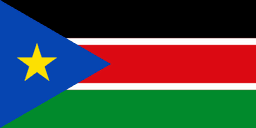
Salva Kiir
Politician · Modern
45.2Total
Basic Information
Born
1961
1951
Died
—
—
Era
Modern
Modern
Nationality
Vanuatu
South Sudan
Occupation
Politician
Politician
Civilization
Other
Other
Score Comparison
Military (10%)
22.6
29.8
Political (20%)
45.1
29.3
Influence (20%)
49.4
51.0
Legacy (20%)
38.3
41.7
Leadership (15%)
64.0
62.2
Strategy (15%)
45.8
52.8
TOTAL
45.1
45.2
Bob Loughman — Complete Timeline
2020 AD
Elected Prime Minister of VanuatuPolitical Action◆ Major
Bob Loughman was elected Prime Minister after the 2020 general election. His tenure was dominated by the COVID-19 pandemic, during which Vanuatu maintained strict border controls.
Prime MinisterCOVID-19
Impact: national
Managed COVID-19 ResponsePolitical Action◆ Major
Loughman's government implemented strict border closures and quarantine measures to prevent the spread of COVID-19. Vanuatu remained one of the few countries with no community transmission for an extended period.
Public HealthPandemic Response
Impact: nationalconstructive
Salva Kiir — Complete Timeline
2005 AD
Succession as SPLM leaderPolitical Action◆ Major
Following the death of John Garang in a helicopter crash, Salva Kiir succeeded him as leader of the Sudan People's Liberation Movement (SPLM) and as President of Southern Sudan. Kiir inherited the task of implementing the Comprehensive Peace Agreement (CPA).
SuccessionSPLMSouthern Sudan
Impact: regional
2011 AD
South Sudanese independence referendumPolitical Action◆ Major
Kiir oversaw the January 2011 referendum on self-determination for South Sudan, as stipulated by the CPA. The vote resulted in 98.83% support for independence. South Sudan formally declared independence on July 9, 2011, with Kiir becoming its first president.
IndependenceReferendumStatehood
Impact: regionalconstructive
2013 AD
Outbreak of South Sudanese Civil WarWar◆ Major
A political power struggle between Kiir and former Vice President Riek Machar escalated into a full-scale civil war. Fighting along ethnic lines (Dinka vs. Nuer) led to tens of thousands of deaths and a humanitarian crisis, with widespread atrocities committed by both sides.
Civil WarEthnic ConflictHumanitarian Crisis
Impact: nationaldestructive
2018 AD
Revitalized Peace AgreementPolitical Action◆ Major
Kiir signed the Revitalized Agreement on the Resolution of the Conflict in South Sudan (R-ARCSS) with Riek Machar and other opposition groups. The agreement established a transitional unity government, with Machar returning as First Vice President in 2020, though implementation remained fragile.
Peace AgreementPower-SharingTransition
Impact: nationalconstructive
Expert Analysis
Origins
Bob Loughman was born in 1960 on the island of Tanna, Vanuatu. He was educated locally and later studied at the University of the South Pacific, earning a degree in law. He worked as a lawyer before entering politics, joining the Vanuaku Party, which had led the country to independence in 1980. His early career was marked by grassroots advocacy and legal work, focusing on land rights and customary governance.
Salva Kiir Mayardit was born in 1951 in Bahr el Ghazal, South Sudan (then part of Anglo-Egyptian Sudan). A member of the Dinka ethnic group, he had little formal education and joined the Anyanya rebellion during the First Sudanese Civil War. After the 1972 Addis Ababa Agreement, he was integrated into the Sudanese army, but later joined the Sudan People's Liberation Army (SPLA) during the Second Civil War, rising through the ranks under John Garang.
Rise to Power
Loughman entered politics as a member of parliament for Tanna in 2004. He served as Minister of Education and later as Deputy Prime Minister. Following the 2020 general election, he was elected Prime Minister on April 20, 2020, succeeding Charlot Salwai. His rise was facilitated by coalition politics and his reputation as a steady, uncontroversial figure.
Kiir's rise was tied to the SPLM/A. He became Garang's deputy in the 1990s. When Garang died in a helicopter crash on July 30, 2005, Kiir succeeded him as leader of the SPLM and as First Vice President of Sudan. He then oversaw the 2011 independence referendum, which resulted in 98.83% support for secession. On July 9, 2011, Kiir became the first President of the Republic of South Sudan.
Leadership & Governance
Loughman's leadership was defined by the COVID-19 pandemic. He implemented strict border closures and quarantine measures, keeping Vanuatu largely virus-free until 2022. His governance focused on economic recovery and infrastructure, but his tenure was short (2020-2022) and limited in scope. He scored 64.0 in leadership, reflecting his crisis management, but his political score of 45.1 indicates the constraints of a small Pacific nation.
Kiir's governance has been authoritarian and marked by ethnic favoritism. He centralized power, dismissed parliament in 2015, and engaged in a power struggle with Vice President Riek Machar, leading to a civil war that killed over 400,000 people. His political score of 29.3 reflects his inability to build inclusive institutions. Despite signing peace agreements, he has often violated them. His leadership score of 62.2 is offset by poor political strategy (52.8) and military score (29.8).
Triumph & Tragedy
Loughman's triumph was maintaining Vanuatu's COVID-free status for nearly two years, protecting a vulnerable population. His tragedy was economic stagnation; tourism collapsed, and recovery was slow. His total score of 45.1 reflects limited impact.
Kiir's triumph is leading South Sudan to independence, fulfilling a long struggle. His tragedy is the civil war he helped ignite, resulting in ethnic violence, famine, and displacement. His legacy score of 41.7 is tainted by ongoing conflict. His military score of 29.8 reflects failure to control armed groups.
Character & Destiny
Loughman is described as reserved and consensus-driven, suited to Vanuatu's coalition politics. His destiny was shaped by the pandemic, which he navigated with caution. His influence score of 49.4 is modest.
Kiir is seen as pragmatic but ruthless, prioritizing Dinka interests. His destiny was to inherit a movement after Garang's death, a role for which he was unprepared. His influence score of 51.0 is higher due to his role in independence, but his character contributed to state failure.
Legacy
Loughman's legacy is that of a pandemic-era leader who kept his country safe. He will be remembered for COVID management, but little else. His legacy score of 38.3 reflects the limited long-term impact.
Kiir's legacy is deeply mixed. He is the founding father of South Sudan but also the man who plunged it into civil war. His legacy score of 41.7 is slightly higher, but it is a cautionary tale of failed leadership.
Conclusion
Despite a score gap of only 0.1, Salva Kiir had greater impact due to his role in creating a new nation, even if his leadership led to disaster. Bob Loughman's impact was limited to a small island nation and a singular crisis. Kiir's total score of 45.2 edges Loughman's 45.1, but the scale of his actions—independence and civil war—makes him more consequential in history. Loughman's legacy will fade; Kiir's will be debated for generations.
Rankings
🥇
Salva KiirLeader
Mil: 29.8Pol: 29.3Inf: 51.0
45.2
🥈
Bob Loughman
Mil: 22.6Pol: 45.1Inf: 49.4
45.1
+0.1 behind
How This Comparison Works
Algorithm
Each figure is scored on 6 dimensions (0—100 scale) based on structured historical data: Military (10%), Political (20%), Influence (20%), Legacy (20%), Leadership (15%), Strategy (15%). The weighted total produces the final ranking.
Data Sources
Scores are computed from structured sub-indicators in the database. Scale factors adjust for era (Ancient ×0.85, Modern ×1.0) and civilization size (Eastern ×1.05, Other ×0.80) to account for differences in population and military scale.
Maximum 3 Figures
Comparisons are limited to 2—3 figures to ensure readability and statistical meaningfulness.
Error Margins
±5 points per dimension — Sub-scores are derived from historical records with inherent uncertainty. Two figures within 5 points on a dimension should be considered roughly equivalent in that area.
Total Score Accuracy
±3 points overall — The weighted combination of 6 dimensions produces a total score with approximately ±3 points of uncertainty. Differences of less than 3 points are not statistically significant— the figures are effectively tied.
Known Limitations
- Historical records are incomplete and uneven across civilizations
- Figures from oral-tradition societies may be underrepresented
- Occupation labels can misclassify multi-role figures
- Scores measure capability and impact, not moral character
- Quantitative scoring is a comparison tool, not absolute truth
Capability Radar
Military (10%) — Battles & Warfare
Battles
25
5
Win Rate
29
5
Expansion
32
5
Political (20%) — Governance & Reform
Reform
35
20
Diplomacy
45
25
Economy
30
10
Influence (20%) — Cultural & Global Reach
Cultural
15
20
Global
20
25
Legacy (20%) — Historical Impact
Historical
20
30
Longevity
10
20
Leadership (15%) — Power & Stability
Tenure
40
55
Stability
35
5
Strategy (15%) — Tactics & Innovation
Strategy
37
5
Tactics
34
5
Reform
42
5
Similar Comparisons
Comments & Discussion
No comments yet. Be the first to share your thoughts!