Loading...
Blaise Compaore vs Recep Tayyip Erdogan
Recep Tayyip Erdogan leads by 5.6 pts · 2 figures compared
…

Blaise Compaore
Politician · Modern
51.1Total
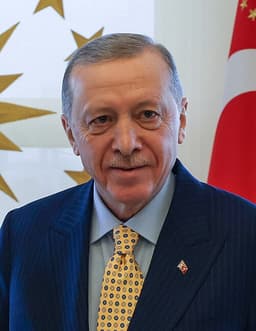
Recep Tayyip Erdogan
Politician · Modern
56.7Total
Basic Information
Born
1951
1954
Died
—
—
Era
Modern
Modern
Nationality
Burkina Faso
Turkey
Occupation
Politician
Politician
Civilization
Other
Middle Eastern
Score Comparison
Military (10%)
41.6
50.0
Political (20%)
48.0
59.3
Influence (20%)
51.0
55.0
Legacy (20%)
41.7
56.0
Leadership (15%)
74.0
72.0
Strategy (15%)
54.3
42.5
TOTAL
51.1
56.7
Blaise Compaore — Complete Timeline
1987 AD
Reversal of Sankara's PoliciesReform◆ Major
Compaoré reversed Sankara's socialist policies, privatizing state enterprises, restoring ties with the IMF and World Bank, and abandoning anti-corruption measures. He also restored traditional chiefs' privileges.
Economic ReformPrivatizationReversal
Impact: nationaldestructive
Coup d'État and Assassination of SankaraPolitical Action
Compaoré led a military coup that resulted in the assassination of President Thomas Sankara. He then assumed the presidency, reversing many of Sankara's revolutionary policies.
CoupAssassinationBetrayal
Impact: nationaldestructive
Longest-Serving President of Burkina FasoPolitical Action◆ Major
Compaoré ruled Burkina Faso for 27 years, becoming one of Africa's longest-serving leaders. He maintained power through a combination of patronage, repression, and electoral manipulation.
Long RuleAuthoritarianismPresidency
Impact: national
1990 AD
Role in Liberian and Sierra Leonean Civil WarsWar◆ Major
Compaoré supported rebel groups in Liberia (Charles Taylor) and Sierra Leone (RUF), providing weapons and safe havens in exchange for diamonds. This fueled regional instability and war crimes.
Regional ConflictDiamond TradeProxy War
Impact: regionaldestructive
2014 AD
Overthrow by Popular UprisingPolitical Action
Compaoré was overthrown by mass protests after attempting to amend the constitution to extend his 27-year rule. He fled to Ivory Coast, ending his authoritarian regime.
Popular UprisingRegime ChangeDemocracy
Impact: nationalconstructive
Recep Tayyip Erdogan — Complete Timeline
1994 AD
Elected Mayor of IstanbulPolitical Action◆ Major
Erdogan was elected mayor of Istanbul as a candidate of the Welfare Party. His tenure focused on infrastructure projects and improving municipal services, raising his national profile.
MayorIstanbul
Impact: nationalconstructive
1998 AD
Imprisonment for inciting religious hatredPolitical Action
Erdogan was sentenced to 10 months in prison after reciting a poem that a court deemed incited religious hatred. He served four months, which fueled his image as a victim of secularist repression.
ImprisonmentSecularism
Impact: nationaltragic
2001 AD
Founding of AK PartyPolitical Action◆ Major
Erdogan co-founded the Justice and Development Party (AKP) as a conservative democratic party. The AKP won a landslide victory in 2002, ending decades of coalition governments.
Party FoundingAKP
Impact: nationalconstructive
2003 AD
Prime Minister of TurkeyPolitical Action◆ Major
Erdogan became Prime Minister after a constitutional amendment allowed him to hold office. His early years saw economic growth, EU accession talks, and reforms to reduce military influence.
Prime MinisterReforms
Impact: nationalconstructive
2013 AD
Gezi Park protestsPolitical Action◆ Major
A small protest against the redevelopment of Gezi Park in Istanbul escalated into nationwide demonstrations against Erdogan's authoritarian governance. The government's heavy-handed response drew international condemnation.
ProtestsAuthoritarianism
Impact: nationaldestructive
2016 AD
Failed coup attemptWar◆ Major
A faction of the Turkish military attempted a coup against Erdogan's government. The coup was suppressed after Erdogan rallied supporters via social media. Thousands were subsequently purged from state institutions.
Coup AttemptPurge
Impact: nationaldestructive
2017 AD
Presidential system referendumPolitical Action◆ Major
Erdogan narrowly won a referendum that replaced Turkey's parliamentary system with a powerful executive presidency. Critics argued it concentrated power in his hands and weakened democratic checks.
Constitutional ChangePresidential System
Impact: nationaldestructive
Expert Analysis
Origins
Blaise Compaoré was born on February 3, 1951, in Ziniaré, Upper Volta (now Burkina Faso). His father was a farmer and a veteran of the French colonial army. Compaoré attended a military school and joined the army, where he befriended Thomas Sankara. Recep Tayyip Erdoğan was born on February 26, 1954, in Istanbul, Turkey. His father was a coast guard officer. Erdoğan grew up in a poor district and sold lemonade and sesame buns to support his family. He attended an imam hatip religious school and later studied management at Marmara University. While Compaoré's early life was shaped by military discipline, Erdoğan's was shaped by religious education and urban poverty.
Rise to Power
Compaoré rose through the military ranks alongside Sankara. In 1983, he participated in the coup that brought Sankara to power. However, on October 15, 1987, Compaoré led a coup that resulted in Sankara's assassination. He then declared himself president, reversing Sankara's socialist policies. Erdoğan's political rise began with his election as mayor of Istanbul in 1994. He gained popularity for infrastructure projects and efficient municipal services. In 1998, he was imprisoned for reciting a religious poem, which boosted his profile. After his release, he co-founded the Justice and Development Party (AKP) in 2001. The AKP won a landslide victory in 2002, and Erdoğan became prime minister in 2003 after a constitutional amendment lifted his ban from office.
Leadership & Governance
Compaoré ruled Burkina Faso for 27 years through patronage, repression, and manipulation of elections. He reversed Sankara's land reforms, privatized state enterprises, and restored ties with the IMF and World Bank. His governance was marked by corruption and cronyism, but he maintained stability and avoided major civil conflict. Erdoğan's early governance focused on economic growth, EU accession talks, and reforms that reduced military influence. However, after 2011, he became increasingly authoritarian, cracking down on opposition, media, and civil society. He centralized power, culminating in a 2017 referendum that replaced the parliamentary system with an executive presidency. Both leaders used democratic processes to legitimize their rule while undermining democratic institutions.
Triumph & Tragedy
Compaoré's triumph was his longevity: he ruled for 27 years, one of Africa's longest-serving leaders. He also contributed to peace in the region by mediating conflicts, notably in Ivory Coast. However, his legacy is tarnished by his role in the Liberian and Sierra Leonean civil wars, where he armed rebels in exchange for diamonds. His greatest tragedy was his overthrow in 2014 by mass protests after attempting to extend his rule. Erdoğan's triumphs include transforming Turkey's economy in his early years, with GDP per capita tripling, and launching major infrastructure projects like airports and bridges. However, his authoritarian turn has been tragic: the Gezi Park protests in 2013, a crackdown on journalists and academics, and a failed coup in 2016 that he used to purge tens of thousands of civil servants. His economic mismanagement later led to high inflation and currency devaluation.
Character & Destiny
Compaoré was pragmatic and calculating. He maintained power by balancing ethnic groups and co-opting rivals. His decision to assassinate Sankara and reverse his policies defined his rule. Erdoğan is charismatic and combative, often framing political struggles as battles between the "national will" and foreign conspiracies. His character led him to concentrate power and silence dissent, which ultimately destabilized Turkey's democracy. Both leaders' character traits—Compaoré's cautious manipulation and Erdoğan's confrontational populism—shaped their political destiny.
Legacy
Compaoré's legacy is mixed: he is remembered as the man who killed Sankara and reversed his reforms, but also as a stabilizer who kept Burkina Faso out of major war. His overthrow inspired other African protests against third-term presidents. Erdoğan's legacy is more complex. He modernized Turkey's infrastructure and economy but eroded its secular and democratic foundations. His push for a neo-Ottoman foreign policy has strained relations with NATO and the EU. In terms of scores, Erdoğan leads with a total of 56.7 compared to Compaoré's 51.1. Erdoğan scores higher in political (59.3 vs 48.0), influence (55.0 vs 51.0), and legacy (56.0 vs 41.7), while Compaoré has a slight edge in leadership (74.0 vs 72.0) and strategy (54.3 vs 42.5).
Conclusion
Recep Tayyip Erdoğan had a greater impact on the world stage than Blaise Compaoré. Erdoğan's policies have reshaped Turkey's domestic politics, economy, and foreign relations, affecting NATO, the EU, and the Middle East. Compaoré's influence was largely confined to West Africa, and his rule ended in failure. While Compaoré scored 74.0 in leadership, Erdoğan's higher political (59.3) and influence (55.0) scores reflect his broader reach. Erdoğan's total score of 56.7 surpasses Compaoré's 51.1, and his legacy will continue to shape Turkey for decades.
Rankings
🥇
Recep Tayyip ErdoganLeader
Mil: 50.0Pol: 59.3Inf: 55.0
56.7
🥈
Blaise Compaore
Mil: 41.6Pol: 48.0Inf: 51.0
51.1
+5.6 behind
How This Comparison Works
Algorithm
Each figure is scored on 6 dimensions (0—100 scale) based on structured historical data: Military (10%), Political (20%), Influence (20%), Legacy (20%), Leadership (15%), Strategy (15%). The weighted total produces the final ranking.
Data Sources
Scores are computed from structured sub-indicators in the database. Scale factors adjust for era (Ancient ×0.85, Modern ×1.0) and civilization size (Eastern ×1.05, Other ×0.80) to account for differences in population and military scale.
Maximum 3 Figures
Comparisons are limited to 2—3 figures to ensure readability and statistical meaningfulness.
Error Margins
±5 points per dimension — Sub-scores are derived from historical records with inherent uncertainty. Two figures within 5 points on a dimension should be considered roughly equivalent in that area.
Total Score Accuracy
±3 points overall — The weighted combination of 6 dimensions produces a total score with approximately ±3 points of uncertainty. Differences of less than 3 points are not statistically significant— the figures are effectively tied.
Known Limitations
- Historical records are incomplete and uneven across civilizations
- Figures from oral-tradition societies may be underrepresented
- Occupation labels can misclassify multi-role figures
- Scores measure capability and impact, not moral character
- Quantitative scoring is a comparison tool, not absolute truth
Capability Radar
Military (10%) — Battles & Warfare
Battles
10
24
Win Rate
15
25
Expansion
5
27
Political (20%) — Governance & Reform
Reform
30
65
Diplomacy
40
70
Economy
35
60
Influence (20%) — Cultural & Global Reach
Cultural
20
55
Global
15
65
Legacy (20%) — Historical Impact
Historical
30
60
Longevity
20
50
Leadership (15%) — Power & Stability
Tenure
65
85
Stability
25
40
Strategy (15%) — Tactics & Innovation
Strategy
15
28
Tactics
10
34
Reform
20
34
Similar Comparisons
Comments & Discussion
No comments yet. Be the first to share your thoughts!