Loading...
This comparison has not been analyzed yet.
One-time AI generation (~1 minute). Scores and timeline are already available below.
Bikenibeu Paeniu vs Parkash Singh Badal
Parkash Singh Badal leads by 15.8 pts · 2 figures compared
…

Bikenibeu Paeniu
Politician · Modern
44.2Total
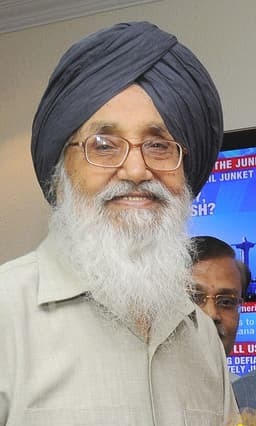
Parkash Singh Badal
Politician · Modern
60.0Total
Basic Information
Born
1956
1927
Died
—
—
Era
Modern
Modern
Nationality
Tuvalu
India
Occupation
Politician
Politician
Civilization
Other
Indian
Score Comparison
Military (10%)
24.9
53.8
Political (20%)
40.8
68.0
Influence (20%)
47.1
56.4
Legacy (20%)
37.5
49.2
Leadership (15%)
67.0
79.8
Strategy (15%)
43.9
60.0
TOTAL
44.2
60.0
Bikenibeu Paeniu — Complete Timeline
1989 AD
First Term as Prime Minister of TuvaluPolitical Action◆ Major
Bikenibeu Paeniu was elected Prime Minister of Tuvalu in 1989, succeeding Tomasi Puapua. He served as head of government, focusing on economic development and foreign relations. His first term lasted until 1993.
Prime MinisterTuvaluElection
Impact: national
1996 AD
Second Term as Prime Minister of TuvaluPolitical Action◆ Major
Bikenibeu Paeniu was elected Prime Minister of Tuvalu for a second time in 1996, after a period of political instability. He served until 1999, when he lost a no-confidence vote. His second term focused on fiscal management and infrastructure.
Prime MinisterTuvaluRe-election
Impact: national
1999 AD
Lost No-Confidence VotePolitical Action◆ Major
Bikenibeu Paeniu lost a no-confidence vote in the Tuvalu Parliament in 1999, ending his second term as Prime Minister. The vote was triggered by political disagreements over budget and governance issues. He was succeeded by Ionatana Ionatana.
No-ConfidencePolitical CrisisTuvalu
Impact: nationaldestructive
Parkash Singh Badal — Complete Timeline
1970 AD
First term as Chief Minister of PunjabPolitical Action◆ Major
Parkash Singh Badal became Chief Minister of Punjab for the first time at age 43, leading a coalition government. His tenure was short-lived but marked the beginning of his long political career. He focused on agricultural development and Sikh interests.
Chief MinisterPunjabAkali Dal
Impact: regionalconstructive
1973 AD
Signed Punjab Accord (1973) as part of Anandpur Sahib ResolutionPolitical Action◆ Major
Badal was a key figure in the Anandpur Sahib Resolution, which demanded greater autonomy for Punjab and Sikh rights. The resolution became a central document in Sikh politics. It was later cited by militants but Badal distanced himself from extremism.
Anandpur SahibPunjabAutonomy
Impact: regional
1995 AD
Became President of Shiromani Akali Dal (SAD)Political Action◆ Major
Parkash Singh Badal became the president of the Shiromani Akali Dal, the main Sikh political party in Punjab. He led the party through the turbulent post-militancy period. His leadership focused on Sikh identity and regional autonomy.
Party LeadershipPunjabAkali Dal
Impact: regionalconstructive
1997 AD
Led Punjab during post-militancy reconstruction (1997-2002)Political Action◆ Major
Badal became Chief Minister in 1997 after the end of Sikh militancy. His government focused on rebuilding Punjab's economy and infrastructure. He implemented free power to farmers and other populist measures, but also faced criticism for fiscal mismanagement.
ReconstructionPunjabAkali Dal
Impact: regionalconstructive
2012 AD
Fifth term as Chief Minister (2012-2017)Political Action◆ Major
Badal won his fifth term as Chief Minister in 2012, leading the SAD-BJP alliance to victory. At 84, he was one of India's oldest chief ministers. His final term was marred by the 2015 drug scandal and farm distress, leading to defeat in 2017.
Chief MinisterPunjabFifth Term
Impact: regional
This comparison has not been analyzed yet.
One-time AI generation (~1 minute). Scores and timeline are already available below.
Rankings
🥇
Parkash Singh BadalLeader
Mil: 53.8Pol: 68.0Inf: 56.4
60.0
🥈
Bikenibeu Paeniu
Mil: 24.9Pol: 40.8Inf: 47.1
44.2
+15.8 behind
How This Comparison Works
Algorithm
Each figure is scored on 6 dimensions (0—100 scale) based on structured historical data: Military (10%), Political (20%), Influence (20%), Legacy (20%), Leadership (15%), Strategy (15%). The weighted total produces the final ranking.
Data Sources
Scores are computed from structured sub-indicators in the database. Scale factors adjust for era (Ancient ×0.85, Modern ×1.0) and civilization size (Eastern ×1.05, Other ×0.80) to account for differences in population and military scale.
Maximum 3 Figures
Comparisons are limited to 2—3 figures to ensure readability and statistical meaningfulness.
Error Margins
±5 points per dimension — Sub-scores are derived from historical records with inherent uncertainty. Two figures within 5 points on a dimension should be considered roughly equivalent in that area.
Total Score Accuracy
±3 points overall — The weighted combination of 6 dimensions produces a total score with approximately ±3 points of uncertainty. Differences of less than 3 points are not statistically significant— the figures are effectively tied.
Known Limitations
- Historical records are incomplete and uneven across civilizations
- Figures from oral-tradition societies may be underrepresented
- Occupation labels can misclassify multi-role figures
- Scores measure capability and impact, not moral character
- Quantitative scoring is a comparison tool, not absolute truth
Capability Radar
Military (10%) — Battles & Warfare
Battles
27
44
Win Rate
26
44
Expansion
28
48
Political (20%) — Governance & Reform
Reform
30
55
Diplomacy
35
60
Economy
30
50
Influence (20%) — Cultural & Global Reach
Cultural
10
40
Global
10
30
Legacy (20%) — Historical Impact
Historical
15
45
Longevity
10
50
Leadership (15%) — Power & Stability
Tenure
40
75
Stability
30
55
Strategy (15%) — Tactics & Innovation
Strategy
36
52
Tactics
36
58
Reform
41
61
Similar Comparisons
Comments & Discussion
No comments yet. Be the first to share your thoughts!