Loading...
Bienville vs Qin Shi Huang
Qin Shi Huang leads by 42.6 pts · 2 figures compared
…

Bienville
Explorer · Modern
42.6Total
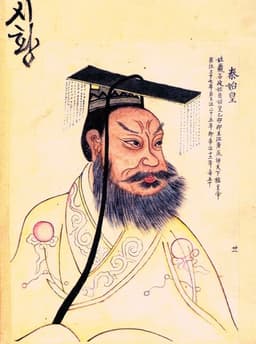
Qin Shi Huang
Emperor · Ancient
85.2Total
Basic Information
Born
1680
-259
Died
1768
-210
Era
Modern
Ancient
Nationality
France
China
Occupation
Explorer
Emperor
Civilization
Western
Eastern
Score Comparison
Military (10%)
33.2
80.0
Political (20%)
26.4
90.0
Influence (20%)
52.5
85.0
Legacy (20%)
45.8
90.0
Leadership (15%)
36.9
78.0
Strategy (15%)
51.7
82.0
TOTAL
42.6
85.2
Bienville — Complete Timeline
1699 AD
Established Fort MaurepasPolitical Action
Bienville established Fort Maurepas (modern Ocean Springs, Mississippi) as the first French settlement in the Louisiana colony. This fort served as a base for further exploration and colonization.
FortColonizationLouisiana
Impact: regionalconstructive
1701 AD
Appointed Governor of LouisianaPolitical Action◆ Major
Bienville was appointed governor of French Louisiana, a position he held intermittently until 1743. He oversaw the colony's expansion, defense, and relations with Native American tribes.
AppointmentGovernorLouisiana
Impact: regional
1718 AD
Founded New OrleansPolitical Action◆ Major
Bienville established the city of New Orleans on the Mississippi River near the Gulf of Mexico. The city became the capital of French Louisiana and a major port for trade and colonization.
FoundingNew OrleansLouisiana
Impact: globalconstructive
1736 AD
Led the French defense against the ChickasawWar
Bienville led a French and allied Native American force against the Chickasaw in present-day Mississippi. The campaign failed due to poor coordination and Chickasaw resistance, resulting in French withdrawal.
Chickasaw WarsMilitary CampaignDefeat
Impact: regionaltragic
Qin Shi Huang — Complete Timeline
246 BC
Construction of the Mausoleum and Terracotta ArmyOther◆ Major
Qin Shi Huang commissioned a vast mausoleum complex near Xi'an, guarded by thousands of life-sized terracotta soldiers, horses, and chariots. The project employed hundreds of thousands of workers and reflected his obsession with immortality and imperial power.
Impact: global
230 BC
Conquest of the Six Warring StatesWar
From 230 to 221 BCE, Ying Zheng led the Qin state in a series of campaigns that conquered the Han, Zhao, Wei, Chu, Yan, and Qi states. This unified China under a single ruler for the first time, ending the Warring States period.
Impact: global
221 BC
Standardization of Writing, Currency, and MeasurementsReform◆ Major
Qin Shi Huang ordered the standardization of Chinese script, currency, and weights and measures across the unified empire. This facilitated administration, trade, and cultural integration, laying a foundation for future dynasties.
Impact: globalconstructive
Proclamation of the Qin DynastyPolitical Action
After conquering the last independent state, Ying Zheng declared himself Shi Huangdi (First Emperor), founding the Qin Dynasty. He adopted a new title to signify his supreme authority and initiated centralized imperial rule.
Impact: global
214 BC
Initiation of the Great Wall ConstructionOther◆ Major
Qin Shi Huang ordered the connection and extension of existing northern fortifications to create a unified defensive wall against nomadic Xiongnu raids. This project involved massive conscripted labor and became the precursor to the later Great Wall.
Impact: regional
213 BC
Burning of Books and Burying of ScholarsPolitical Action◆ Major
On the advice of Li Si, Qin Shi Huang ordered the burning of historical records and philosophical texts not aligned with Legalist doctrine. He also had 460 Confucian scholars buried alive to suppress dissent and consolidate ideological control.
Impact: nationaldestructive
Expert Analysis
bienville-vs-qin-shi-huang
# The First Emperor and the Last Governor
On a winter morning in 221 BC, a thirty-eight-year-old king stood before his assembled court in Xianyang and declared himself *Shi Huangdi*—the First Emperor. Two thousand years later, on a humid Louisiana morning in 1718, a thirty-eight-year-old French nobleman waded through swampy marshland and marked the spot where he would build a city called New Orleans. One man commanded the largest empire the world had ever known; the other commanded a struggling colony that most of his countrymen considered a backwater. Yet both shaped history in ways their contemporaries could not have imagined. What separates the conqueror of China from the founder of a city? The answer lies not in their ambitions, which were equally vast, but in the worlds they inherited and the choices they made.
Origins
Ying Zheng was born into war. The year was 259 BC, and the Zhou dynasty had collapsed into the chaos of the Warring States period—seven kingdoms locked in a struggle for supremacy that had already lasted two centuries. His father was the king of Qin, a state in the far west that had developed a ruthlessly efficient military machine and a legalist philosophy that valued order above all. Ying Zheng grew up in a palace where assassination plots were as common as court banquets. By the time he took the throne at thirteen, he had learned that power was not a gift but a weapon.
Jean-Baptiste Le Moyne de Bienville was born into exploration. The year was 1680, and France was expanding its reach across North America under the Sun King, Louis XIV. His father was a minor noble in New France, and Bienville grew up in the frontier settlements of Canada, where survival depended on understanding Native American alliances and navigating vast, unmapped rivers. Unlike Ying Zheng, who inherited a kingdom, Bienville inherited a frontier—and a brother, Pierre Le Moyne d'Iberville, who was already a celebrated explorer. When Iberville led an expedition to the Gulf of Mexico in 1699, seventeen-year-old Bienville came along. He never went back.
Rise to Power
Ying Zheng's path was brutal and direct. At twenty-two, he purged his regent and took full control of Qin. For the next nine years, from 230 to 221 BC, he unleashed his armies against the six rival states in a campaign of breathtaking efficiency. His generals, armed with crossbows and iron swords, used siege tactics and psychological warfare to break one kingdom after another. When Han fell, then Zhao, then Wei, then Chu, Yan, and finally Qi, Ying Zheng did not simply conquer—he erased. He abolished the old noble families, destroyed their fortifications, and forced their rulers into exile. By 221 BC, he had done what no Chinese ruler had ever done: unified the entire civilized world under one command.
Bienville's rise was slower and more precarious. In 1701, at twenty-one, he was appointed governor of Louisiana—a position he would hold, lose, and regain multiple times over four decades. Louisiana was a disaster: underfunded, underpopulated, and surrounded by hostile Native American tribes and encroaching Spanish and English colonies. Bienville governed not through conquest but through negotiation. He forged alliances with the Choctaw, navigated the complex rivalries of the Natchez and Chickasaw, and begged France for settlers and supplies that rarely arrived. His greatest achievement came in 1718, when he founded New Orleans on a crescent of the Mississippi River—a site so swampy that engineers warned it would flood. Bienville insisted, and history proved him right.
Leadership & Governance
Qin Shi Huang ruled through absolute control. He standardized writing, currency, and measurements across his empire, ensuring that a merchant in the east could do business with a farmer in the west. He built roads and canals, connecting his domains with a network that would last for centuries. But his governance had a dark side. In 213 BC, on the advice of his minister Li Si, he ordered the burning of all books except those on medicine, agriculture, and divination. Scholars who protested were buried alive. The First Emperor believed that history should begin with him—and he was willing to destroy the past to secure the future.
Bienville governed through persuasion. He could not burn books; he could barely get books shipped from France. He could not standardize currency; he could not even control the paper money issued by the Company of the Indies. His leadership was defined by patience. He spent years cultivating relationships with Native American leaders, learning their languages, and mediating disputes. When the Chickasaw resisted French expansion, he led a campaign against them in 1736—but it failed, and he learned from the defeat. Unlike Qin Shi Huang, who demanded total submission, Bienville understood that survival in Louisiana required compromise.
Triumph & Tragedy
The First Emperor's greatest triumph was also his greatest tragedy. He unified China, but at a terrible cost. He ordered the construction of a mausoleum guarded by thousands of life-sized terracotta soldiers—a project that consumed the labor of hundreds of thousands of workers, many of whom died and were buried within the complex. He initiated the Great Wall, connecting existing fortifications into a single defensive line, but the construction killed uncounted conscripts. And in his final years, obsessed with immortality, he sent expeditions to find the elixir of life and swallowed mercury pills prescribed by his alchemists. He died in 210 BC at age forty-nine, poisoned by his own desperation.
Bienville's triumph was quieter but more lasting. New Orleans grew from a swampy outpost into the economic heart of the Mississippi Valley. Bienville served as governor until 1743, when he retired to France at age sixty-three. He lived to see his city thrive, but he also saw his colony nearly collapse multiple times. His tragedy was that he was never given the resources he needed—France was always more interested in Europe's wars than in Louisiana's survival. He died in 1768 at age eighty-eight, having outlived his era.
Character & Destiny
Qin Shi Huang was driven by a vision of total order. He saw chaos as the enemy and believed that only absolute control could prevent the return of the Warring States. His personality was shaped by the violence of his upbringing and the legalist philosophy that justified any means in pursuit of stability. He was paranoid, ruthless, and brilliant—a combination that allowed him to achieve the impossible but also doomed his dynasty. The Qin Dynasty collapsed within four years of his death, destroyed by the very repression he had created.
Bienville was driven by a vision of possibility. He saw the Mississippi Valley not as it was—a disease-ridden frontier—but as it could become: the breadbasket of a continent. His personality was shaped by the frontier, where patience and diplomacy mattered more than military might. He was pragmatic, persistent, and adaptable—qualities that allowed him to survive fifty years of colonial chaos but also limited his ambitions. He never conquered anything; he only planted seeds.
Legacy
Qin Shi Huang's legacy is monumental. He gave China its name, its administrative structure, and its ideal of unity. The Great Wall, the Terracotta Army, and the standardization of writing are his enduring monuments. But he is also remembered as a tyrant who burned books and buried scholars—a figure of awe and horror. His dynasty was short, but its template lasted two thousand years.
Bienville's legacy is quieter but no less real. He founded a city that became one of the most culturally vital in America. New Orleans bears his fingerprints: the French Quarter, the Catholic churches, the Creole culture that blends French, African, and Native American influences. He is remembered not as a conqueror but as a founder—a man who built something from nothing.
Conclusion
What separates the First Emperor from the colonial governor is not ability but circumstance. Qin Shi Huang inherited a war machine and used it to forge an empire. Bienville inherited a swamp and used it to forge a city. Both succeeded beyond their contemporaries' expectations, and both failed in ways that reveal the limits of human ambition. The First Emperor sought immortality and found only mercury poisoning. Bienville sought security and found only a fragile colony that would change hands multiple times after his death. Yet both left marks that survive today—one in the bones of a continent, the other in the soul of a city. History remembers the conqueror, but it lives in the work of the builder.
Rankings
🥇
Qin Shi HuangLeader
Mil: 80.0Pol: 90.0Inf: 85.0
85.2
🥈
Bienville
Mil: 33.2Pol: 26.4Inf: 52.5
42.6
+42.6 behind
How This Comparison Works
Algorithm
Each figure is scored on 6 dimensions (0—100 scale) based on structured historical data: Military (10%), Political (20%), Influence (20%), Legacy (20%), Leadership (15%), Strategy (15%). The weighted total produces the final ranking.
Data Sources
Scores are computed from structured sub-indicators in the database. Scale factors adjust for era (Ancient ×0.85, Modern ×1.0) and civilization size (Eastern ×1.05, Other ×0.80) to account for differences in population and military scale.
Maximum 3 Figures
Comparisons are limited to 2—3 figures to ensure readability and statistical meaningfulness.
Error Margins
±5 points per dimension — Sub-scores are derived from historical records with inherent uncertainty. Two figures within 5 points on a dimension should be considered roughly equivalent in that area.
Total Score Accuracy
±3 points overall — The weighted combination of 6 dimensions produces a total score with approximately ±3 points of uncertainty. Differences of less than 3 points are not statistically significant— the figures are effectively tied.
Known Limitations
- Historical records are incomplete and uneven across civilizations
- Figures from oral-tradition societies may be underrepresented
- Occupation labels can misclassify multi-role figures
- Scores measure capability and impact, not moral character
- Quantitative scoring is a comparison tool, not absolute truth
Capability Radar
Military (10%) — Battles & Warfare
Battles
15
85
Win Rate
20
90
Expansion
30
90
Political (20%) — Governance & Reform
Reform
40
95
Diplomacy
50
75
Economy
45
90
Influence (20%) — Cultural & Global Reach
Cultural
45
95
Global
40
85
Legacy (20%) — Historical Impact
Historical
50
95
Longevity
45
95
Leadership (15%) — Power & Stability
Tenure
55
70
Stability
35
65
Strategy (15%) — Tactics & Innovation
Strategy
25
85
Tactics
20
80
Reform
10
95
Similar Comparisons
Comments & Discussion
QinConqueror6/17/2026
Bienville founded a swamp city that only matters because of the Mississippi River trade that came later. Qin Shi Huang actually unified China—standardized writing, weights, and roads, and built the Great Wall's foundation. That's real empire-building, not just plopping a fort in a mosquito-infested delta. Bienville's achievement is a footnote; Qin's is the bedrock of a civilization. Stop overhyping a colonial bureaucrat's real estate project.
路易战车6/17/2026
把比安维尔跟秦始皇比?你怕不是在看平行宇宙。前者只是跟土著做交易、图点地皮,后者可是用铁血统一了七国,废分封立郡县,文字度量衡全他规范了。新奥尔良算个啥,没水运它能存在?一个地方总督能跟始皇帝的气场比?吹前殖民者也得有个度。