Loading...
This comparison has not been analyzed yet.
One-time AI generation (~1 minute). Scores and timeline are already available below.
Bhim Singh II of Kota vs Sayyid Said
Sayyid Said leads by 10.1 pts · 2 figures compared
…
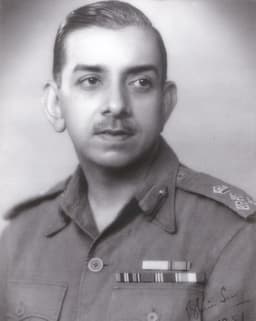
Bhim Singh II of Kota
Emperor · Modern
44.5Total

Sayyid Said
Emperor · Modern
54.6Total
Basic Information
Born
1909
1797
Died
1991
1856
Era
Modern
Modern
Nationality
India
Oman
Occupation
Emperor
Emperor
Civilization
Indian
Middle Eastern
Score Comparison
Military (10%)
45.3
25.0
Political (20%)
36.5
72.0
Influence (20%)
47.1
58.0
Legacy (20%)
35.0
46.7
Leadership (15%)
58.8
72.0
Strategy (15%)
51.3
43.3
TOTAL
44.5
54.6
Bhim Singh II of Kota — Complete Timeline
1940 AD
Accession as Maharao of KotaPolitical Action◆ Major
Bhim Singh II became the Maharao of Kota at age 31, succeeding his father. His reign spanned the end of British colonial rule and the integration of princely states into independent India, requiring him to navigate political transitions.
SuccessionPrincely StateTransition
Impact: regional
1949 AD
Integration of Kota into the Indian UnionPolitical Action
Bhim Singh II signed the Instrument of Accession, merging Kota into the Dominion of India. He later served as a member of the Rajasthan Legislative Assembly and as a Rajya Sabha member, participating in democratic governance after the end of princely rule.
Indian IndependenceIntegrationDemocracy
Impact: national
1960 AD
Establishment of the Kota Barrage and irrigation projectsReform◆ Major
Bhim Singh II championed the construction of the Kota Barrage on the Chambal River, a major irrigation project that transformed agriculture in the region. The project provided water for farming and helped mitigate droughts, benefiting thousands of farmers.
IrrigationAgricultureDevelopment
Impact: regionalconstructive
1970 AD
Environmental conservation efforts in KotaReform
Bhim Singh II initiated environmental conservation programs, including the protection of the Chambal River ecosystem and the establishment of wildlife sanctuaries. His efforts contributed to the preservation of the region's biodiversity, including the gharial crocodile.
EnvironmentConservationWildlife
Impact: regionalconstructive
Sayyid Said — Complete Timeline
1804 AD
Accession as Sultan of OmanPolitical Action◆ Major
Sayyid Said became Sultan of Oman after the death of his father, Sultan bin Ahmad. He consolidated power and began expanding Omani influence in East Africa, laying the foundation for his later relocation to Zanzibar.
SuccessionOmanZanzibar
Impact: regional
1833 AD
Signed trade treaty with the United StatesPolitical Action◆ Major
Sayyid Said signed a commercial treaty with the United States, granting American merchants access to Zanzibar's ports. This agreement expanded Zanzibar's international trade network and strengthened its economic ties with the West.
Trade TreatyDiplomacyUnited States
Impact: regionalconstructive
1840 AD
Expanded clove plantations in ZanzibarReform◆ Major
Sayyid Said mandated the cultivation of cloves on Zanzibar and Pemba islands, using slave labor. This transformed the islands into the world's leading clove producer, generating immense wealth for the Omani elite and entrenching the slave economy.
AgricultureSlaveryEconomy
Impact: regionaldestructive
Moved capital to ZanzibarPolitical Action
Sayyid Said relocated the Omani capital from Muscat to Zanzibar, shifting the empire's focus to East African trade. This move centralized clove and slave trade operations and made Zanzibar a major commercial hub in the Indian Ocean.
Capital RelocationTradeZanzibar
Impact: regional
1856 AD
Death and division of the Omani EmpirePolitical Action
Upon Sayyid Said's death, his sons Thuwaini and Majid divided the Omani Empire into two separate sultanates: Oman and Zanzibar. This partition ended the unified Omani thalassocracy and established Zanzibar as an independent state under Majid.
SuccessionDivisionOmanZanzibar
Impact: regional
This comparison has not been analyzed yet.
One-time AI generation (~1 minute). Scores and timeline are already available below.
Rankings
🥇
Sayyid SaidLeader
Mil: 25.0Pol: 72.0Inf: 58.0
54.6
🥈
Bhim Singh II of Kota
Mil: 45.3Pol: 36.5Inf: 47.1
44.5
+10.1 behind
How This Comparison Works
Algorithm
Each figure is scored on 6 dimensions (0—100 scale) based on structured historical data: Military (10%), Political (20%), Influence (20%), Legacy (20%), Leadership (15%), Strategy (15%). The weighted total produces the final ranking.
Data Sources
Scores are computed from structured sub-indicators in the database. Scale factors adjust for era (Ancient ×0.85, Modern ×1.0) and civilization size (Eastern ×1.05, Other ×0.80) to account for differences in population and military scale.
Maximum 3 Figures
Comparisons are limited to 2—3 figures to ensure readability and statistical meaningfulness.
Error Margins
±5 points per dimension — Sub-scores are derived from historical records with inherent uncertainty. Two figures within 5 points on a dimension should be considered roughly equivalent in that area.
Total Score Accuracy
±3 points overall — The weighted combination of 6 dimensions produces a total score with approximately ±3 points of uncertainty. Differences of less than 3 points are not statistically significant— the figures are effectively tied.
Known Limitations
- Historical records are incomplete and uneven across civilizations
- Figures from oral-tradition societies may be underrepresented
- Occupation labels can misclassify multi-role figures
- Scores measure capability and impact, not moral character
- Quantitative scoring is a comparison tool, not absolute truth
Capability Radar
Military (10%) — Battles & Warfare
Battles
30
30
Win Rate
32
40
Expansion
33
45
Political (20%) — Governance & Reform
Reform
20
55
Diplomacy
25
65
Economy
20
70
Influence (20%) — Cultural & Global Reach
Cultural
15
45
Global
5
45
Legacy (20%) — Historical Impact
Historical
10
50
Longevity
10
40
Leadership (15%) — Power & Stability
Tenure
30
70
Stability
25
50
Strategy (15%) — Tactics & Innovation
Strategy
36
40
Tactics
44
35
Reform
45
30
Similar Comparisons
Comments & Discussion
No comments yet. Be the first to share your thoughts!