Loading...
Bharata vs Mithridates I of Parthia
Mithridates I of Parthia leads by 9.9 pts · 2 figures compared
…

Bharata
Emperor · Ancient
54.3Total
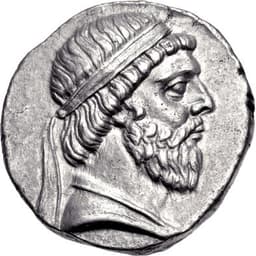
Mithridates I of Parthia
Emperor · Ancient
64.2Total
Basic Information
Born
-1500
-195
Died
-1450
-132
Era
Ancient
Ancient
Nationality
Vedic India
Parthian Empire
Occupation
Emperor
Emperor
Civilization
Indian
Middle Eastern
Score Comparison
Military (10%)
55.0
85.0
Political (20%)
45.1
55.0
Influence (20%)
72.0
60.0
Legacy (20%)
40.0
56.0
Leadership (15%)
65.0
78.0
Strategy (15%)
43.3
67.2
TOTAL
54.3
64.2
Bharata — Complete Timeline
1500 BC
Ancestor of the Bharata ClanPolitical Action◆ Major
Bharata established the Bharata clan, which became the central lineage in the Mahabharata epic. His rule is associated with the consolidation of Vedic tribes in the Kurukshetra region, laying the foundation for later Kuru dynasty politics.
Dynasty FoundingVedic PeriodEpic Tradition
Impact: regionalconstructive
Namesake of BharatavarshaCultural◆ Major
Bharata's name was applied to the Indian subcontinent as Bharatavarsha in ancient texts. This designation persisted through the Mahabharata and Puranas, and was adopted as the official name of India in 1950.
Geographical NamingCultural LegacyNational Identity
Impact: globalconstructive
Mithridates I of Parthia — Complete Timeline
141 BC
Conquest of Media and MesopotamiaWar
Mithridates I conquered Media and Mesopotamia from the Seleucid Empire, capturing the cities of Ecbatana and Seleucia-on-the-Tigris. These conquests transformed Parthia from a minor kingdom into a major imperial power controlling the Iranian plateau and the Tigris-Euphrates valley.
Parthian ExpansionSeleucid DeclineConquest
Impact: regionalconstructive
140 BC
Adoption of the Title 'King of Kings'Political Action◆ Major
Mithridates I adopted the Achaemenid title 'King of Kings' (Shahanshah) on his coinage and inscriptions. This act asserted Parthian legitimacy as the successor to the Persian Empire and established the ideological foundation for the Parthian Empire.
Royal TitulaturePropagandaAchaemenid Legacy
Impact: regionalconstructive
138 BC
Capture of Demetrius II NicatorWar◆ Major
Mithridates I defeated and captured the Seleucid king Demetrius II Nicator during a campaign to reclaim the eastern provinces. Demetrius was held captive in Parthia for ten years, during which Mithridates consolidated his conquests.
Seleucid-Parthian WarCaptivityPrisoner
Impact: regionalconstructive
Expert Analysis
Origins
Bharata is a figure from ancient Indian tradition, primarily known through the epic Mahabharata and Puranic texts. He is described as a son of King Dushyanta and Shakuntala, born around the 2nd millennium BCE. His early life, as narrated in the Mahabharata, involved a childhood in the forest with his mother, later recognized by his father. He received Vedic education and martial training, embodying the ideal Kshatriya. His lineage is central to the Bharata clan, which becomes the focus of the Mahabharata war. However, historical evidence for Bharata is entirely textual, with no archaeological corroboration.
Mithridates I of Parthia (r. c. 171–132 BCE) was a historical king of the Parthian Empire. He was the son of Phraates I and belonged to the Arsacid dynasty. Little is known of his early life, but he likely received a princely education in Parthian martial and administrative traditions. The Parthian Empire at his accession was a relatively minor kingdom in northeastern Iran, having broken away from the Seleucid Empire. Mithridates would transform it into a major power.
Rise to Power
Bharata's rise is mythological. According to the Mahabharata, he became king after his father Dushyanta acknowledged him. His reign is associated with the expansion of the Kuru kingdom and the establishment of the Bharata clan. The epic credits him with performing numerous sacrifices (yajnas) and conquering neighboring tribes. However, no specific dates or historical events can be attached to his rule.
Mithridates I rose to power by exploiting the weakening Seleucid Empire. He began his campaigns around 155 BCE, first conquering Media and its capital Ecbatana. He then turned to Mesopotamia, capturing Seleucia-on-the-Tigris in 141 BCE and taking the title 'King of Kings' (Shahanshah) on his coinage. His capture of the Seleucid king Demetrius II Nicator in 139 BCE was a major coup, demonstrating Parthian military superiority. By the end of his reign, the Parthian Empire stretched from the Indus to the Euphrates.
Leadership & Governance
Bharata's leadership is portrayed as that of a righteous emperor (chakravartin) who upheld dharma. He is described as a just ruler who performed grand sacrifices and maintained social order according to Vedic norms. However, his governance lacks detailed historical record. His leadership score of 65.0 reflects his idealized role, but with no tangible administrative achievements.
Mithridates I was a pragmatic and effective ruler. He adopted Achaemenid administrative practices, such as using satraps to govern provinces, and allowed local rulers to retain power as vassals. He issued coins with Greek and Iranian motifs, promoting cultural synthesis. His political score of 55.0 and leadership of 78.0 indicate his ability to consolidate conquests, though his governance relied heavily on military force. He did not impose Zoroastrianism on subjects, tolerating Greek and Babylonian religions.
Triumph & Tragedy
Bharata's triumphs are legendary: he established the Bharata clan, which became the central lineage of the Mahabharata, and his name was applied to the Indian subcontinent as Bharatavarsha. These achievements gave him an influence score of 72.0. However, there are no recorded failures, as his story is entirely positive in tradition. This lack of historical grounding limits his legacy score to 40.0.
Mithridates I's greatest triumph was transforming Parthia from a minor kingdom into an empire that rivaled Rome. His conquest of Media and Mesopotamia, and the capture of Demetrius II, were remarkable military successes, reflected in his military score of 85.0. His strategy score of 67.2 shows effective campaign planning. However, his tragedy lies in the brevity of his empire's stability. After his death, Parthia faced internal strife and external threats from the Scythians and Romans. His empire did not endure as a unified state, and his immediate successors lost some territories.
Character & Destiny
Bharata's character is that of an ideal king: virtuous, brave, and devoted to dharma. His destiny was to be remembered as the ancestor of the Pandavas and Kauravas, the heroes of the Mahabharata. His personality shaped his fate by embodying the values that the epic promotes. However, as a mythical figure, his character is a literary construct rather than a historical personality.
Mithridates I was a determined and ambitious conqueror. His decision to adopt the title 'King of Kings' reveals his desire to legitimize Parthian rule as the successor to the Achaemenids. His character was pragmatic: he treated captured enemies with respect, as seen with Demetrius II, whom he kept in honorable captivity. His destiny was to be remembered as the founder of the Parthian Empire, but his death led to succession crises that weakened the realm.
Legacy
Bharata's legacy is immense in Indian culture. The name 'Bharat' is the official name of India in Hindi, and the Bharata clan is central to the Mahabharata, which remains a foundational text. His influence score of 72.0 reflects this cultural impact, but his historical legacy is minimal due to lack of evidence. He is more a symbol than a historical figure.
Mithridates I's legacy is substantial. He established Parthia as a major power that would challenge Rome for centuries. The Parthian empire lasted until 224 CE, with its administrative and military structures influencing later Iranian empires. His adoption of Hellenistic and Persian elements set a precedent for cultural fusion. His legacy score of 56.0 is tempered by the fact that his empire eventually fell, but his role as a state-builder is clear.
Conclusion
Mithridates I of Parthia had a greater historical impact than Bharata. While Bharata's cultural legacy is profound, it is mythological and lacks historical substantiation. Mithridates I, with a total score of 64.2 compared to Bharata's 54.3, demonstrably transformed the political landscape of the ancient Near East. His military conquests, administrative innovations, and establishment of a durable empire make him a more significant figure in world history. Bharata remains an important cultural icon, but Mithridates I shaped the course of empires.
Rankings
🥇
Mithridates I of ParthiaLeader
Mil: 85.0Pol: 55.0Inf: 60.0
64.2
🥈
Bharata
Mil: 55.0Pol: 45.1Inf: 72.0
54.3
+9.9 behind
How This Comparison Works
Algorithm
Each figure is scored on 6 dimensions (0—100 scale) based on structured historical data: Military (10%), Political (20%), Influence (20%), Legacy (20%), Leadership (15%), Strategy (15%). The weighted total produces the final ranking.
Data Sources
Scores are computed from structured sub-indicators in the database. Scale factors adjust for era (Ancient ×0.85, Modern ×1.0) and civilization size (Eastern ×1.05, Other ×0.80) to account for differences in population and military scale.
Maximum 3 Figures
Comparisons are limited to 2—3 figures to ensure readability and statistical meaningfulness.
Error Margins
±5 points per dimension — Sub-scores are derived from historical records with inherent uncertainty. Two figures within 5 points on a dimension should be considered roughly equivalent in that area.
Total Score Accuracy
±3 points overall — The weighted combination of 6 dimensions produces a total score with approximately ±3 points of uncertainty. Differences of less than 3 points are not statistically significant— the figures are effectively tied.
Known Limitations
- Historical records are incomplete and uneven across civilizations
- Figures from oral-tradition societies may be underrepresented
- Occupation labels can misclassify multi-role figures
- Scores measure capability and impact, not moral character
- Quantitative scoring is a comparison tool, not absolute truth
Capability Radar
Military (10%) — Battles & Warfare
Battles
40
75
Win Rate
45
80
Expansion
50
90
Political (20%) — Governance & Reform
Reform
40
60
Diplomacy
45
75
Economy
40
65
Influence (20%) — Cultural & Global Reach
Cultural
80
55
Global
75
65
Legacy (20%) — Historical Impact
Historical
85
70
Longevity
90
60
Leadership (15%) — Power & Stability
Tenure
50
70
Stability
50
70
Strategy (15%) — Tactics & Innovation
Strategy
40
85
Tactics
35
70
Reform
30
65
Similar Comparisons
Comments & Discussion
No comments yet. Be the first to share your thoughts!