Loading...
Bermudo II of Leon vs Harthacnut
Harthacnut leads by 0.3 pts · 2 figures compared
…
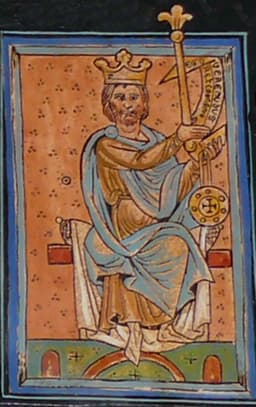
Bermudo II of Leon
Emperor · Medieval
39.6Total

Harthacnut
Emperor · Medieval
39.9Total
Basic Information
Born
953
1018
Died
999
1042
Era
Medieval
Medieval
Nationality
Leon
England
Occupation
Emperor
Emperor
Civilization
Western
Western
Score Comparison
Military (10%)
25.9
50.0
Political (20%)
27.9
27.9
Influence (20%)
48.6
49.4
Legacy (20%)
40.8
38.3
Leadership (15%)
45.0
38.1
Strategy (15%)
36.8
30.3
TOTAL
39.6
39.9
Bermudo II of Leon — Complete Timeline
981 AD
Battle of RuedaWar◆ Major
Bermudo II suffered a major defeat at the hands of Almanzor at the Battle of Rueda. The Leonese army was routed, and Bermudo was forced to flee. This defeat led to the payment of tribute to Cordoba and a period of Leonese subordination to the caliphate.
DefeatAlmanzorTribute
Impact: regionaltragic
990 AD
Alliance with the County of CastilePolitical Action
Bermudo II formed an alliance with the County of Castile under Count Sancho Garcia to resist Almanzor's campaigns. The alliance included marriage ties and military cooperation, but it failed to prevent further Cordoban incursions into Leonese territory.
AllianceCastileAlmanzor
Impact: regionalconstructive
997 AD
Loss of Santiago de Compostela to AlmanzorWar◆ Major
Bermudo II's kingdom was invaded by the Cordoban general Almanzor, who captured and sacked the city of Santiago de Compostela, the holiest Christian shrine in Iberia. The city's churches were destroyed, and its bells were taken to Cordoba. This defeat was a profound humiliation for the Leonese king.
SackSantiago de CompostelaAlmanzor
Impact: regionaltragic
Harthacnut — Complete Timeline
1040 AD
Accession to English ThronePolitical Action◆ Major
Harthacnut became king of England after the death of his half-brother Harold Harefoot. He arrived from Denmark with a fleet and was accepted by the English nobility.
CoronationSuccessionDanish Rule
Impact: national
1041 AD
Harsh TaxationReform◆ Major
Harthacnut imposed a heavy tax (heregeld) to pay for his fleet. This led to a revolt in Worcester, where two of his tax collectors were killed. Harthacnut burned the city in retaliation.
TaxationRevoltRepression
Impact: nationaldestructive
Invitation to Edward the ConfessorPolitical Action◆ Major
Harthacnut invited his half-brother Edward (later Edward the Confessor) to return from Normandy and made him his heir. This ensured a peaceful succession after Harthacnut's death.
SuccessionNorman InfluenceHeir
Impact: nationalconstructive
1042 AD
Death of HarthacnutPolitical Action◆ Major
Harthacnut died at Lambeth on June 8, 1042, while drinking at a wedding feast. His death ended Danish rule in England and led to the restoration of the Anglo-Saxon line under Edward the Confessor.
DeathEnd of Danish RuleSuccession
Impact: nationaltragic
Expert Analysis
Origins
Bermudo II of Leon was born around 953, the son of King Ordoño III of Leon. His reign was plagued by ill health, notably gout, which limited his mobility and military effectiveness. He inherited a kingdom fractured by internal strife and facing the relentless expansion of the Caliphate of Cordoba under Almanzor. Harthacnut was born around 1018, the son of King Cnut the Great of Denmark, England, and Norway, and his wife Emma of Normandy. He was raised in Denmark and, after Cnut's death, claimed the English throne, but his half-brother Harold Harefoot seized power first. Harthacnut's early life was shaped by the complex politics of the North Sea Empire.
Rise to Power
Bermudo II became king of Leon in 984 after the death of his brother Ramiro III, but his claim was contested. He faced immediate pressure from Almanzor, who launched punitive expeditions. Bermudo's rise was marked by military defeats, not victories. He allied with the County of Castile through marriage, but this did little to stem Almanzor's advances. Harthacnut's rise was more straightforward: after Harold Harefoot's death in 1040, Harthacnut was invited to England and crowned king. He arrived with a fleet and was accepted by the English nobility, who feared his Danish military power. His accession ended a period of uncertainty, but his harsh rule quickly alienated his subjects.
Leadership & Governance
Bermudo II ruled a kingdom in crisis. His leadership was reactive, focused on survival against Almanzor's raids. He attempted to strengthen his position through alliances, but his gout prevented him from leading armies in person, a critical weakness in a warrior society. He lost Santiago de Compostela in 997, a devastating blow to Christian morale. Harthacnut's governance was equally troubled. He imposed a heavy tax (heregeld) to pay for his fleet, sparking a revolt in Worcester in 1041 where two tax collectors were killed. Harthacnut responded by burning the city and mutilating hostages. His political score of 27.9 reflects his inability to build consensus.
Triumph & Tragedy
Bermudo's greatest triumph was surviving Almanzor's campaigns long enough to see the caliph's death in 1002, though he died shortly after in 999. His greatest tragedy was the sack of Santiago de Compostela, which he could not prevent. Harthacnut's tragedy was his own death: he died suddenly at a wedding feast in 1042, likely from a stroke or excessive drinking. His triumph was securing a peaceful succession by inviting Edward the Confessor back from Normandy, ensuring the restoration of the Saxon line. However, his heavy-handed rule and short reign (1040-1042) left little positive legacy.
Character & Destiny
Bermudo II was a sickly king who fought against overwhelming odds. His gout symbolized his physical and political weakness. He was determined but ineffective, earning a military score of 25.9 and a strategy score of 36.8. Harthacnut was more capable militarily (score 50.0) but politically inept (score 27.9). His harsh taxation and brutal suppression of revolt showed a lack of diplomatic skill. His character—decisive but cruel—led to a short, unpopular reign. Both kings were shaped by forces beyond their control: Bermudo by Almanzor's might, Harthacnut by the expectations of Danish rule.
Legacy
Bermudo II's legacy is overshadowed by his failures. He is remembered as the king who lost Santiago, a symbol of Christian Spain's vulnerability. His reign weakened Leon and paved the way for the eventual fragmentation of the kingdom. Harthacnut's legacy is more mixed: he ended Danish rule in England, but his invitation to Edward the Confessor led to the Norman Conquest in 1066. His influence score of 49.4 reflects this indirect impact. Neither king left enduring institutions or reforms.
Conclusion
Harthacnut had a slightly higher total score (39.9 vs 39.6), but the gap is negligible. In terms of historical impact, Harthacnut's decision to name Edward the Confessor as heir altered English history more than Bermudo's defeats altered Spanish history. However, both were weak rulers who failed to secure their dynasties. Bermudo's line ended with his son, while Harthacnut's line ended with him. The clear position is that Harthacnut's actions had greater long-term consequences, but neither achieved lasting greatness.
Rankings
🥇
HarthacnutLeader
Mil: 50.0Pol: 27.9Inf: 49.4
39.9
🥈
Bermudo II of Leon
Mil: 25.9Pol: 27.9Inf: 48.6
39.6
+0.3 behind
How This Comparison Works
Algorithm
Each figure is scored on 6 dimensions (0—100 scale) based on structured historical data: Military (10%), Political (20%), Influence (20%), Legacy (20%), Leadership (15%), Strategy (15%). The weighted total produces the final ranking.
Data Sources
Scores are computed from structured sub-indicators in the database. Scale factors adjust for era (Ancient ×0.85, Modern ×1.0) and civilization size (Eastern ×1.05, Other ×0.80) to account for differences in population and military scale.
Maximum 3 Figures
Comparisons are limited to 2—3 figures to ensure readability and statistical meaningfulness.
Error Margins
±5 points per dimension — Sub-scores are derived from historical records with inherent uncertainty. Two figures within 5 points on a dimension should be considered roughly equivalent in that area.
Total Score Accuracy
±3 points overall — The weighted combination of 6 dimensions produces a total score with approximately ±3 points of uncertainty. Differences of less than 3 points are not statistically significant— the figures are effectively tied.
Known Limitations
- Historical records are incomplete and uneven across civilizations
- Figures from oral-tradition societies may be underrepresented
- Occupation labels can misclassify multi-role figures
- Scores measure capability and impact, not moral character
- Quantitative scoring is a comparison tool, not absolute truth
Capability Radar
Military (10%) — Battles & Warfare
Battles
20
20
Win Rate
15
25
Expansion
5
10
Political (20%) — Governance & Reform
Reform
20
20
Diplomacy
25
25
Economy
20
20
Influence (20%) — Cultural & Global Reach
Cultural
20
15
Global
10
10
Legacy (20%) — Historical Impact
Historical
25
20
Longevity
20
10
Leadership (15%) — Power & Stability
Tenure
40
30
Stability
15
15
Strategy (15%) — Tactics & Innovation
Strategy
10
15
Tactics
15
15
Reform
5
10
Similar Comparisons
Comments & Discussion
No comments yet. Be the first to share your thoughts!