Loading...
Bayezid II vs William the Conqueror
William the Conqueror leads by 9.2 pts · 2 figures compared
…
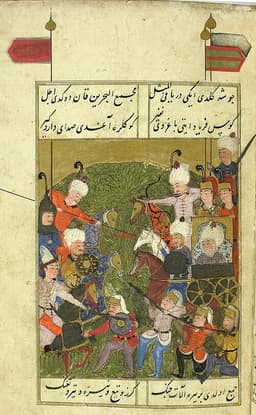
Bayezid II
Emperor · Medieval
59.6Total
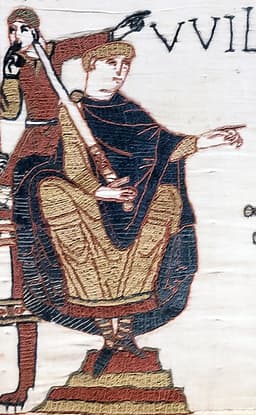
William the Conqueror
Emperor · Medieval
68.8Total
Basic Information
Born
1447
1028
Died
1512
1087
Era
Medieval
Medieval
Nationality
Ottoman Empire
England
Occupation
Emperor
Emperor
Civilization
Middle Eastern
Western
Score Comparison
Military (10%)
50.0
82.0
Political (20%)
72.0
70.0
Influence (20%)
56.7
65.0
Legacy (20%)
56.0
65.0
Leadership (15%)
66.0
72.0
Strategy (15%)
57.5
68.0
TOTAL
59.6
68.8
Bayezid II — Complete Timeline
1481 AD
Suppressed the Cem Sultan RebellionWar◆ Major
Bayezid II faced a civil war against his brother Cem Sultan, who claimed the throne. Cem was defeated and fled to Rhodes, then to Europe, where he was held captive. This conflict ended the immediate succession crisis but left a rival claimant alive.
Civil WarSuccession CrisisCem Sultan
Impact: nationaldestructive
1492 AD
Issued Edict of Expulsion for Jews from SpainPolitical Action◆ Major
Bayezid II issued a decree welcoming Jewish refugees expelled from Spain by the Alhambra Decree. He sent the Ottoman fleet to transport them to safety, settling them in Salonica, Istanbul, and other cities, strengthening the empire's economy and intellectual life.
Jewish MigrationOttoman EmpireReligious Tolerance
Impact: regionalconstructive
1499 AD
Battle of ZonchioWar◆ Major
The Ottoman navy under Bayezid II defeated the Venetian fleet off the coast of Greece. This victory secured Ottoman control over the Ionian Sea and marked the first major naval battle where cannons were used on ships.
Ottoman-Venetian WarNaval BattleCannon
Impact: regional
1503 AD
Concluded the Treaty of Constantinople with VenicePolitical Action
Bayezid II signed a peace treaty with the Republic of Venice, ending the Ottoman-Venetian War (1499-1503). The treaty confirmed Ottoman gains in the Morea and established a border in the Adriatic, bringing a period of peace.
Peace TreatyVeniceOttoman-Venetian War
Impact: regionalconstructive
1512 AD
Abdicated the Throne to Selim IPolitical Action
Bayezid II was forced to abdicate by his son Selim I, who led a Janissary revolt. Bayezid agreed to step down but died shortly after under suspicious circumstances. This transfer of power marked the end of his reign and the beginning of Selim's expansionist policies.
AbdicationSuccessionSelim I
Impact: nationaltragic
William the Conqueror — Complete Timeline
1066 AD
Battle of HastingsWar
William, Duke of Normandy, defeated King Harold II of England at Hastings. Harold was killed in battle. William then marched to London and was crowned King of England on Christmas Day 1066, beginning Norman rule in England.
Norman ConquestBattleCrowning
Impact: national
1069 AD
Harrying of the NorthWar◆ Major
William led a brutal military campaign to suppress rebellions in northern England. His forces systematically destroyed crops, livestock, and settlements across Yorkshire and Northumbria. The devastation caused a famine that killed tens of thousands and depopulated large areas.
RepressionFamineRebellion
Impact: regionaldestructive
1080 AD
Council of LillebonnePolitical Action
William convened a council of Norman barons and bishops at Lillebonne to assert royal authority over the Church in Normandy. The council issued decrees regulating ecclesiastical jurisdiction and property, strengthening ducal control.
Church-State RelationsNormandy
Impact: regional
1086 AD
Domesday Book SurveyReform◆ Major
William ordered a comprehensive survey of landholdings and resources in England. The resulting Domesday Book recorded ownership, value, and population for tax assessment. It became the most detailed administrative record in medieval Europe.
AdministrationTaxationCensus
Impact: national
Expert Analysis
Origins
Bayezid II was born in 1447 to Sultan Mehmed II, the conqueror of Constantinople. He grew up in the Ottoman court, receiving a thorough education in Islamic theology, law, and statecraft. His early life was marked by the shadow of his father's military conquests and the complex politics of the Ottoman succession. In contrast, William the Conqueror was born in 1028 in Falaise, Normandy, the illegitimate son of Duke Robert I. His childhood was precarious, with his father's death leading to a period of instability. William's early years were shaped by the constant threat of assassination and rebellion, which forged his ruthless determination.
Rise to Power
Bayezid II ascended the Ottoman throne in 1481 after his father's death, but faced immediate challenge from his brother Cem Sultan. The ensuing civil war lasted until 1482, when Cem fled to Rhodes. Bayezid's consolidation was marked by diplomatic maneuvering rather than overwhelming force. William's rise was more dramatic. He secured Normandy through military prowess, defeating rivals at the Battle of Val-ès-Dunes in 1047. His claim to the English throne led to the invasion of 1066. The Battle of Hastings on October 14, 1066, was the turning point: William's tactical use of archers and cavalry defeated Harold II, leading to his coronation on Christmas Day.
Leadership & Governance
Bayezid II's leadership was characterized by piety and tolerance. His most notable act was the Edict of Expulsion for Jews from Spain in 1492, where he welcomed Jewish refugees, sending the Ottoman fleet to transport them to safety. He also concluded the Treaty of Constantinople with Venice in 1503, securing Ottoman gains. However, his political score of 72.0 reflects his inability to control succession, as his son Selim I forced his abdication in 1512. William's governance was transformative. He commissioned the Domesday Book in 1086, a comprehensive survey of landholdings that centralized royal control. His Harrying of the North (1069-1070) was a brutal campaign that suppressed rebellion by destroying crops and livestock, causing widespread famine. William's leadership score of 72.0 matches Bayezid's political score, but his military score of 82.0 far exceeds Bayezid's 50.0.
Triumph & Tragedy
Bayezid's greatest triumph was his humanitarian act of welcoming Jews, which enriched Ottoman culture and economy. His naval victory at the Battle of Zonchio in 1499 secured Ottoman control over the Ionian Sea. Yet his tragedy was his forced abdication by his son Selim I, under suspicious circumstances. William's triumph was the conquest of England, establishing Norman rule. His Domesday Book remains a landmark administrative achievement. However, his tragedy was the Harrying of the North, which left lasting scars and resentment. William's legacy score of 65.0 is higher than Bayezid's 56.0, reflecting his more profound impact on English institutions.
Character & Destiny
Bayezid II was known for his piety and aversion to conflict. He scored 66.0 in leadership but only 57.5 in strategy, indicating a preference for diplomacy over war. His character led to a relatively peaceful reign but ultimately made him vulnerable to his ambitious son. William the Conqueror was ruthless and calculating. His strategy score of 68.0 and military score of 82.0 reflect his aggressive approach. His character shaped his destiny: he died in 1087 from injuries sustained during a battle, still fighting for control. Historical assessments often portray Bayezid as a just but weak ruler, while William is seen as a formidable but brutal conqueror.
Legacy
Bayezid II's legacy is mixed. His welcome of Jews created a lasting Sephardic community in the Ottoman Empire, but his political weakness allowed his son to usurp power. His influence score of 56.7 is moderate. William's legacy is monumental. He transformed England's language, architecture, and governance. The Domesday Book set a precedent for centralized record-keeping. His influence score of 65.0 and legacy score of 65.0 indicate a lasting impact. However, both rulers left complex legacies: Bayezid's tolerance versus William's brutality.
Conclusion
William the Conqueror had a greater impact than Bayezid II. His total score of 68.8 versus Bayezid's 59.6 reflects his superior military and strategic abilities. William's conquest permanently altered England's trajectory, introducing feudalism and Norman culture. Bayezid's reign, while notable for its tolerance, was less transformative. His failure to secure succession led to internal strife. Thus, William's legacy in shaping a nation outweighs Bayezid's more regional and temporary influence.
Rankings
🥇
William the ConquerorLeader
Mil: 82.0Pol: 70.0Inf: 65.0
68.8
🥈
Bayezid II
Mil: 50.0Pol: 72.0Inf: 56.7
59.6
+9.2 behind
How This Comparison Works
Algorithm
Each figure is scored on 6 dimensions (0—100 scale) based on structured historical data: Military (10%), Political (20%), Influence (20%), Legacy (20%), Leadership (15%), Strategy (15%). The weighted total produces the final ranking.
Data Sources
Scores are computed from structured sub-indicators in the database. Scale factors adjust for era (Ancient ×0.85, Modern ×1.0) and civilization size (Eastern ×1.05, Other ×0.80) to account for differences in population and military scale.
Maximum 3 Figures
Comparisons are limited to 2—3 figures to ensure readability and statistical meaningfulness.
Error Margins
±5 points per dimension — Sub-scores are derived from historical records with inherent uncertainty. Two figures within 5 points on a dimension should be considered roughly equivalent in that area.
Total Score Accuracy
±3 points overall — The weighted combination of 6 dimensions produces a total score with approximately ±3 points of uncertainty. Differences of less than 3 points are not statistically significant— the figures are effectively tied.
Known Limitations
- Historical records are incomplete and uneven across civilizations
- Figures from oral-tradition societies may be underrepresented
- Occupation labels can misclassify multi-role figures
- Scores measure capability and impact, not moral character
- Quantitative scoring is a comparison tool, not absolute truth
Capability Radar
Military (10%) — Battles & Warfare
Battles
60
85
Win Rate
55
90
Expansion
45
85
Political (20%) — Governance & Reform
Reform
65
85
Diplomacy
75
75
Economy
60
70
Influence (20%) — Cultural & Global Reach
Cultural
60
75
Global
55
70
Legacy (20%) — Historical Impact
Historical
65
85
Longevity
55
80
Leadership (15%) — Power & Stability
Tenure
70
80
Stability
65
65
Strategy (15%) — Tactics & Innovation
Strategy
55
85
Tactics
50
80
Reform
40
75
Similar Comparisons
Comments & Discussion
No comments yet. Be the first to share your thoughts!