Loading...
Baybars vs Julius Caesar
Julius Caesar leads by 19.0 pts · 2 figures compared
…
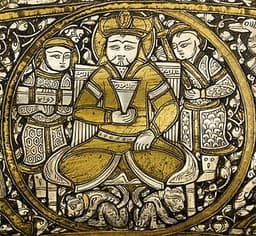
Baybars
Emperor · Medieval
63.8Total

Julius Caesar
General · Ancient
82.8Total
Basic Information
Born
1223
-100
Died
1277
-44
Era
Medieval
Ancient
Nationality
Egypt
Roman Republic
Occupation
Emperor
General
Civilization
Middle Eastern
Western
Score Comparison
Military (10%)
85.0
88.0
Political (20%)
70.0
78.0
Influence (20%)
55.0
85.0
Legacy (20%)
52.0
82.0
Leadership (15%)
72.0
80.0
Strategy (15%)
72.0
85.0
TOTAL
63.8
82.8
Baybars — Complete Timeline
1260 AD
Battle of Ain Jalut (1260)War◆ Major
Baybars served as a key commander under Qutuz at the Battle of Ain Jalut. He led the vanguard and played a crucial role in the Mamluk victory over the Mongols. This battle established his reputation as a military leader.
Mongol InvasionBattleMamluk Victory
Impact: globalconstructive
Accession as Sultan (1260)Political Action◆ Major
After assassinating Qutuz, Baybars proclaimed himself Sultan of Egypt. He was accepted by the Mamluk commanders and the Abbasid Caliph. His reign began a period of Mamluk dominance in the Middle East, lasting for decades.
SuccessionMamluk SultanateAssassination
Impact: regional
1265 AD
Campaigns against the Crusader States (1260s-1270s)War◆ Major
Baybars launched a series of campaigns against the remaining Crusader states in the Levant. He captured key fortresses including Arsuf (1265), Safed (1266), Jaffa (1268), and Antioch (1268). These victories reduced Crusader territory to a few coastal enclaves.
Crusader WarsConquestMamluk Expansion
Impact: regionaldestructive
1277 AD
Defeat of the Mongols at Elbistan (1277)War◆ Major
Baybars defeated a Mongol army at the Battle of Elbistan in Anatolia. He invaded the Seljuk Sultanate of Rum, which was under Mongol suzerainty. Although a tactical victory, Baybars could not hold Anatolia and returned to Syria.
Mongol WarsBattleAnatolia
Impact: regionalconstructive
Death of Baybars (1277)Other◆ Major
Baybars died in Damascus, possibly from poisoning or illness. His death was kept secret for a time to prevent unrest. He was succeeded by his son Al-Said Barakah. Baybars' reign is considered the peak of the early Mamluk Sultanate.
DeathSuccessionMamluk Sultanate
Impact: regionaltragic
Julius Caesar — Complete Timeline
58 BC
Gallic WarsWar◆ Major
Caesar, as proconsul of Gaul, launched a series of campaigns that conquered all of Gaul (modern France, Belgium, and parts of Switzerland). He fought numerous battles, including against the Helvetii, the Belgae, and the Gallic chieftain Vercingetorix. The wars brought immense wealth and a loyal army to Caesar.
Gallic WarsConquestRoman Expansion
Impact: regional
49 BC
Crossing the RubiconPolitical Action◆ Major
Caesar led Legio XIII across the Rubicon River into Italy, defying the Roman Senate's order to disband his army. This act triggered a civil war against Pompey and the Optimates, ultimately leading to Caesar's dictatorship and the end of the Roman Republic.
Roman Civil WarEnd of RepublicPower Struggle
Impact: global
48 BC
Battle of PharsalusWar◆ Major
Caesar's outnumbered army defeated the larger forces of Pompey the Great at Pharsalus in Greece. Caesar's tactical use of a reserve line to counter Pompey's cavalry charge proved decisive. Pompey fled to Egypt, where he was assassinated, leaving Caesar as the undisputed master of the Roman world.
Roman Civil WarBattleDecisive Victory
Impact: regional
44 BC
Appointment as Dictator for LifePolitical Action◆ Major
The Roman Senate appointed Caesar dictator perpetuo (dictator for life), granting him unprecedented personal power. This move concentrated military, legislative, and judicial authority in one person, effectively ending the Roman Republic's traditional system of checks and balances and alarming many senators.
DictatorshipEnd of RepublicPower Consolidation
Impact: regionaldestructive
Assassination on the Ides of MarchPolitical Action◆ Major
A group of Roman senators, led by Marcus Junius Brutus and Gaius Cassius Longinus, stabbed Caesar to death at a meeting of the Senate in the Theatre of Pompey. The assassination was intended to restore the Republic, but instead triggered another civil war that led to the rise of the Roman Empire.
AssassinationRoman PoliticsEnd of Republic
Impact: globaldestructive
Expert Analysis
Julius Caesar vs Baybars: Historical Comparison
Julius Caesar, a Roman general and statesman of the late Republic, and Baybars, a Mamluk sultan of medieval Egypt, both rose from turbulent eras to become transformative military and political figures, though their contexts and long-term impacts diverged sharply.
Dimension Analysis
**Military: Julius Caesar 88 / Baybars 86**
Caesar’s conquest of Gaul and his civil war victories demonstrated unmatched tactical flexibility and speed, while Baybars repelled the Mongols at Ain Jalut and crushed Crusader strongholds, yet Caesar’s broader strategic innovations edge ahead.
**Political: Julius Caesar 78 / Baybars 87**
Baybars skillfully consolidated power within the Mamluk system, forging alliances with the Golden Horde and stabilizing Egypt, whereas Caesar’s political maneuvering, though brilliant, ended in assassination and civil strife, reflecting a less stable outcome.
**Influence: Julius Caesar 85 / Baybars 71**
Caesar’s reforms—including the Julian calendar and centralization of power—reshaped Rome and inspired countless leaders from Charlemagne to Napoleon, while Baybars’ influence remained largely regional, confined to Mamluk and Islamic spheres.
**Legacy: Julius Caesar 82 / Baybars 72**
Caesar’s name became synonymous with imperial ambition and dictatorship, permeating Western culture, literature, and political thought, whereas Baybars is revered in the Arab world but less globally recognized, his legacy fading outside medieval Islamic history.
**Leadership: Julius Caesar 82 / Baybars 75**
Caesar’s charisma and ability to inspire personal loyalty across diverse legions were extraordinary, while Baybars’ leadership was effective but more autocratic and reliant on Mamluk military hierarchy, lacking Caesar’s enduring personal mystique.
Verdict
Julius Caesar leads overall due to his superior military genius, broader global influence, and enduring legacy as a archetype of transformative leadership.
FAQ
Q: Who ranks higher? A: Julius Caesar ranks higher based on a weighted composite score of 83 to Baybars’ 79, driven by his unmatched influence and legacy across Western civilization.
Rankings
🥇
Julius CaesarLeader
Mil: 88.0Pol: 78.0Inf: 85.0
82.8
🥈
Baybars
Mil: 85.0Pol: 70.0Inf: 55.0
63.8
+19.0 behind
How This Comparison Works
Algorithm
Each figure is scored on 6 dimensions (0—100 scale) based on structured historical data: Military (10%), Political (20%), Influence (20%), Legacy (20%), Leadership (15%), Strategy (15%). The weighted total produces the final ranking.
Data Sources
Scores are computed from structured sub-indicators in the database. Scale factors adjust for era (Ancient ×0.85, Modern ×1.0) and civilization size (Eastern ×1.05, Other ×0.80) to account for differences in population and military scale.
Maximum 3 Figures
Comparisons are limited to 2—3 figures to ensure readability and statistical meaningfulness.
Error Margins
±5 points per dimension — Sub-scores are derived from historical records with inherent uncertainty. Two figures within 5 points on a dimension should be considered roughly equivalent in that area.
Total Score Accuracy
±3 points overall — The weighted combination of 6 dimensions produces a total score with approximately ±3 points of uncertainty. Differences of less than 3 points are not statistically significant— the figures are effectively tied.
Known Limitations
- Historical records are incomplete and uneven across civilizations
- Figures from oral-tradition societies may be underrepresented
- Occupation labels can misclassify multi-role figures
- Scores measure capability and impact, not moral character
- Quantitative scoring is a comparison tool, not absolute truth
Capability Radar
Military (10%) — Battles & Warfare
Battles
85
95
Win Rate
90
92
Expansion
80
97
Political (20%) — Governance & Reform
Reform
80
90
Diplomacy
78
85
Economy
72
82
Influence (20%) — Cultural & Global Reach
Cultural
65
88
Global
65
94
Legacy (20%) — Historical Impact
Historical
75
95
Longevity
60
96
Leadership (15%) — Power & Stability
Tenure
75
75
Stability
70
60
Strategy (15%) — Tactics & Innovation
Strategy
85
94
Tactics
88
96
Reform
82
88
Similar Comparisons
Comments & Discussion
HistoryBuff_886/16/2026
Okay, I gotta say, the military scores being that close doesn’t sit right with me. Caesar’s Gaul campaigns are legendary—like the Siege of Alesia where he built a whole freaking wall around the city while keeping the relief army at bay. That’s tactical genius. Baybars stopped the Mongols at Ain Jalut, which was huge, but let’s be real: the Mongols were already overstretched by then. Caesar faced the full might of the Roman Senate and Pompey, and he still won. Plus, Caesar’s legacy is basically the blueprint for every dictator since. Baybars is cool but he’s nowhere near that level of influence. The score gap should be wider.
LegionaryLover6/16/2026
Come on! Caesar all the way, and it’s not even close. Baybars was a badass for sure—crushing the Crusaders and holding off the Mongols—but Caesar basically invented the playbook for military genius. The guy crossed the Rubicon, conquered Gaul with a mix of brutality and diplomacy, and then beat Pompey’s superior forces at Pharsalus by using his veterans like a scalpel. Plus, Caesar’s reforms—the Julian calendar, land redistribution, centralizing power—shaped Europe for millennia. Baybars was a great Mamluk sultan, but he’s a footnote in world history. Caesar is a headline. The score difference should be 15 points, not 10. Give Caesar the respect he deserves!
Chronicler50486/16/2026
每次看到这种西方vs伊斯兰世界的比较,总觉得评分尺度有文化偏差。凯撒确实开创了帝国模式,但拜巴尔斯在对抗蒙古铁骑时展现的统帅力,放在中国历史上都算顶尖。想想看,1258年巴格达陷落,蒙古人势不可挡,拜巴尔斯却在1260年用计谋和伏击在艾因贾鲁特击败了怯的不花。这有点像唐朝安史之乱中郭子仪力挽狂澜,但拜巴尔斯是逆势翻盘。凯撒的《高卢战记》是经典,但拜巴尔斯留下的军事改革和城堡体系,在西亚持续影响了三百年。评分者可能高估了‘全球知名度’的权重,低估了区域战略防御的重要性。
Chronicler80706/16/2026
从数据上看,凯撒总分83.3,拜巴尔斯73,差距10.3分,但政治分拜巴尔斯87高于凯撒78。这让我觉得评分有偏向性。拜巴尔斯在1260年击败蒙古人后,巩固了马穆鲁克王朝,并建立了与金帐汗国的联盟,这个外交手腕在混乱的中东非常难得。反观凯撒,他的政治改革直接导致共和制崩溃,死后引发内战。如果把凯撒的政治分扣到75,拜巴尔斯提高到90,总分差就会缩小到6分左右。此外,影响力维度用全球知名度来评判对区域型领袖不公平。建议用‘区域影响力深度’替代。这样拜巴尔斯在伊斯兰世界的影响分至少能到80。