Loading...
Bayan of the Baarin vs Qin Shi Huang
Qin Shi Huang leads by 22.6 pts · 2 figures compared
…

Bayan of the Baarin
General · Medieval
62.6Total
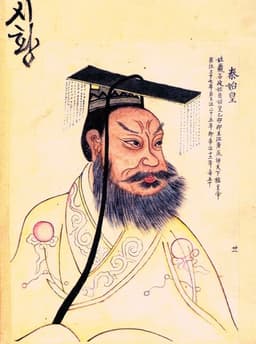
Qin Shi Huang
Emperor · Ancient
85.2Total
Basic Information
Born
1236
-259
Died
1295
-210
Era
Medieval
Ancient
Nationality
Mongolia
China
Occupation
General
Emperor
Civilization
Eastern
Eastern
Score Comparison
Military (10%)
88.0
80.0
Political (20%)
68.0
90.0
Influence (20%)
55.0
85.0
Legacy (20%)
58.0
90.0
Leadership (15%)
48.8
78.0
Strategy (15%)
80.8
82.0
TOTAL
62.6
85.2
Bayan of the Baarin — Complete Timeline
1273 AD
Battle of XiangyangWar◆ Major
Bayan oversaw the siege of Xiangyang, a fortified Song city that resisted for six years. The Mongol use of trebuchets and blockade tactics forced its surrender, breaking the Song defensive line and opening the Yangtze River valley to invasion.
SiegeMilitary CampaignSong-Yuan War
Impact: regional
1274 AD
Led the Mongol Conquest of the Southern SongWar
Bayan of the Baarin commanded the Mongol army in the final campaign against the Southern Song dynasty. He captured key cities including Xiangyang and Hangzhou, leading to the surrender of the Song emperor in 1276 and the unification of China under Yuan rule.
Mongol ConquestSouthern SongYuan Dynasty
Impact: global
1277 AD
Appointed Grand Councillor of the Yuan DynastyPolitical Action◆ Major
After the conquest, Bayan was appointed Grand Councillor, the highest civil office in the Yuan government. He helped consolidate Mongol rule over China, advising on administrative integration and military governance.
Yuan DynastyGovernmentPost-Conquest
Impact: nationalconstructive
Qin Shi Huang — Complete Timeline
246 BC
Construction of the Mausoleum and Terracotta ArmyOther◆ Major
Qin Shi Huang commissioned a vast mausoleum complex near Xi'an, guarded by thousands of life-sized terracotta soldiers, horses, and chariots. The project employed hundreds of thousands of workers and reflected his obsession with immortality and imperial power.
Impact: global
230 BC
Conquest of the Six Warring StatesWar
From 230 to 221 BCE, Ying Zheng led the Qin state in a series of campaigns that conquered the Han, Zhao, Wei, Chu, Yan, and Qi states. This unified China under a single ruler for the first time, ending the Warring States period.
Impact: global
221 BC
Standardization of Writing, Currency, and MeasurementsReform◆ Major
Qin Shi Huang ordered the standardization of Chinese script, currency, and weights and measures across the unified empire. This facilitated administration, trade, and cultural integration, laying a foundation for future dynasties.
Impact: globalconstructive
Proclamation of the Qin DynastyPolitical Action
After conquering the last independent state, Ying Zheng declared himself Shi Huangdi (First Emperor), founding the Qin Dynasty. He adopted a new title to signify his supreme authority and initiated centralized imperial rule.
Impact: global
214 BC
Initiation of the Great Wall ConstructionOther◆ Major
Qin Shi Huang ordered the connection and extension of existing northern fortifications to create a unified defensive wall against nomadic Xiongnu raids. This project involved massive conscripted labor and became the precursor to the later Great Wall.
Impact: regional
213 BC
Burning of Books and Burying of ScholarsPolitical Action◆ Major
On the advice of Li Si, Qin Shi Huang ordered the burning of historical records and philosophical texts not aligned with Legalist doctrine. He also had 460 Confucian scholars buried alive to suppress dissent and consolidate ideological control.
Impact: nationaldestructive
Expert Analysis
bayan-of-the-baarin-vs-qin-shi-huang
# The Unifier and the Conqueror: Two Paths to Empire
On a winter morning in 221 BC, Ying Zheng stood before the gates of the last independent kingdom of China, the state of Qi having just surrendered without a fight. He was thirty-eight years old, and the world he had known—a patchwork of warring states, each with its own script, its own coins, its own measure of a foot—was about to vanish. Thirteen centuries later, in the spring of 1273, a Mongol general named Bayan of the Baarin watched from a hilltop as the walls of Xiangyang finally crumbled after six years of siege. Both men were architects of unification, but their empires could not have been more different: one built to last a thousand years and lasting barely fifteen, the other built to conquer and holding on for nearly a century. The question of why—why one emperor's vision outlived him while another general's conquests faded—lies not in the battles they won, but in the worlds they inherited.
Origins
Qin Shi Huang was born into chaos. The Warring States period had raged for over two centuries, a brutal competition among seven kingdoms that had perfected the arts of war while forgetting the arts of peace. His father was a king, but a weak one; his mother was a concubine who would later plot against him. From childhood, Ying Zheng learned that trust was a liability and that power, once seized, must be held with an iron grip. The Legalist philosophy that surrounded him taught that human nature was base, that only harsh laws and uniform standards could create order. He was a product of his time—a time that demanded a tyrant to end the tyranny of endless war.
Bayan of the Baarin, by contrast, was born into empire. The Mongol Empire of 1236 already stretched from the Caspian Sea to the Pacific Ocean. His people were horsemen who had conquered more territory in a generation than Rome had in five centuries. But the Mongols were not builders; they were takers. Their genius lay in mobility, in the compound bow fired from the saddle, in the terrifying speed of their advances. Bayan grew up in a world where the question was not *whether* to conquer, but *how* to conquer the next kingdom. He was a general in a machine designed for expansion, and like the machine, he had no off switch.
Rise to Power
Ying Zheng's path to power was a slow, grinding campaign of annihilation. From 230 to 221 BC, he methodically destroyed one kingdom after another—Han, Zhao, Wei, Chu, Yan, Qi—using a combination of military force, bribery, and psychological warfare. He did not merely defeat his enemies; he erased them. Their royal families were executed, their capitals razed, their histories rewritten. When he declared himself Shi Huangdi, the First Emperor, he meant it literally: there would be no second.
Bayan's rise was more sudden. In 1273, after the fall of Xiangyang, the Southern Song dynasty's last great defensive position, he was given command of the final campaign. He moved with breathtaking speed, capturing one city after another not by sieges but by diplomacy and terror. He offered terms: surrender and live, resist and die. Many cities chose to live. Within three years, the Song emperor was a prisoner, and Bayan was the most powerful man in the Yuan dynasty, appointed Grand Councillor in 1277. Where Qin Shi Huang had built his empire through decades of relentless war, Bayan had inherited one through a single, brilliant campaign.
Leadership & Governance
Here the two men diverge most sharply. Qin Shi Huang was a revolutionary. He standardized writing, currency, and measurements across his empire, creating a unified administrative system that would outlast his dynasty by two thousand years. He connected the northern fortifications into what would become the Great Wall. He built roads and canals. But he also burned books and buried scholars alive, believing that the past must be destroyed to make way for the future. His rule was absolute, his laws harsh, his punishments cruel. The people did not love him; they feared him.
Bayan, by contrast, was a pragmatist. As Grand Councillor, he helped consolidate Mongol rule over China by adopting Chinese administrative practices while preserving Mongol military traditions. He was not a reformer; he was a manager. The Mongol Empire had no interest in standardizing writing or currency—it was a tribute-based system, not a unified state. Bayan's genius lay in keeping the machine running, not in rebuilding it. He did not burn books or bury scholars; he simply ignored them.
Triumph & Tragedy
Qin Shi Huang's greatest triumph was also his greatest tragedy. In 210 BC, while searching for an elixir of immortality, he died at the age of forty-nine. His empire, held together by his iron will, began to unravel within months. The standardized script and currency survived, but the dynasty did not. His mausoleum, guarded by the Terracotta Army, remained hidden for two millennia—a monument not to his success but to his obsession.
Bayan's triumph was the conquest of the Southern Song, the richest and most populous kingdom on earth. His tragedy was that the Mongol Empire, like the Qin dynasty, could not survive its founder. Kublai Khan died in 1294; Bayan died the following year. Within a generation, the Yuan dynasty began to fracture, and within a century, it was overthrown. The Mongols had conquered China, but China, in the end, conquered them.
Character & Destiny
Qin Shi Huang was a man possessed by the future. He believed that he could impose order on chaos, that the world could be reshaped by sheer will. He was paranoid, ruthless, and visionary—a combination that made him both a great unifier and a terrible ruler. His character drove him to extremes: the standardization of everything, the destruction of the past, the search for immortality. He could not accept limits, and that refusal to accept limits ultimately destroyed his dynasty.
Bayan was a man of the present. He understood power as a tool, not a mission. He conquered because that was his job, not because he believed in a grand vision. He was loyal to the Khans, efficient in his campaigns, and pragmatic in his governance. But he lacked the ambition to build something new. He was a perfect instrument of empire, but instruments do not create; they are used.
Legacy
Qin Shi Huang's legacy is paradoxical. His dynasty lasted only fifteen years, but the institutions he created—the unified script, the centralized bureaucracy, the standardization of weights and measures—survived for two millennia. He is remembered as both a tyrant and a founder, the man who made China possible. The Terracotta Army, discovered in 1974, has made him a global icon, a symbol of ancient power and ambition.
Bayan's legacy is quieter. He is remembered in Mongolia as a great general, but in China, he is a footnote. The Yuan dynasty he helped build lasted less than a century, and its Mongol rulers were eventually driven back to the steppes. His conquests were vast, but they left no lasting institutions, no unified script, no standardized currency. The Mongols conquered China, but China absorbed them.
Conclusion
The difference between Qin Shi Huang and Bayan of the Baarin is the difference between a founder and a conqueror. One built a system that outlived him; the other executed a campaign that faded. Qin Shi Huang's tyranny was creative; Bayan's efficiency was destructive. Both men achieved what they set out to do, but one changed the world, while the other merely conquered it. In the end, the unifier's legacy proved more enduring than the conqueror's—a reminder that the hardest task in history is not to take an empire, but to build one that lasts.
Rankings
🥇
Qin Shi HuangLeader
Mil: 80.0Pol: 90.0Inf: 85.0
85.2
🥈
Bayan of the Baarin
Mil: 88.0Pol: 68.0Inf: 55.0
62.6
+22.6 behind
How This Comparison Works
Algorithm
Each figure is scored on 6 dimensions (0—100 scale) based on structured historical data: Military (10%), Political (20%), Influence (20%), Legacy (20%), Leadership (15%), Strategy (15%). The weighted total produces the final ranking.
Data Sources
Scores are computed from structured sub-indicators in the database. Scale factors adjust for era (Ancient ×0.85, Modern ×1.0) and civilization size (Eastern ×1.05, Other ×0.80) to account for differences in population and military scale.
Maximum 3 Figures
Comparisons are limited to 2—3 figures to ensure readability and statistical meaningfulness.
Error Margins
±5 points per dimension — Sub-scores are derived from historical records with inherent uncertainty. Two figures within 5 points on a dimension should be considered roughly equivalent in that area.
Total Score Accuracy
±3 points overall — The weighted combination of 6 dimensions produces a total score with approximately ±3 points of uncertainty. Differences of less than 3 points are not statistically significant— the figures are effectively tied.
Known Limitations
- Historical records are incomplete and uneven across civilizations
- Figures from oral-tradition societies may be underrepresented
- Occupation labels can misclassify multi-role figures
- Scores measure capability and impact, not moral character
- Quantitative scoring is a comparison tool, not absolute truth
Capability Radar
Military (10%) — Battles & Warfare
Battles
92
85
Win Rate
90
90
Expansion
95
90
Political (20%) — Governance & Reform
Reform
55
95
Diplomacy
75
75
Economy
50
90
Influence (20%) — Cultural & Global Reach
Cultural
60
95
Global
75
85
Legacy (20%) — Historical Impact
Historical
75
95
Longevity
70
95
Leadership (15%) — Power & Stability
Tenure
60
70
Stability
65
65
Strategy (15%) — Tactics & Innovation
Strategy
95
85
Tactics
88
80
Reform
70
95
Similar Comparisons
Comments & Discussion
CANTONCATAPULT6/17/2026
Bayan's siege of Xiangyang was the real test of empire-building, not Qin's cookie-cutter conquests. While Qin Shi Huang mopped up already-weakened states with standardized chariots, Bayan faced the Song's mountain fortresses and naval defenses using trebuchets that launched 200-pound stones. One had to innovate against desperation; the other just showed up to a dying party. Give me the general who wins against a fortified system, not the king who inherits a crumbling one.
墨守成规6/17/2026
秦始皇统一六国用的是"远交近攻"的阳谋,可他把六国文字烧成灰烬的时候,想过语言统一需要几代人吗?巴颜在襄阳六年围城战中,允许蒙古骑兵学习南方水战技巧,这才是务实主义。一个靠烧书强推标准化,一个靠学习包容多样性。历史投票了:谁的文化活得更久?
LAOZIWOULDKNOW6/17/2026
Qin Shi Huang wasn't just a conqueror; he was a systems architect. The guy standardized axle widths so roads could carry grain—that's logistics genius. Bayan's Mongols rode horses that needed 20 pounds of forage daily, but they never built a single granary network that outlasted them. Qin's terra-cotta army isn't art; it's a supply chain monument. One general fed an empire for a decade; one emperor designed one that could feed itself for centuries. Numbers don't lie.
蒙古弓手6/17/2026
说巴颜厉害?他不过是大汗的提线木偶!忽必烈在背后遥控每一发炮弹,连襄阳投降的日子都是大都算好的吉时。反观嬴政,亲自督战邯郸城,把母亲的奸夫剁成肉酱——这才叫主子当家。巴颜连汉语都不会说,靠翻译攻城,算什么统一者?要当皇帝先得攥紧自己的刀,而不是等主子的信鸽。
STELESTEALER6/17/2026
Here's the uncomfortable truth: Qin Shi Huang's unification was a propaganda coup, not a military miracle. The Zhao, Wei, and Han states were already decimated by corruption—Qin just delivered the killing blow with poisoned wine. Bayan, however, broke the Song's 200-year fortress network, which the Jurchens couldn't crack for a century. The Song army wasn't collapsing; it was still fielding 300,000 troops when Xiangyang fell. That's a real conquest, not a game of diplomacy. Call it what it is.