Loading...
Bassirou Diomaye Faye vs Harry S. Truman
Harry S. Truman leads by 28.3 pts · 2 figures compared
…
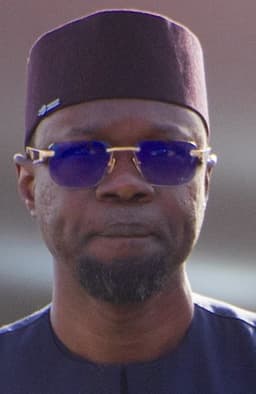
Bassirou Diomaye Faye
Politician · Modern
35.4Total
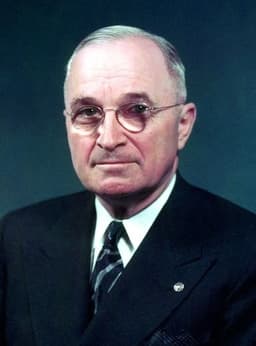
Harry S. Truman
Politician · Modern
63.7Total
Basic Information
Born
1980
1884
Died
—
1972
Era
Modern
Modern
Nationality
Senegal
United States
Occupation
Politician
Politician
Civilization
Other
Western
Score Comparison
Military (10%)
16.7
30.0
Political (20%)
27.9
55.0
Influence (20%)
47.1
68.0
Legacy (20%)
35.0
72.0
Leadership (15%)
31.2
79.8
Strategy (15%)
43.2
55.0
TOTAL
35.4
63.7
Bassirou Diomaye Faye — Complete Timeline
2024 AD
Election as President of SenegalPolitical Action◆ Major
Bassirou Diomaye Faye won the 2024 Senegalese presidential election in the first round, defeating the ruling coalition candidate. At 44, he became the youngest elected president in Senegal's history. Faye, a former tax inspector, ran on an anti-corruption platform.
ElectionSenegalYouth
Impact: nationalconstructive
Release from prison before electionPolitical Action◆ Major
Faye was released from prison in March 2024 after being detained on charges of defamation and incitement. His release, part of a political amnesty, allowed him to campaign for the presidency, which he won weeks later.
PrisonAmnestyElection
Impact: national
Harry S. Truman — Complete Timeline
1945 AD
Ordered atomic bombings of Hiroshima and NagasakiWar
Truman authorized the use of atomic bombs against Japan. Hiroshima was bombed on August 6, Nagasaki on August 9. Japan surrendered on August 15, ending World War II. The bombings caused massive civilian casualties and initiated the nuclear age.
World War IINuclear WeaponsJapan
Impact: globaldestructive
1947 AD
Announced the Truman DoctrinePolitical Action◆ Major
Truman declared that the United States would provide political, military, and economic assistance to all democratic nations under threat from authoritarian forces. This policy was first applied to Greece and Turkey, marking the start of the Cold War containment strategy.
Cold WarContainmentForeign Policy
Impact: globalconstructive
1948 AD
Desegregated the U.S. armed forcesReform◆ Major
Truman issued Executive Order 9981, mandating equality of treatment and opportunity for all persons in the armed services regardless of race. This order began the process of racial integration in the U.S. military, a major step in the civil rights movement.
Civil RightsMilitaryDesegregation
Impact: nationalprogressive
Signed the Marshall Plan into lawPolitical Action◆ Major
Truman signed the Economic Cooperation Act, implementing the Marshall Plan. This program provided over $12 billion in economic aid to rebuild Western European economies after World War II, stabilizing the region and countering Soviet influence.
Cold WarEconomic AidEurope
Impact: globalconstructive
1950 AD
Ordered U.S. intervention in the Korean WarWar◆ Major
After North Korea invaded South Korea, Truman committed U.S. forces under a United Nations mandate. The war lasted until 1953, ended in an armistice, and solidified the division of Korea. It also led to the militarization of the Cold War.
Korean WarCold WarMilitary Intervention
Impact: global
Expert Analysis
Origins
Bassirou Diomaye Faye was born in 1980 in Ndiaganiao, Senegal, into a modest rural family. He studied law at Cheikh Anta Diop University in Dakar and later joined the tax administration, working as a tax collector. His early career exposed him to the workings of the Senegalese state and its fiscal challenges. Harry S. Truman was born in 1884 in Lamar, Missouri, into a farming family. He did not attend college, instead working as a haberdasher and farmer. His political career began with local offices, shaped by the Pendergast machine in Kansas City. Both men came from humble beginnings, but their paths diverged sharply: Faye in a modern African democracy, Truman in early 20th-century America.
Rise to Power
Faye's rise was meteoric. He became a protégé of opposition leader Ousmane Sonko and was elected president in March 2024 at age 44, after being released from prison just days earlier. His victory in the first round against the ruling coalition candidate marked a seismic shift in Senegalese politics. Truman's ascent was slower. He was elected to the Senate in 1934, gained prominence for investigating defense spending, and was chosen as Franklin Roosevelt's vice president in 1944. Upon Roosevelt's death in April 1945, Truman became president, inheriting World War II and the decision to use atomic bombs. Where Faye's rise was driven by popular discontent and a youth movement, Truman's was a product of party machinery and historical accident.
Leadership & Governance
Faye's leadership style is consultative and reformist. He has promised anti-corruption measures, economic sovereignty, and a break from the old elite. His governance approach emphasizes transparency and inclusivity, but his tenure is too brief to assess concrete outcomes. Truman, by contrast, was decisive and interventionist. He authorized the atomic bombings of Hiroshima and Nagasaki in August 1945, ending World War II but killing hundreds of thousands. Domestically, he signed Executive Order 9981 in 1948 to desegregate the armed forces, a landmark civil rights action. His Fair Deal program expanded the New Deal, but many proposals were blocked by Congress. Faye scores 27.9 in political skill versus Truman's 55.0, reflecting Truman's longer experience and more significant legislative battles.
Triumph & Tragedy
Faye's greatest triumph is his election itself—a peaceful transfer of power from the ruling party to an opposition candidate, demonstrating Senegal's democratic maturity. His tragedy lies in the immense expectations he faces; failure to deliver on reforms could destabilize the country. Truman's triumphs include the Marshall Plan (signed in 1948), which rebuilt Western Europe, and the Truman Doctrine (1947), which contained Soviet expansion. His greatest tragedy is the atomic bombings, which remain controversial. Additionally, the Korean War (1950-1953) ended in stalemate after 36,000 U.S. deaths. Truman's leadership score of 79.8 contrasts with Faye's 31.2, reflecting Truman's handling of crises. However, Faye's strategy score of 43.2 versus Truman's 55.0 shows a narrower gap, as both faced complex geopolitical landscapes.
Character & Destiny
Faye is described as calm, methodical, and incorruptible. His imprisonment before the election galvanized support and shaped his narrative as a martyr for democracy. His destiny is tied to Senegal's stability and his ability to implement reforms. Truman was blunt, humble, and decisive. He famously kept a sign on his desk: "The buck stops here." His character—willing to take responsibility for difficult decisions—defined his presidency. Historians generally rate Truman as a near-great president, while Faye's legacy is unwritten. Character shaped fate: Truman's decisiveness led to the Cold War's early architecture; Faye's patience may foster democratic consolidation.
Legacy
Truman's legacy is vast: the atomic bombings, the Cold War containment policy, the Marshall Plan, NATO's founding (1949), and desegregation of the military. He set the stage for U.S. global leadership. Faye's legacy is nascent. If he succeeds in reducing corruption and boosting Senegal's economy, he could be a model for African governance. His overall score of 35.4 versus Truman's 63.7 reflects this imbalance. Truman's influence score of 68.0 dwarfs Faye's 47.1, as Truman shaped world order. Faye's military score of 16.7 is low, as Senegal has no major conflict, while Truman's 30.0 reflects his wartime leadership.
Conclusion
Harry S. Truman had vastly greater impact than Bassirou Diomaye Faye. Truman's decisions shaped the second half of the 20th century and beyond, from nuclear proliferation to global alliances. Faye, while symbolically important for Senegal and Africa, has not yet achieved transformative change. The score gap of 28.3 points underlines this disparity. Truman's legacy is secure; Faye's remains to be built. For now, the historical weight of atomic bombs, the Marshall Plan, and the Cold War far outweighs a promising but unproven presidency.
Rankings
🥇
Harry S. TrumanLeader
Mil: 30.0Pol: 55.0Inf: 68.0
63.7
🥈
Bassirou Diomaye Faye
Mil: 16.7Pol: 27.9Inf: 47.1
35.4
+28.3 behind
How This Comparison Works
Algorithm
Each figure is scored on 6 dimensions (0—100 scale) based on structured historical data: Military (10%), Political (20%), Influence (20%), Legacy (20%), Leadership (15%), Strategy (15%). The weighted total produces the final ranking.
Data Sources
Scores are computed from structured sub-indicators in the database. Scale factors adjust for era (Ancient ×0.85, Modern ×1.0) and civilization size (Eastern ×1.05, Other ×0.80) to account for differences in population and military scale.
Maximum 3 Figures
Comparisons are limited to 2—3 figures to ensure readability and statistical meaningfulness.
Error Margins
±5 points per dimension — Sub-scores are derived from historical records with inherent uncertainty. Two figures within 5 points on a dimension should be considered roughly equivalent in that area.
Total Score Accuracy
±3 points overall — The weighted combination of 6 dimensions produces a total score with approximately ±3 points of uncertainty. Differences of less than 3 points are not statistically significant— the figures are effectively tied.
Known Limitations
- Historical records are incomplete and uneven across civilizations
- Figures from oral-tradition societies may be underrepresented
- Occupation labels can misclassify multi-role figures
- Scores measure capability and impact, not moral character
- Quantitative scoring is a comparison tool, not absolute truth
Capability Radar
Military (10%) — Battles & Warfare
Battles
20
0
Win Rate
22
0
Expansion
26
0
Political (20%) — Governance & Reform
Reform
10
65
Diplomacy
10
75
Economy
10
60
Influence (20%) — Cultural & Global Reach
Cultural
5
55
Global
5
80
Legacy (20%) — Historical Impact
Historical
5
80
Longevity
5
70
Leadership (15%) — Power & Stability
Tenure
5
70
Stability
10
60
Strategy (15%) — Tactics & Innovation
Strategy
31
70
Tactics
35
0
Reform
34
60
Similar Comparisons
Comments & Discussion
No comments yet. Be the first to share your thoughts!