Loading...
This comparison has not been analyzed yet.
One-time AI generation (~1 minute). Scores and timeline are already available below.
Barsbay vs Charles IV of Bohemia
Charles IV of Bohemia leads by 4.0 pts · 2 figures compared
…

Barsbay
Emperor · Medieval
57.6Total
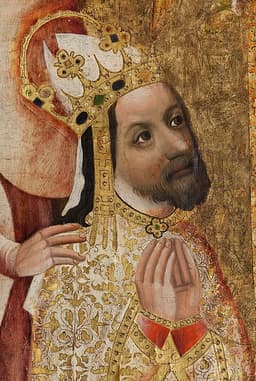
Charles IV of Bohemia
Emperor · Medieval
61.6Total
Basic Information
Born
1369
1316
Died
1438
1378
Era
Medieval
Medieval
Nationality
Egypt
Bohemia
Occupation
Emperor
Emperor
Civilization
Middle Eastern
Western
Score Comparison
Military (10%)
50.0
46.7
Political (20%)
60.0
78.0
Influence (20%)
59.0
65.0
Legacy (20%)
49.2
55.0
Leadership (15%)
72.0
78.0
Strategy (15%)
57.5
35.0
TOTAL
57.6
61.6
Barsbay — Complete Timeline
1424 AD
Suppression of the Revolt of the BedouinWar
Barsbay led a military campaign to suppress a large-scale Bedouin revolt in Upper Egypt. The rebellion threatened agricultural production and trade routes. The sultan's forces defeated the Bedouin tribes, restoring order and securing the region.
Mamluk SultanateBedouinRevolt
Impact: regional
1426 AD
Campaign against CyprusWar◆ Major
Barsbay launched a naval expedition against the Kingdom of Cyprus, which had been raiding Mamluk coasts. The Mamluk fleet captured Limassol and forced the Cypriot king to pay tribute, extending Mamluk influence into the eastern Mediterranean.
Mamluk SultanateCyprusNaval Campaign
Impact: regional
1429 AD
Monopolization of the Spice TradeReform◆ Major
Barsbay established a state monopoly over the spice trade in Egypt, requiring all spice imports to be sold to the government at fixed prices. This policy generated significant revenue for the Mamluk treasury but disrupted traditional trade routes and angered Venetian merchants.
Mamluk SultanateTradeMonopolySpice
Impact: global
Charles IV of Bohemia — Complete Timeline
1348 AD
Foundation of Charles UniversityCultural◆ Major
Charles IV founded Charles University in Prague, the first university in Central Europe. The institution became a center of learning and culture, attracting scholars from across Europe and fostering the development of Czech intellectual life.
EducationUniversityCultural Center
Impact: regionalconstructive
1355 AD
Coronation as Holy Roman EmperorPolitical Action◆ Major
Charles IV was crowned Holy Roman Emperor in Rome by Pope Innocent VI. This coronation solidified his authority over the empire and allowed him to implement reforms that strengthened imperial governance.
CoronationImperial AuthorityPapal Relations
Impact: global
1356 AD
Golden Bull of 1356Reform
Charles IV issued the Golden Bull, a constitutional document that regulated the election of the Holy Roman Emperor. It established the seven prince-electors and defined their privileges, stabilizing the empire's political structure for centuries.
ConstitutionHoly Roman EmpireElectoral System
Impact: globalconstructive
1357 AD
Construction of Charles BridgeCultural◆ Major
Charles IV commissioned the construction of the Charles Bridge in Prague, a stone bridge connecting the Old Town with the Lesser Quarter. The bridge became a vital trade route and a symbol of Prague's architectural heritage.
ArchitectureInfrastructurePrague
constructive
This comparison has not been analyzed yet.
One-time AI generation (~1 minute). Scores and timeline are already available below.
Rankings
🥇
Charles IV of BohemiaLeader
Mil: 46.7Pol: 78.0Inf: 65.0
61.6
🥈
Barsbay
Mil: 50.0Pol: 60.0Inf: 59.0
57.6
+4.0 behind
How This Comparison Works
Algorithm
Each figure is scored on 6 dimensions (0—100 scale) based on structured historical data: Military (10%), Political (20%), Influence (20%), Legacy (20%), Leadership (15%), Strategy (15%). The weighted total produces the final ranking.
Data Sources
Scores are computed from structured sub-indicators in the database. Scale factors adjust for era (Ancient ×0.85, Modern ×1.0) and civilization size (Eastern ×1.05, Other ×0.80) to account for differences in population and military scale.
Maximum 3 Figures
Comparisons are limited to 2—3 figures to ensure readability and statistical meaningfulness.
Error Margins
±5 points per dimension — Sub-scores are derived from historical records with inherent uncertainty. Two figures within 5 points on a dimension should be considered roughly equivalent in that area.
Total Score Accuracy
±3 points overall — The weighted combination of 6 dimensions produces a total score with approximately ±3 points of uncertainty. Differences of less than 3 points are not statistically significant— the figures are effectively tied.
Known Limitations
- Historical records are incomplete and uneven across civilizations
- Figures from oral-tradition societies may be underrepresented
- Occupation labels can misclassify multi-role figures
- Scores measure capability and impact, not moral character
- Quantitative scoring is a comparison tool, not absolute truth
Capability Radar
Military (10%) — Battles & Warfare
Battles
55
30
Win Rate
60
40
Expansion
45
25
Political (20%) — Governance & Reform
Reform
65
80
Diplomacy
60
85
Economy
85
80
Influence (20%) — Cultural & Global Reach
Cultural
40
80
Global
55
60
Legacy (20%) — Historical Impact
Historical
55
75
Longevity
40
70
Leadership (15%) — Power & Stability
Tenure
70
85
Stability
60
75
Strategy (15%) — Tactics & Innovation
Strategy
55
45
Tactics
50
35
Reform
40
20
Similar Comparisons
Comments & Discussion
No comments yet. Be the first to share your thoughts!