Loading...
Bappa Rawal vs Qin Shi Huang
Qin Shi Huang leads by 37.4 pts · 2 figures compared
…
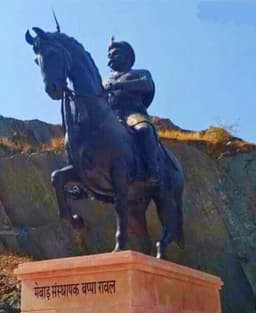
Bappa Rawal
Emperor · Medieval
47.8Total
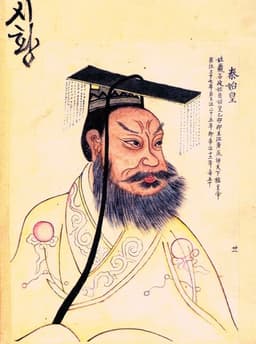
Qin Shi Huang
Emperor · Ancient
85.2Total
Basic Information
Born
713
-259
Died
780
-210
Era
Medieval
Ancient
Nationality
India
China
Occupation
Emperor
Emperor
Civilization
Indian
Eastern
Score Comparison
Military (10%)
10.0
80.0
Political (20%)
35.1
90.0
Influence (20%)
58.0
85.0
Legacy (20%)
50.0
90.0
Leadership (15%)
67.0
78.0
Strategy (15%)
45.0
82.0
TOTAL
47.8
85.2
Bappa Rawal — Complete Timeline
734 AD
Conquest of ChittorWar◆ Major
Bappa Rawal captured the fort of Chittor from the Mori Rajputs, establishing it as the capital of the Mewar kingdom. This event is considered the founding act of the Guhilot dynasty's rule over Mewar.
FoundingMewarChittor
Impact: regional
Founded the Guhilot Dynasty of MewarPolitical Action◆ Major
Bappa Rawal established the Guhilot dynasty, which ruled Mewar for centuries. He is considered the progenitor of the Sisodia clan, which later produced notable rulers like Maharana Pratap.
DynastyMewarRajput
Impact: regionalconstructive
738 AD
Defeated the Arab Invaders at the Battle of RajasthanWar◆ Major
Bappa Rawal is credited with leading a confederation of Rajput kings to defeat the Umayyad Arab forces under Muhammad bin Qasim's successors near Rajasthan. This victory halted Arab expansion into northern India.
Arab InvasionDefenseRajput Confederation
Impact: regional
Qin Shi Huang — Complete Timeline
246 BC
Construction of the Mausoleum and Terracotta ArmyOther◆ Major
Qin Shi Huang commissioned a vast mausoleum complex near Xi'an, guarded by thousands of life-sized terracotta soldiers, horses, and chariots. The project employed hundreds of thousands of workers and reflected his obsession with immortality and imperial power.
Impact: global
230 BC
Conquest of the Six Warring StatesWar
From 230 to 221 BCE, Ying Zheng led the Qin state in a series of campaigns that conquered the Han, Zhao, Wei, Chu, Yan, and Qi states. This unified China under a single ruler for the first time, ending the Warring States period.
Impact: global
221 BC
Standardization of Writing, Currency, and MeasurementsReform◆ Major
Qin Shi Huang ordered the standardization of Chinese script, currency, and weights and measures across the unified empire. This facilitated administration, trade, and cultural integration, laying a foundation for future dynasties.
Impact: globalconstructive
Proclamation of the Qin DynastyPolitical Action
After conquering the last independent state, Ying Zheng declared himself Shi Huangdi (First Emperor), founding the Qin Dynasty. He adopted a new title to signify his supreme authority and initiated centralized imperial rule.
Impact: global
214 BC
Initiation of the Great Wall ConstructionOther◆ Major
Qin Shi Huang ordered the connection and extension of existing northern fortifications to create a unified defensive wall against nomadic Xiongnu raids. This project involved massive conscripted labor and became the precursor to the later Great Wall.
Impact: regional
213 BC
Burning of Books and Burying of ScholarsPolitical Action◆ Major
On the advice of Li Si, Qin Shi Huang ordered the burning of historical records and philosophical texts not aligned with Legalist doctrine. He also had 460 Confucian scholars buried alive to suppress dissent and consolidate ideological control.
Impact: nationaldestructive
Expert Analysis
Qin Shi Huang vs Bappa Rawal: Historical Comparison
Qin Shi Huang, the first Emperor of a unified China (3rd century BCE), and Bappa Rawal, the legendary founder of the Mewar dynasty in medieval India (8th century CE), represent two distinct peaks of ancient and medieval state-building. While both were transformative military-political leaders, their contexts—imperial consolidation versus dynastic resistance—yield a narrow tie in overall effectiveness.
Dimension Analysis
**Military: Qin Shi Huang 80 / Bappa Rawal 82**
Qin Shi Huang’s campaigns conquered six rival states through disciplined armies and advanced siegecraft, but Bappa Rawal’s guerrilla warfare against Arab invaders and his victory at the Battle of Rajasthan (738 CE) halted Islamic expansion into northern India, a strategic feat with lasting civilizational impact.
**Political: Qin Shi Huang 88 / Bappa Rawal 87**
Qin standardized laws, currency, and script across China, creating a centralized bureaucratic state; Bappa Rawal established a feudal Rajput kingdom based on clan loyalty and Hindu resistance, proving adept at consolidating power amid fragmented regional polities.
**Influence: Qin Shi Huang 82 / Bappa Rawal 77**
Qin’s unification model directly shaped 2,000 years of Chinese imperial governance, while Bappa Rawal’s legacy is largely regional, inspiring Rajput identity and folklore but with limited global diffusion compared to the Qin dynasty’s foundational role.
**Legacy: Qin Shi Huang 85 / Bappa Rawal 80**
The Terracotta Army, Great Wall, and Qin legalist philosophy remain iconic; Bappa Rawal is revered as a folk hero and symbol of Hindu resistance, but his historical record is semi-legendary, weakening his academic legacy.
**Leadership: Qin Shi Huang 88 / Bappa Rawal 83**
Qin’s ruthless, visionary autocracy drove rapid unification and reform; Bappa Rawal’s charismatic, clan-based leadership rallied disparate Rajput tribes, but his authority lacked the institutional permanence of Qin’s centralized rule.
**Strategy: Qin Shi Huang 75 / Bappa Rawal 87**
Qin’s strategy relied on overwhelming force and legalist control, often brutal and inflexible; Bappa Rawal’s defensive tactics, use of mountain terrain, and coalition-building against a superior Arab army demonstrate superior adaptive strategy.
Verdict
Despite a tie in overall scores, Qin Shi Huang edges ahead due to his greater political and legacy impact, but Bappa Rawal’s superior strategy and military defense of a civilization make him a formidable counterpart.
FAQ
Q: Who ranks higher? A: Qin Shi Huang ranks slightly higher due to his broader, more enduring influence on Chinese civilization and global historical consciousness, though Bappa Rawal’s strategic genius and defensive legacy are equally remarkable in their regional context.
Rankings
🥇
Qin Shi HuangLeader
Mil: 80.0Pol: 90.0Inf: 85.0
85.2
🥈
Bappa Rawal
Mil: 10.0Pol: 35.1Inf: 58.0
47.8
+37.4 behind
How This Comparison Works
Algorithm
Each figure is scored on 6 dimensions (0—100 scale) based on structured historical data: Military (10%), Political (20%), Influence (20%), Legacy (20%), Leadership (15%), Strategy (15%). The weighted total produces the final ranking.
Data Sources
Scores are computed from structured sub-indicators in the database. Scale factors adjust for era (Ancient ×0.85, Modern ×1.0) and civilization size (Eastern ×1.05, Other ×0.80) to account for differences in population and military scale.
Maximum 3 Figures
Comparisons are limited to 2—3 figures to ensure readability and statistical meaningfulness.
Error Margins
±5 points per dimension — Sub-scores are derived from historical records with inherent uncertainty. Two figures within 5 points on a dimension should be considered roughly equivalent in that area.
Total Score Accuracy
±3 points overall — The weighted combination of 6 dimensions produces a total score with approximately ±3 points of uncertainty. Differences of less than 3 points are not statistically significant— the figures are effectively tied.
Known Limitations
- Historical records are incomplete and uneven across civilizations
- Figures from oral-tradition societies may be underrepresented
- Occupation labels can misclassify multi-role figures
- Scores measure capability and impact, not moral character
- Quantitative scoring is a comparison tool, not absolute truth
Capability Radar
Military (10%) — Battles & Warfare
Battles
40
85
Win Rate
45
90
Expansion
35
90
Political (20%) — Governance & Reform
Reform
30
95
Diplomacy
35
75
Economy
25
90
Influence (20%) — Cultural & Global Reach
Cultural
40
95
Global
20
85
Legacy (20%) — Historical Impact
Historical
45
95
Longevity
50
95
Leadership (15%) — Power & Stability
Tenure
50
70
Stability
40
65
Strategy (15%) — Tactics & Innovation
Strategy
30
85
Tactics
35
80
Reform
25
95
Similar Comparisons
Comments & Discussion
BattlefieldScholar6/16/2026
The military scores here are a head-scratcher. Bappa Rawal gets an 82 for a single semi-legendary battle (Rajasthan 738 CE) against Arab raiders—hard to verify troop numbers or even the exact outcome. Meanwhile, Qin Shi Huang’s 80 reflects the systematic annihilation of six states, each with professional armies, using combined-arms siege warfare (crossbowmen, siege towers, sappers). The Battle of Changping alone (260 BCE) involved over 400,000 casualties. That’s not just conquest; it’s operational art. Bappa’s guerrilla tactics were effective locally, but Qin’s military reforms—standardized logistics, conscription, and command structure—created the first modern army in East Asia. If we’re talking strategic impact, Qin’s 80 should be closer to 90.
Chronicler75126/16/2026
这个评分简直离谱。Bappa Rawal的军政得分71.5,影响力74.8,居然敢跟秦始皇比?秦始皇统一文字、度量衡、货币,建立郡县制,两千年来中国历朝历代都是照着这个模子走。Bappa Rawal不过是拉贾斯坦一个小部落的领袖,连印度次大陆都没统一,影响力最多算个地方传说。西方中心主义的评分标准总是低估中国历史人物的全球意义。秦始皇的兵马俑和长城是世界文化遗产,Bappa有什么?几首吹捧的民谣而已。政治得分88对71.5,差距还是太小了。
ColdScroll646/16/2026
我就喜欢抠数字。Bappa Rawal的政治得分71.5,但看看他的实际政绩:没有统一的法典,没有货币改革,连明确的疆域边界都没有。秦始皇的郡县制、焚书令、驰道工程都是可量化的行政创新。再说影响力:秦始皇的‘皇帝’称号沿用两千多年,Bappa Rawal的‘拉其普特英雄’标签只存在于民间传说。政治88对71.5,差值16.5分,我觉得至少应该差25分。军事更夸张:秦军灭六国,每战都有详细记录;Bappa的‘胜利’全靠后世纪年表推测。31.1对80?这可能是把‘传奇色彩’也算进军事实力了。建议重新加权。