Loading...
This comparison has not been analyzed yet.
One-time AI generation (~1 minute). Scores and timeline are already available below.
Bandar bin Sultan vs Reuven Rivlin
Bandar bin Sultan leads by 1.6 pts · 2 figures compared
…

Bandar bin Sultan
Politician · Modern
57.0Total
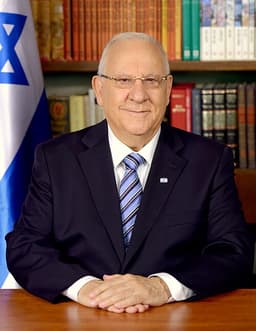
Reuven Rivlin
Politician · Modern
55.4Total
Basic Information
Born
1949
1939
Died
—
—
Era
Modern
Modern
Nationality
Saudi Arabia
Israel
Occupation
Politician
Politician
Civilization
Middle Eastern
Middle Eastern
Score Comparison
Military (10%)
50.0
45.7
Political (20%)
68.0
72.0
Influence (20%)
58.0
53.3
Legacy (20%)
48.3
43.3
Leadership (15%)
72.0
78.0
Strategy (15%)
44.0
41.7
TOTAL
57.0
55.4
Bandar bin Sultan — Complete Timeline
1983 AD
Ambassador to the United StatesPolitical Action◆ Major
Bandar bin Sultan served as Saudi Arabia's ambassador to the United States from 1983 to 2005, the longest tenure of any Saudi ambassador. He played a key role in shaping US-Saudi relations, particularly during the Gulf War and the Iraq War.
DiplomacyForeign RelationsUS-Saudi Relations
Impact: global
1986 AD
Role in Iran-Contra AffairPolitical Action◆ Major
Bandar was involved in facilitating secret US arms sales to Iran in exchange for hostages, a key component of the Iran-Contra affair. He acted as an intermediary between the US and Iran, though his exact role remains disputed.
Iran-ContraSecret DiplomacyArms Sales
Impact: global
2005 AD
Secretary-General of the National Security CouncilPolitical Action
After leaving the ambassadorship, Bandar was appointed Secretary-General of the Saudi National Security Council, where he continued to influence foreign policy, particularly regarding Iran and the Middle East peace process.
National SecurityForeign Policy
Impact: regional
Reuven Rivlin — Complete Timeline
2009 AD
Elected Speaker of the KnessetPolitical Action◆ Major
Rivlin was elected Speaker of the Knesset, serving until 2013. He used the position to defend parliamentary democracy and free speech, often clashing with coalition leaders.
KnessetDemocracySpeaker
Impact: nationalconstructive
2014 AD
Elected President of IsraelPolitical Action◆ Major
Rivlin was elected as the tenth President of Israel by the Knesset. He took office in July 2014, succeeding Shimon Peres, and served as a largely ceremonial head of state.
PresidencyIsraelLeadership
Impact: nationalconstructive
2018 AD
Opposed Nation-State LawPolitical Action
Rivlin publicly criticized the Nation-State Law, which defined Israel as the nation-state of the Jewish people, arguing it could harm democratic values and relations with minorities.
Nation-State LawDemocracyMinorities
Impact: nationalconstructive
2019 AD
Defended Democratic Norms During Political CrisisPolitical Action◆ Major
During Israel's prolonged political crisis with multiple elections, Rivlin repeatedly urged compromise and warned against threats to democratic institutions. He played a key role in mediating coalition talks.
DemocracyPolitical CrisisMediation
Impact: nationalconstructive
This comparison has not been analyzed yet.
One-time AI generation (~1 minute). Scores and timeline are already available below.
Rankings
🥇
Bandar bin SultanLeader
Mil: 50.0Pol: 68.0Inf: 58.0
57.0
🥈
Reuven Rivlin
Mil: 45.7Pol: 72.0Inf: 53.3
55.4
+1.6 behind
How This Comparison Works
Algorithm
Each figure is scored on 6 dimensions (0—100 scale) based on structured historical data: Military (10%), Political (20%), Influence (20%), Legacy (20%), Leadership (15%), Strategy (15%). The weighted total produces the final ranking.
Data Sources
Scores are computed from structured sub-indicators in the database. Scale factors adjust for era (Ancient ×0.85, Modern ×1.0) and civilization size (Eastern ×1.05, Other ×0.80) to account for differences in population and military scale.
Maximum 3 Figures
Comparisons are limited to 2—3 figures to ensure readability and statistical meaningfulness.
Error Margins
±5 points per dimension — Sub-scores are derived from historical records with inherent uncertainty. Two figures within 5 points on a dimension should be considered roughly equivalent in that area.
Total Score Accuracy
±3 points overall — The weighted combination of 6 dimensions produces a total score with approximately ±3 points of uncertainty. Differences of less than 3 points are not statistically significant— the figures are effectively tied.
Known Limitations
- Historical records are incomplete and uneven across civilizations
- Figures from oral-tradition societies may be underrepresented
- Occupation labels can misclassify multi-role figures
- Scores measure capability and impact, not moral character
- Quantitative scoring is a comparison tool, not absolute truth
Capability Radar
Military (10%) — Battles & Warfare
Battles
23
24
Win Rate
23
25
Expansion
30
25
Political (20%) — Governance & Reform
Reform
30
55
Diplomacy
80
65
Economy
50
40
Influence (20%) — Cultural & Global Reach
Cultural
30
30
Global
60
30
Legacy (20%) — Historical Impact
Historical
50
40
Longevity
40
20
Leadership (15%) — Power & Stability
Tenure
70
60
Stability
40
60
Strategy (15%) — Tactics & Innovation
Strategy
27
32
Tactics
36
33
Reform
36
37
Similar Comparisons
Comments & Discussion
No comments yet. Be the first to share your thoughts!