Loading...
Baldwin III of Jerusalem vs Napoleon Bonaparte
Napoleon Bonaparte leads by 15.6 pts · 2 figures compared
…
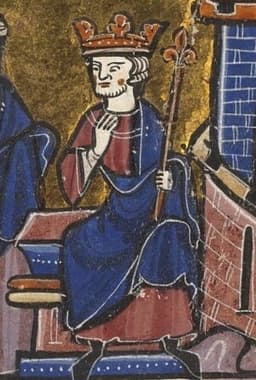
Baldwin III of Jerusalem
Emperor · Medieval
55.3Total

Napoleon Bonaparte
General · Modern
70.9Total
Basic Information
Born
1130
1769
Died
1163
1821
Era
Medieval
Modern
Nationality
Jerusalem
France
Occupation
Emperor
General
Civilization
Western
Western
Score Comparison
Military (10%)
60.0
94.0
Political (20%)
68.0
72.0
Influence (20%)
51.8
40.0
Legacy (20%)
43.3
80.0
Leadership (15%)
64.0
78.0
Strategy (15%)
57.5
90.0
TOTAL
55.3
70.9
Baldwin III of Jerusalem — Complete Timeline
1143 AD
Coronation as King of JerusalemPolitical Action◆ Major
Baldwin III was crowned King of Jerusalem at age 13, but his mother Melisende served as regent. This arrangement led to a power struggle that culminated in Baldwin asserting his independence in 1152.
SuccessionRegencyCrusader States
Impact: regional
1153 AD
Siege and capture of AscalonWar◆ Major
Baldwin III led a campaign to capture the Fatimid fortress of Ascalon, the last major Muslim stronghold on the Palestinian coast. After a five-month siege, the city fell, securing the southern border of the Kingdom of Jerusalem and opening trade routes.
CrusadeConquestFatimid
Impact: regionalconstructive
1158 AD
Marriage to Theodora KomnenePolitical Action
Baldwin III married Theodora Komnene, a niece of Byzantine Emperor Manuel I Komnenos. This alliance strengthened ties between Jerusalem and the Byzantine Empire, securing Byzantine support for crusader campaigns.
AllianceMarriageByzantine
Impact: regionalconstructive
1163 AD
Death from illnessOther◆ Major
Baldwin III died at age 33, possibly from malaria or poisoning. His death without a direct heir led to the succession of his brother Amalric I, and marked the end of a period of relative stability for the Kingdom of Jerusalem.
DeathSuccessionCrusader States
Impact: regionaltragic
Napoleon Bonaparte — Complete Timeline
1799 AD
Coup of 18 BrumaireOther◆ Major
Napoleon Bonaparte, with support from his brother Lucien and key political figures, overthrew the Directory in a bloodless coup. He established the Consulate with himself as First Consul, effectively becoming the ruler of France. This event ended the French Revolution's most unstable period.
French RevolutionCoupRise to Power
Impact: regional
1804 AD
Promulgation of the Napoleonic CodeOther◆ Major
Napoleon enacted the Civil Code of the French, known as the Napoleonic Code, a comprehensive set of laws that replaced the fragmented feudal legal systems. The code established legal equality, protected property rights, and secularized law. It became the basis for legal systems in many European and world countries.
Legal ReformNapoleonic CodeCivil Law
Impact: globalconstructive
1805 AD
Battle of AusterlitzWar◆ Major
Napoleon's Grande Arm
Napoleonic WarsBattleDecisive Victory
Impact: global
1812 AD
Invasion of RussiaWar◆ Major
Napoleon led the Grande Arm
Napoleonic WarsInvasionDisaster
Impact: globaldestructive
1815 AD
Battle of WaterlooWar◆ Major
Napoleon's French army was defeated by the combined forces of the Duke of Wellington's Anglo-Allied army and Gebhard Leberecht von Bl
Napoleonic WarsBattleFinal Defeat
Impact: globaldestructive
Expert Analysis
baldwin-iii-of-jerusalem-vs-napoleon-bonaparte
# The Emperor and the Crusader King
On a June morning in 1815, Napoleon Bonaparte watched his Imperial Guard march toward the ridge of Mont-Saint-Jean, their bearskin caps bobbing above the smoke of Waterloo. He had conquered Europe from Madrid to Moscow, redrawn the map of nations, and codified laws that would outlive empires. Less than seven hundred years earlier, another young ruler had stood before the walls of Ascalon in 1153, watching his siege towers roll toward the last Fatimid stronghold on the Palestinian coast. Baldwin III was just twenty-three, a king from a fragile Crusader kingdom that few in Europe believed could survive. One man would shake the world and die in exile; the other would fall to illness at thirty-three, leaving a kingdom that would crumble within a generation. What separated them was not simply luck or talent, but the deep, unyielding logic of the eras that shaped them.
Origins
Napoleon was born in 1769 on Corsica, an island only recently absorbed into France. His family were minor nobility, but their world was one of sharp edges and resentments—Corsican independence crushed by French armies, a provincial accent that marked him as an outsider in mainland society. He attended military school in Brienne, where classmates mocked his poverty and his accent. That humiliation forged something cold and calculating in him. He read Plutarch and Rousseau, dreamed of Alexander and Caesar, and understood that in the chaos of the French Revolution, a man of talent could rise as high as his ambition reached.
Baldwin III entered the world in 1130, born into the House of Anjou, a dynasty that had carved out a Christian kingdom in the Holy Land after the First Crusade. His father Fulk was a warrior-king, his mother Melisende the daughter of Baldwin II, a ruler who had held Jerusalem together through treachery and diplomacy. From infancy, Baldwin breathed the air of a frontier kingdom surrounded by enemies—the Zengids to the north, the Fatimids to the south, and always the looming shadow of Nur ad-Din. His education was not in Enlightenment philosophy but in feudal oaths, siegecraft, and the intricate dance of Crusader politics. Where Napoleon learned to despise the old order, Baldwin was taught to defend it.
Rise to Power
Napoleon’s ascent was a rocket. At twenty-four, he cleared the streets of Paris with a "whiff of grapeshot" during the 1795 royalist uprising, earning the gratitude of the Directory. At twenty-six, he led the Army of Italy through the Alps, smashing Austrian armies and dictating peace terms before he was old enough to sit in the Senate. By 1799, he had overthrown the Directory in the coup of 18 Brumaire, installed himself as First Consul, and by 1804 crowned himself Emperor in Notre Dame. Each step was a gamble, each victory a lever to pry open the next door. He rode the tiger of revolution and learned to tame it.
Baldwin’s rise was slower, more constrained. Crowned at thirteen in 1143, he ruled in name only; his mother Melisende held the real power. For nearly a decade, she governed with skill, but the young king chafed. In 1152, at twenty-two, Baldwin forced a confrontation. He demanded full control, and when Melisende refused, he gathered his knights and marched on Jerusalem. The kingdom teetered on civil war. But Baldwin did not crush his mother—he negotiated. The Haute Cour, the kingdom’s high court, brokered a settlement: Baldwin would rule the north, Melisende the south. Within a year, he had reunited the kingdom through patience and political acumen, not bloodshed. His path was not the lightning strike of a coup but the slow pressure of a siege.
Leadership & Governance
Napoleon governed through will and system. The Napoleonic Code, enacted in 1804, swept away feudal leftovers and established legal equality, property rights, and secular administration. He appointed prefects, built roads, founded the Bank of France, and centralized power in Paris. On campaign, he was a genius of logistics and maneuver—his Grande Armée could march faster, fight harder, and recover quicker than any enemy. At Austerlitz in 1805, he lured the Austro-Russian army into a trap so perfect that military academies still study it. But his governance was also a dictatorship. Press freedom vanished, secret police watched every corner, and he crowned himself emperor with the Pope looking on, snatching the crown from papal hands to place it on his own head.
Baldwin ruled a kingdom that could not afford such absolutism. Jerusalem was a feudal patchwork—barons with their own armies, the Church with its own agenda, the military orders of the Templars and Hospitallers who answered to Rome. Baldwin governed through consensus, summoning the Haute Cour, listening to his vassals, balancing factions. His great triumph was the capture of Ascalon in 1153, a two-month siege that ended when his engineers breached the walls. He did not massacre the defenders; he offered terms, allowed the garrison to leave, and brought the city into the kingdom with its trade routes intact. Where Napoleon commanded, Baldwin persuaded. Where Napoleon centralized, Baldwin negotiated. The difference was not merely personality—it was necessity. Napoleon ruled millions; Baldwin ruled perhaps fifty thousand Franks surrounded by a hostile sea.
Triumph & Tragedy
Napoleon’s triumphs were continental. He defeated Austria, Prussia, and Russia in sequence, dissolved the Holy Roman Empire, placed his brothers on European thrones, and marched into Berlin and Vienna as a conqueror. His tragedy was the same scale. The 1812 invasion of Russia destroyed his Grande Armée—over 400,000 men lost to winter, hunger, and Cossack raids. He refused to compromise, refused to accept limits. Exiled to Elba, he returned for the Hundred Days, only to fall at Waterloo when his generals failed and his Guard was shattered. He died in 1821 on Saint Helena, a prisoner of the British, dictating memoirs that would remake his legend.
Baldwin’s triumph was smaller but more fragile. Taking Ascalon in 1153 secured the southern frontier of Jerusalem, opening trade with Egypt and giving the kingdom a decade of relative peace. He married Theodora Komnene in 1158, forging an alliance with Byzantium that promised protection. His tragedy was time. He died in 1163 at thirty-three, probably from malaria, leaving no direct heir. Within a decade, Nur ad-Din would unite Syria and Egypt; within a generation, Saladin would recapture Jerusalem. Baldwin’s death was not a dramatic fall but a quiet extinguishing—a candle snuffed out before the storm arrived.
Character & Destiny
Napoleon’s character was fire. He was restless, brilliant, and consumed by a need to prove himself. "I am not a man," he once said, "but a thing." He saw history as a stage and himself as its lead actor. That hunger drove him to the heights and then over the edge. He could not stop, could not share power, could not accept defeat. His destiny was to rise so high that the fall was inevitable.
Baldwin’s character was steel wrapped in silk. He was patient, diplomatic, and realistic. He knew his kingdom was small, his resources limited, his enemies numerous. He did not dream of conquering Damascus or Cairo; he aimed to survive. His destiny was to hold the line, to buy time, to build alliances. He succeeded, but time ran out. His death left a vacuum that no successor could fill.
Legacy
Napoleon’s legacy is written across Europe. The Napoleonic Code governs law from France to Louisiana. He reshaped nationalism, modern warfare, and the very idea of the state. He is remembered as both liberator and tyrant, genius and megalomaniac. His score of 82.4 reflects a figure who changed the world, for better and worse.
Baldwin III’s legacy is quieter. He is remembered by Crusader historians as a capable king who held the kingdom together. His capture of Ascalon was the last great Crusader victory before the decline. He scored 60.3, a measure of a ruler who did his job competently in an impossible situation. But his kingdom fell, and history forgets the losers.
Conclusion
Standing before the walls of Ascalon in 1153, Baldwin III must have known that his victory was temporary. The Muslim world was rising, the Crusader states were islands, and time was against him. He did not try to conquer the world; he tried to save his kingdom. Napoleon, watching his Guard march into the smoke at Waterloo, believed he could still conquer the world. One man accepted his limits; the other refused to see them. In the end, both lost. But Baldwin’s defeat was the quiet end of a candle, while Napoleon’s was a supernova that still lights the sky. The difference was not in their courage or their intelligence—it was in the worlds they inherited, and the dreams they dared to dream.
Rankings
🥇
Napoleon BonaparteLeader
Mil: 94.0Pol: 72.0Inf: 40.0
70.9
🥈
Baldwin III of Jerusalem
Mil: 60.0Pol: 68.0Inf: 51.8
55.3
+15.6 behind
How This Comparison Works
Algorithm
Each figure is scored on 6 dimensions (0—100 scale) based on structured historical data: Military (10%), Political (20%), Influence (20%), Legacy (20%), Leadership (15%), Strategy (15%). The weighted total produces the final ranking.
Data Sources
Scores are computed from structured sub-indicators in the database. Scale factors adjust for era (Ancient ×0.85, Modern ×1.0) and civilization size (Eastern ×1.05, Other ×0.80) to account for differences in population and military scale.
Maximum 3 Figures
Comparisons are limited to 2—3 figures to ensure readability and statistical meaningfulness.
Error Margins
±5 points per dimension — Sub-scores are derived from historical records with inherent uncertainty. Two figures within 5 points on a dimension should be considered roughly equivalent in that area.
Total Score Accuracy
±3 points overall — The weighted combination of 6 dimensions produces a total score with approximately ±3 points of uncertainty. Differences of less than 3 points are not statistically significant— the figures are effectively tied.
Known Limitations
- Historical records are incomplete and uneven across civilizations
- Figures from oral-tradition societies may be underrepresented
- Occupation labels can misclassify multi-role figures
- Scores measure capability and impact, not moral character
- Quantitative scoring is a comparison tool, not absolute truth
Capability Radar
Military (10%) — Battles & Warfare
Battles
55
95
Win Rate
60
90
Expansion
55
95
Political (20%) — Governance & Reform
Reform
45
95
Diplomacy
55
80
Economy
50
85
Influence (20%) — Cultural & Global Reach
Cultural
30
85
Global
20
90
Legacy (20%) — Historical Impact
Historical
35
95
Longevity
25
90
Leadership (15%) — Power & Stability
Tenure
50
85
Stability
45
70
Strategy (15%) — Tactics & Innovation
Strategy
55
95
Tactics
50
98
Reform
40
92
Similar Comparisons
Comments & Discussion
CRUSADER\_SLAYER6/17/2026
Napoleon’s scale dwarfs Baldwin III like a mountain dwarfs a molehill. Baldwin never commanded more than a few thousand men, fought petty Levantine squabbles, and died young without changing history’s direction. Napoleon reshaped Europe’s political map, military tactics, and legal codes. Waterloo isn’t even his legacy—the Napoleonic Code is. Baldwin’s kingdom collapsed. Period.
攻城塔大爷6/17/2026
拿渡发真是被高估了。鲍德温三世二十三岁攻克阿什凯隆,那可是法蒂玛王朝在巴勒斯坦最后的堡垒。拿渡发二十三岁还在科西嘉窝着当小军官呢。什么叫生于动荡时代?十字军王国能撑九十多年,法兰西帝国撑了几年?拿渡发输光了法兰西,鲍德温至少没让耶路撒冷王国在他手里丢掉一英寸土地。
DATA\_SPIKE6/17/2026
People love big numbers, but Baldwin’s victory at Ascalon in 1153 was strategically critical—it secured the Crusader coastline and eliminated Fatimid naval threat. Napoleon’s 1812 campaign lost 400,000 men for zero territorial gain. Let’s calculate: Baldwin’s kingdom lasted 88 years after his death. Napoleon’s empire collapsed in 11. Who’s the “great” ruler? Efficiency matters.
历史老饕6/17/2026
别拿长度比深度。鲍德温三世的王国每天在刀刃上跳舞,他得跟拜占庭皇帝、赞吉王朝、法蒂玛、医院骑士团周旋,外交线比拿渡发的婚姻还复杂。拿渡发呢?打了一堆仗,最后流放圣赫勒拿。鲍德温死时三十三岁,至少病死在自家宫殿里。谁活得更像一场悲剧?我觉得是那个死在荒岛上的。
REVISIONIST\_QUILL6/17/2026
Stop mythologizing. Baldwin III inherited a kingdom funded by Papal crusade taxes and Venetian trade monopolies. Napoleon built his empire from scratch after the Revolution shattered the old order. One rode existing structures; the other created new ones. And Baldwin’s “great” siege at Ascalon? He needed two years and massive reinforcements to take a city that surrendered largely because of Fatimid incompetence. Not grand strategy—lucky timing.