Loading...
Bakaffa vs Napoleon Bonaparte
Napoleon Bonaparte leads by 19.2 pts · 2 figures compared
…
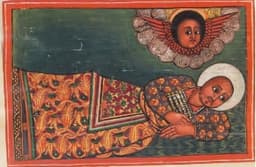
Bakaffa
Emperor · Modern
51.7Total

Napoleon Bonaparte
General · Modern
70.9Total
Basic Information
Born
1695
1769
Died
1730
1821
Era
Modern
Modern
Nationality
Ethiopia
France
Occupation
Emperor
General
Civilization
Other
Western
Score Comparison
Military (10%)
50.0
94.0
Political (20%)
62.7
72.0
Influence (20%)
53.3
40.0
Legacy (20%)
44.2
80.0
Leadership (15%)
66.0
78.0
Strategy (15%)
30.3
90.0
TOTAL
51.7
70.9
Bakaffa — Complete Timeline
1722 AD
Marriage to MentewabPolitical Action◆ Major
Bakaffa married Mentewab, a woman of humble origins who became his most influential wife. Mentewab later served as regent for their son Iyasu II, wielding significant political power and shaping Ethiopian politics for decades after Bakaffa's death.
MarriageRegencyMentewab
Impact: national
1725 AD
Construction of the Qusquam ChurchCultural
Bakaffa commissioned the construction of the Qusquam Church in Gondar, dedicated to the Virgin Mary. The church became an important religious site and a symbol of the Gondarine architectural style.
ChurchArchitectureGondar
constructive
Napoleon Bonaparte — Complete Timeline
1799 AD
Coup of 18 BrumaireOther◆ Major
Napoleon Bonaparte, with support from his brother Lucien and key political figures, overthrew the Directory in a bloodless coup. He established the Consulate with himself as First Consul, effectively becoming the ruler of France. This event ended the French Revolution's most unstable period.
French RevolutionCoupRise to Power
Impact: regional
1804 AD
Promulgation of the Napoleonic CodeOther◆ Major
Napoleon enacted the Civil Code of the French, known as the Napoleonic Code, a comprehensive set of laws that replaced the fragmented feudal legal systems. The code established legal equality, protected property rights, and secularized law. It became the basis for legal systems in many European and world countries.
Legal ReformNapoleonic CodeCivil Law
Impact: globalconstructive
1805 AD
Battle of AusterlitzWar◆ Major
Napoleon's Grande Arm
Napoleonic WarsBattleDecisive Victory
Impact: global
1812 AD
Invasion of RussiaWar◆ Major
Napoleon led the Grande Arm
Napoleonic WarsInvasionDisaster
Impact: globaldestructive
1815 AD
Battle of WaterlooWar◆ Major
Napoleon's French army was defeated by the combined forces of the Duke of Wellington's Anglo-Allied army and Gebhard Leberecht von Bl
Napoleonic WarsBattleFinal Defeat
Impact: globaldestructive
Expert Analysis
bakaffa-vs-napoleon-bonaparte
# The Emperor Who Vanished and the Emperor Who Conquered
On a spring morning in 1815, Napoleon Bonaparte stood before his Grande Armée, ready to reclaim a throne he had lost only months before. Across the Mediterranean, a century earlier, another emperor moved through the stone corridors of Gondar, his name already fading from the lips of his subjects. One man’s story would echo through every classroom in Europe; the other’s would become a footnote, known only to scholars. What separates a figure who reshapes the world from one who merely passes through it? The answer lies not in ambition alone, but in the soil from which they grew.
Origins
Napoleon was born in 1769 on the island of Corsica, a place recently annexed by France, where his family belonged to the minor nobility. His father’s death left him to forge his own path at a military academy, surrounded by French aristocrats who mocked his accent and his origins. That sting of exclusion never left him. It sharpened his hunger for glory, for proof that he belonged not just to France, but to history itself. The French Revolution had shattered the old order, and for a young artillery officer with talent and no pedigree, the moment was a door thrown open.
Bakaffa, born in 1695, inherited a different world. Ethiopia’s Solomonic dynasty traced its lineage to the Queen of Sheba and King Solomon, a mythic legitimacy that required no revolution to sustain. Bakaffa was not the eldest son; he came to power after a period of civil war, when the empire was fractured and the nobility held more real power than the crown. He had no academy, no revolutionary upheaval to ride. His stage was the ancient highlands of East Africa, where tradition weighed heavier than ambition.
Rise to Power
Napoleon’s rise was a masterpiece of speed and audacity. At twenty-four, he commanded the artillery at the Siege of Toulon, driving the British from the harbor. At twenty-six, he crushed a royalist uprising in Paris with a “whiff of grapeshot.” At twenty-seven, he led a ragged army across the Alps into Italy, where he won six battles in twelve days. Each victory elevated him, until he crowned himself Emperor in 1804, taking the crown from the Pope’s hands and placing it on his own head. He understood that in a revolutionary age, legitimacy came not from birth but from victory.
Bakaffa’s path was slower, more cautious. He was chosen by the nobility after the death of his brother, Emperor Iyasu I, who had been assassinated. To rule, Bakaffa had to negotiate with powerful regional lords, to balance their demands against his own authority. In 1722, he married Mentewab, a woman of humble origins, a decision that was both personal and political. She would become his most influential wife, and later, regent for their son. Where Napoleon seized power, Bakaffa married it.
Leadership & Governance
Napoleon governed with the same energy he brought to battle. He reformed France’s legal system with the Napoleonic Code, standardizing laws that had been a patchwork of feudal customs. He established the Bank of France, stabilized the currency, and built a network of lycées to educate a new elite. His military genius was undeniable—his strategy score of 93 reflects a mind that could read a battlefield like a chessboard. He could march an army faster than any enemy expected, strike at the hinge between two opposing forces, and turn defeat into victory. But his political score of 75 reveals a flaw: he could conquer, but he could not consolidate. He placed his brothers on thrones across Europe, but they governed poorly, and resentment grew.
Bakaffa’s rule was quieter, but not without achievement. He commissioned the construction of the Qusquam Church in Gondar in 1725, a dedication to the Virgin Mary that became a symbol of his reign. His political score of 62.6 indicates a ruler who understood the art of survival, not expansion. He did not seek to conquer new lands; he sought to hold his empire together. His leadership score of 74.9 suggests he commanded respect, but his military score of 35.6 shows he was no warrior. In a world where power often came from the sword, Bakaffa ruled through patience and alliance.
Triumph & Tragedy
Napoleon’s greatest triumph was Austerlitz in 1805, where he destroyed the combined armies of Austria and Russia. It was a victory so complete that the Tsar wept. His greatest tragedy was the invasion of Russia in 1812. He marched six hundred thousand men into the snow; fewer than forty thousand returned. The disaster broke his aura of invincibility. By 1814, he was exiled to Elba. He returned in 1815 for the Hundred Days, only to meet his final defeat at Waterloo, where his genius could not overcome the weight of a united Europe.
Bakaffa’s triumphs were domestic: a stable succession, a church that still stands, a wife who ruled wisely after him. His tragedy was that he ruled in an era when Ethiopia was turning inward, not outward. The world was changing; the Atlantic slave trade was reshaping economies, European powers were colonizing the coastlines. But Bakaffa’s Ethiopia remained isolated, and his name would not travel far.
Character & Destiny
Napoleon was driven by an insatiable need for validation. He said, “Glory is fleeting, but obscurity is forever.” He could not stop. He could not rest. That hunger made him great, but it also made him blind. He refused to share power, refused to build institutions that could outlast him. His empire crumbled because it was built on his will alone.
Bakaffa was the opposite. He understood that an emperor’s power was limited, that he ruled not by divine right alone but by the consent of the nobility. He built a church, not an army. He married a woman who could govern after him. His destiny was not to change the world, but to keep his world from changing too much. And in that, he succeeded.
Legacy
Napoleon’s legacy is enormous. The Napoleonic Code influenced legal systems across Europe and the Americas. His military tactics are still studied. His name is a byword for ambition and genius. His legacy score of 78 reflects a figure whose impact is undeniable, but also contested—he is both hero and tyrant, liberator and conqueror.
Bakaffa’s legacy is more modest. His score of 57.9 places him in the quiet corners of history. He is remembered in Ethiopia, in the stones of Qusquam Church, in the memory of Mentewab. But outside that highland kingdom, he is unknown. His story raises an uncomfortable question: how many rulers, as capable as he, have been forgotten simply because their world was not the one that wrote the history books?
Conclusion
The difference between Napoleon and Bakaffa is not one of talent. It is one of context. Napoleon was born into a revolution that needed a hero; Bakaffa was born into a tradition that needed a steward. One conquered the world; the other preserved his own. History remembers the conqueror, but perhaps it should also pause to consider the steward. For every Napoleon who burns across the sky, there are a hundred Bakaffas who hold the candle steady, and the world goes on because of them.
Rankings
🥇
Napoleon BonaparteLeader
Mil: 94.0Pol: 72.0Inf: 40.0
70.9
🥈
Bakaffa
Mil: 50.0Pol: 62.7Inf: 53.3
51.7
+19.2 behind
How This Comparison Works
Algorithm
Each figure is scored on 6 dimensions (0—100 scale) based on structured historical data: Military (10%), Political (20%), Influence (20%), Legacy (20%), Leadership (15%), Strategy (15%). The weighted total produces the final ranking.
Data Sources
Scores are computed from structured sub-indicators in the database. Scale factors adjust for era (Ancient ×0.85, Modern ×1.0) and civilization size (Eastern ×1.05, Other ×0.80) to account for differences in population and military scale.
Maximum 3 Figures
Comparisons are limited to 2—3 figures to ensure readability and statistical meaningfulness.
Error Margins
±5 points per dimension — Sub-scores are derived from historical records with inherent uncertainty. Two figures within 5 points on a dimension should be considered roughly equivalent in that area.
Total Score Accuracy
±3 points overall — The weighted combination of 6 dimensions produces a total score with approximately ±3 points of uncertainty. Differences of less than 3 points are not statistically significant— the figures are effectively tied.
Known Limitations
- Historical records are incomplete and uneven across civilizations
- Figures from oral-tradition societies may be underrepresented
- Occupation labels can misclassify multi-role figures
- Scores measure capability and impact, not moral character
- Quantitative scoring is a comparison tool, not absolute truth
Capability Radar
Military (10%) — Battles & Warfare
Battles
20
95
Win Rate
25
90
Expansion
15
95
Political (20%) — Governance & Reform
Reform
55
95
Diplomacy
50
80
Economy
50
85
Influence (20%) — Cultural & Global Reach
Cultural
30
85
Global
20
90
Legacy (20%) — Historical Impact
Historical
35
95
Longevity
30
90
Leadership (15%) — Power & Stability
Tenure
60
85
Stability
55
70
Strategy (15%) — Tactics & Innovation
Strategy
20
95
Tactics
20
98
Reform
15
92
Similar Comparisons
Comments & Discussion
No comments yet. Be the first to share your thoughts!