Loading...
Bahram IV vs Julius Caesar
Julius Caesar leads by 44.2 pts · 2 figures compared
…
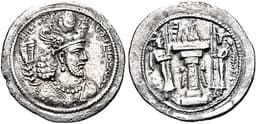
Bahram IV
Emperor · Ancient
38.6Total

Julius Caesar
General · Ancient
82.8Total
Basic Information
Born
370
-100
Died
399
-44
Era
Ancient
Ancient
Nationality
Sasanian Empire
Roman Republic
Occupation
Emperor
General
Civilization
Middle Eastern
Western
Score Comparison
Military (10%)
50.0
88.0
Political (20%)
26.4
78.0
Influence (20%)
44.0
85.0
Legacy (20%)
33.3
82.0
Leadership (15%)
41.5
80.0
Strategy (15%)
41.0
85.0
TOTAL
38.6
82.8
Bahram IV — Complete Timeline
388 AD
Accession to the Sasanian thronePolitical Action◆ Major
Bahram IV became Shahanshah of the Sasanian Empire after the death of Shapur III. His reign was marked by conflicts with the Roman Empire and internal unrest.
SuccessionSasanian Empire
Impact: national
399 AD
Assassination by his own soldiersPolitical Action◆ Major
Bahram IV was killed by his own soldiers, likely due to dissatisfaction with his rule or military failures. His death led to a succession crisis.
AssassinationMilitary Revolt
Impact: nationaltragic
Julius Caesar — Complete Timeline
58 BC
Gallic WarsWar◆ Major
Caesar, as proconsul of Gaul, launched a series of campaigns that conquered all of Gaul (modern France, Belgium, and parts of Switzerland). He fought numerous battles, including against the Helvetii, the Belgae, and the Gallic chieftain Vercingetorix. The wars brought immense wealth and a loyal army to Caesar.
Gallic WarsConquestRoman Expansion
Impact: regional
49 BC
Crossing the RubiconPolitical Action◆ Major
Caesar led Legio XIII across the Rubicon River into Italy, defying the Roman Senate's order to disband his army. This act triggered a civil war against Pompey and the Optimates, ultimately leading to Caesar's dictatorship and the end of the Roman Republic.
Roman Civil WarEnd of RepublicPower Struggle
Impact: global
48 BC
Battle of PharsalusWar◆ Major
Caesar's outnumbered army defeated the larger forces of Pompey the Great at Pharsalus in Greece. Caesar's tactical use of a reserve line to counter Pompey's cavalry charge proved decisive. Pompey fled to Egypt, where he was assassinated, leaving Caesar as the undisputed master of the Roman world.
Roman Civil WarBattleDecisive Victory
Impact: regional
44 BC
Appointment as Dictator for LifePolitical Action◆ Major
The Roman Senate appointed Caesar dictator perpetuo (dictator for life), granting him unprecedented personal power. This move concentrated military, legislative, and judicial authority in one person, effectively ending the Roman Republic's traditional system of checks and balances and alarming many senators.
DictatorshipEnd of RepublicPower Consolidation
Impact: regionaldestructive
Assassination on the Ides of MarchPolitical Action◆ Major
A group of Roman senators, led by Marcus Junius Brutus and Gaius Cassius Longinus, stabbed Caesar to death at a meeting of the Senate in the Theatre of Pompey. The assassination was intended to restore the Republic, but instead triggered another civil war that led to the rise of the Roman Empire.
AssassinationRoman PoliticsEnd of Republic
Impact: globaldestructive
Expert Analysis
bahram-iv-vs-julius-caesar
# The Emperor and the General: Two Paths to Power, Two Destinies
On a spring morning in 44 BCE, Julius Caesar walked into the Senate chamber in Rome, a man who had conquered Gaul, defeated his rivals, and made himself master of the Mediterranean world. Within hours, he lay dead, stabbed twenty-three times by senators who called themselves liberators. More than four centuries later, in the year 399, another ruler—Bahram IV, Shahanshah of the Sasanian Empire—fell to the blades of his own soldiers during a campaign, a death so obscure that history barely pauses to record it. Both men were killed by those they commanded. But the gap between their legacies is not merely a matter of centuries or geography. It is a chasm carved by character, circumstance, and the raw calculus of power.
Origins
Julius Caesar was born into the patrician Julian clan, one of Rome’s oldest families, but one that had fallen from political prominence. His childhood coincided with the violent unraveling of the Roman Republic—civil wars, proscriptions, and the rise of warlords like Marius and Sulla. Young Caesar grew up watching men seize power through military might and political cunning. He learned early that in Rome, survival meant ambition, and ambition meant war.
Bahram IV, by contrast, was born into the Sasanian dynasty at its height. The Sasanian Empire, Rome’s great eastern rival, had a stable system of succession and a bureaucracy that could function without a charismatic leader. Bahram was not a revolutionary or a reformer; he was a prince who inherited a throne. The year 388, when he became Shahanshah after the death of Shapur III, was not a moment of crisis but of continuity. The empire expected him to maintain order, not transform it.
Rise to Power
Caesar’s rise was a masterpiece of calculated risk. He served as a military tribune, then quaestor in Spain, then aedile in Rome, where he spent fortunes on games and spectacles to win public adoration. His appointment as governor of Gaul in 58 BCE gave him the army he needed. Over the next eight years, he conquered all of Gaul, crossed the Rhine into Germany, and even invaded Britain. His military score of 88 reflects not just victories but innovation—he engineered siege works, adapted tactics to terrain, and turned legionaries into a personal instrument of power.
When the Senate ordered him to disband his army, Caesar made his famous choice: he crossed the Rubicon River into Italy in 49 BCE, sparking a civil war. “The die is cast,” he reportedly said. Within four years, he had defeated Pompey, crushed the last republican holdouts, and made himself dictator for life.
Bahram IV’s path was simpler. He inherited a stable empire. His accession in 388 was a routine transition of power. But stability also meant constraint. The Sasanian military elite expected their shah to lead campaigns, distribute spoils, and respect their privileges. Bahram’s reign saw conflicts with the Roman Empire, but no great conquests. His military score of 23.5 suggests campaigns that were neither disastrous nor glorious—merely forgettable.
Leadership & Governance
Caesar governed as a revolutionary. He reformed the calendar, granted citizenship to provincials, initiated public works, and packed the Senate with his supporters. His political score of 78 reflects a man who understood that power required both force and legitimacy. He was clement toward former enemies—a calculated mercy that won loyalty. Yet his concentration of power alarmed the old aristocracy. When he accepted the title “dictator for life,” he crossed a line that made assassination inevitable.
Bahram IV governed as a traditional monarch. The Sasanian system did not demand personal charisma; it required the shah to balance the interests of the nobility, the Zoroastrian clergy, and the army. Bahram appears to have failed this balancing act. His assassination by his own soldiers in 399 suggests deep unpopularity—perhaps due to military failures, perhaps due to perceived weakness. His political score of 37.7 indicates a ruler who could not command the loyalty of those who held the swords.
Triumph & Tragedy
Caesar’s greatest triumph was not a single battle but the transformation of Rome itself. The conquest of Gaul added a vast province to the Republic. The civil war victory made him the first man in Rome. His tragedy was that he could not complete the transition from republic to empire without destroying himself. The Ides of March was the price of his ambition.
Bahram IV’s reign had no great triumphs. The historical record is so thin that we cannot name a single decisive battle or reform. His tragedy was not a dramatic fall but a quiet erasure. He died, and the empire moved on. His legacy score of 44.0 reflects a ruler who did nothing to be remembered.
Character & Destiny
Caesar’s character was forged in the crucible of civil war. He was audacious, calculating, and ruthless when necessary. He wrote his own accounts of his campaigns, shaping his image for posterity. He understood that in a world of violence, reputation was a weapon. His leadership score of 82 and strategy score of 88 reflect a man who thought in decades, not days.
Bahram IV’s character is almost invisible to history. We do not know his personality, his speeches, or his private thoughts. He was a placeholder in a dynasty that produced both great shahs and forgotten ones. His leadership score of 34.2 suggests a ruler who could neither inspire nor intimidate.
Legacy
Caesar’s legacy reshaped the world. His name became synonymous with imperial power—Kaiser in German, Tsar in Russian. The Roman Empire he set in motion lasted for centuries. His writings remain classics of military literature. He is remembered not as a victim but as a force of history.
Bahram IV’s legacy is a footnote. The Sasanian Empire continued after him, but his reign was a pause, not a turning point. He is remembered only because his death—by his own soldiers—fits a pattern of Sasanian instability. But no one builds a cult around a forgotten shah.
Conclusion
Standing at the edge of history, we see two men who shared a fate but not a destiny. Caesar’s assassination immortalized him because he had already made himself immortal. Bahram IV’s death ended a reign that had never truly begun. The difference is not in how they died but in how they lived. Caesar bent history to his will; Bahram IV let history pass him by. In the end, the blade that killed them both measured the same—but the scales of history weigh ambition, courage, and vision far heavier than mere survival.
Rankings
🥇
Julius CaesarLeader
Mil: 88.0Pol: 78.0Inf: 85.0
82.8
🥈
Bahram IV
Mil: 50.0Pol: 26.4Inf: 44.0
38.6
+44.2 behind
How This Comparison Works
Algorithm
Each figure is scored on 6 dimensions (0—100 scale) based on structured historical data: Military (10%), Political (20%), Influence (20%), Legacy (20%), Leadership (15%), Strategy (15%). The weighted total produces the final ranking.
Data Sources
Scores are computed from structured sub-indicators in the database. Scale factors adjust for era (Ancient ×0.85, Modern ×1.0) and civilization size (Eastern ×1.05, Other ×0.80) to account for differences in population and military scale.
Maximum 3 Figures
Comparisons are limited to 2—3 figures to ensure readability and statistical meaningfulness.
Error Margins
±5 points per dimension — Sub-scores are derived from historical records with inherent uncertainty. Two figures within 5 points on a dimension should be considered roughly equivalent in that area.
Total Score Accuracy
±3 points overall — The weighted combination of 6 dimensions produces a total score with approximately ±3 points of uncertainty. Differences of less than 3 points are not statistically significant— the figures are effectively tied.
Known Limitations
- Historical records are incomplete and uneven across civilizations
- Figures from oral-tradition societies may be underrepresented
- Occupation labels can misclassify multi-role figures
- Scores measure capability and impact, not moral character
- Quantitative scoring is a comparison tool, not absolute truth
Capability Radar
Military (10%) — Battles & Warfare
Battles
20
95
Win Rate
15
92
Expansion
10
97
Political (20%) — Governance & Reform
Reform
20
90
Diplomacy
20
85
Economy
20
82
Influence (20%) — Cultural & Global Reach
Cultural
10
88
Global
10
94
Legacy (20%) — Historical Impact
Historical
10
95
Longevity
10
96
Leadership (15%) — Power & Stability
Tenure
40
75
Stability
10
60
Strategy (15%) — Tactics & Innovation
Strategy
20
94
Tactics
20
96
Reform
10
88
Similar Comparisons
Comments & Discussion
FALLEN EAGLE6/17/2026
Let's be real—comparing Bahram IV to Caesar is like comparing a footnote to a novel. Caesar didn't just conquer Gaul; he literally rewrote the constitution of Rome and changed Western civilization forever. Bahram? He ruled for 11 years and we barely know what he did besides get assassinated. One transformed history, the other was a footnote in a forgotten dynasty's decline. Not all deaths are equal.
阿契美尼德遗民6/17/2026
说句难听的,巴赫拉姆四世连凯撒的脚趾甲都比不上。凯撒在高卢杀了100万人,征服了300个部落,还发明了闰年。巴赫拉姆做了什么?他在位期间史料少得可怜,连死因都三四种说法。一个是被元老院集体背刺的政治巨人,一个是被自己士兵砍了的倒霉蛋。历史筛选从不公平,但这次筛选得特别准。
CIVILIZATION SCORECARD6/17/2026
If we're ranking empires, Rome wins this match-up hands down. Caesar inherited a failing republic and turned it into a superpower that lasted 500 more years. The Sasanians under Bahram IV? They were already sliding into the chaos that would make them easy prey for the Arabs in 651. One death sparked the birth of an empire; the other death was just a symptom of a rotting system. Context matters.
边疆拓荒者6/17/2026
你得看地理格局。凯撒打高卢走的是北上扩张路线,把罗马的边界推到了莱茵河,直接改变欧洲版图。巴赫拉姆呢?他在西部跟亚美尼亚和罗马玩拉锯战,在东部跟贵霜和匈人来回纠缠。撒珊王朝的生存逻辑就是防御和消耗,从来不是开疆拓土。两人面对的文明压力完全不同:一个在扩张,一个在自保。评价体系就不该一样。
GHOST OF RAVENNA6/17/2026
Frankly, the comparison insults Caesar. Bahram IV died so obscurely that later Persian sources couldn't agree whether he was killed in battle, assassinated in his tent, or executed by nobles. Caesar's assassination is one of the most documented events in ancient history—we know the daggers, the names, the betrayal. One death echoes through eternity; the other is a whisper lost to sandstorms. Legacy isn't just about dying—it's about being remembered.