Loading...
Bagyidaw vs Rudolf II of Bohemia
Rudolf II of Bohemia leads by 12.7 pts · 2 figures compared
…
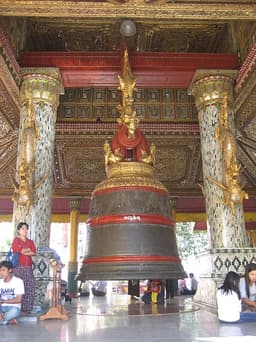
Bagyidaw
Emperor · Modern
40.3Total

Rudolf II of Bohemia
Emperor · Modern
53.0Total
Basic Information
Born
1784
1552
Died
1846
1612
Era
Modern
Modern
Nationality
Myanmar
Bohemia
Occupation
Emperor
Emperor
Civilization
Eastern
Western
Score Comparison
Military (10%)
22.6
20.0
Political (20%)
29.3
54.7
Influence (20%)
47.9
61.0
Legacy (20%)
36.7
49.2
Leadership (15%)
58.8
65.0
Strategy (15%)
36.8
54.6
TOTAL
40.3
53.0
Bagyidaw — Complete Timeline
1824 AD
First Anglo-Burmese WarWar
Bagyidaw's kingdom fought the British East India Company in the First Anglo-Burmese War. The conflict began over border disputes in Assam and Arakan. The Burmese army was defeated after initial successes, leading to the Treaty of Yandabo.
Anglo-Burmese WarDefeatBurma
Impact: regionaltragic
1826 AD
Treaty of YandaboPolitical Action
Bagyidaw signed the Treaty of Yandabo, ending the First Anglo-Burmese War. Burma ceded Assam, Manipur, Arakan, and Tenasserim to the British, agreed to pay a huge indemnity of one million pounds, and accepted a British resident at the court of Ava.
TreatyTerritorial LossBurma
Impact: regionaltragic
Loss of Assam and ManipurPolitical Action◆ Major
As a result of the Treaty of Yandabo, Bagyidaw permanently lost control of the kingdoms of Assam and Manipur to the British. These territories had been under Burmese suzerainty since the early 19th century, and their loss significantly reduced Burmese influence in the region.
Territorial LossAssamManipur
Impact: regionaltragic
1837 AD
Abdication due to DepressionPolitical Action◆ Major
Overwhelmed by the consequences of the war and the loss of territory, Bagyidaw became deeply depressed and abdicated the throne in favor of his brother Tharrawaddy Min. He spent his remaining years in seclusion until his death in 1846.
AbdicationMental HealthBurma
Impact: nationaltragic
Rudolf II of Bohemia — Complete Timeline
1583 AD
Move of the Imperial Court to PragueCultural◆ Major
Rudolf II moved the imperial court from Vienna to Prague, making the city the cultural and political center of the Holy Roman Empire. This attracted artists, scientists, and alchemists, fostering a vibrant intellectual environment.
Cultural CenterPragueRenaissance
Impact: regionalconstructive
1599 AD
Patronage of Tycho Brahe and Johannes KeplerCultural◆ Major
Rudolf II invited astronomer Tycho Brahe to Prague and later employed Johannes Kepler as his assistant. This patronage led to Kepler's laws of planetary motion, which revolutionized astronomy and science.
ScienceAstronomyPatronage
Impact: globalconstructive
1609 AD
Letter of MajestyPolitical Action◆ Major
Rudolf II issued the Letter of Majesty, granting religious freedom to Protestants in Bohemia. This concession temporarily eased tensions but failed to prevent the outbreak of the Thirty Years' War in 1618.
Religious ToleranceProtestantismBohemia
Impact: nationalconstructive
1611 AD
Abdication as Holy Roman EmperorPolitical Action◆ Major
Rudolf II was forced to abdicate the throne of Bohemia in favor of his brother Matthias due to his mental instability and inability to govern. This abdication weakened Habsburg authority and contributed to the political crisis leading to the Thirty Years' War.
AbdicationSuccession CrisisHabsburg
Impact: regionaltragic
Expert Analysis
Origins
Bagyidaw (born 1784) was the seventh king of the Konbaung dynasty of Burma. He was the grandson of King Bodawpaya and ascended the throne in 1819 after his grandfather's death. His early life was shaped by the absolutist traditions of Burmese monarchy, where the king was seen as a divine ruler. He received a traditional education in Buddhism and statecraft but lacked exposure to Western military technology and diplomacy.
Rudolf II (born 1552) was a member of the Habsburg dynasty, son of Emperor Maximilian II. He was raised in the Spanish court under the strict Catholic tutelage of his uncle Philip II. Educated in humanist traditions, he became fluent in several languages and developed a deep interest in the arts, alchemy, and astronomy. His upbringing emphasized the divine right of kings but also the complexities of ruling a multi-confessional empire.
Rise to Power
Bagyidaw became king in 1819 without major opposition, inheriting a powerful but isolated kingdom. His early reign focused on expanding Burmese influence into Assam and Manipur, which brought him into conflict with the British East India Company. The border disputes escalated into the First Anglo-Burmese War (1824–1826). Bagyidaw's generals initially won battles but were ultimately overwhelmed by British naval power and superior logistics.
Rudolf II became Holy Roman Emperor in 1576 upon his father's death. He had already been crowned King of Hungary and Bohemia. His reign began with promise: he moved the imperial court to Prague in 1583, transforming it into a vibrant cultural center. He attracted scholars like Tycho Brahe and Johannes Kepler, but his inability to manage the empire's religious tensions and his reclusive nature weakened his political authority.
Leadership & Governance
Bagyidaw ruled as an absolute monarch, relying on traditional Burmese administrative structures. He delegated military command to generals like Maha Bandula but failed to modernize the army. After the war, he became despondent and neglected governance, leading to economic decline and loss of royal authority. His abdication in 1837 was a direct result of his inability to cope with the defeat.
Rudolf II's governance was marked by indecision and a preference for intellectual pursuits over political action. He issued the Letter of Majesty in 1609, granting religious freedom to Bohemian Protestants, but this was a last-ditch effort to maintain control. His mental instability and refusal to delegate led to a power vacuum, culminating in his forced abdication as Bohemian king in 1611. His political score of 54.7 reflects moderate effectiveness, while Bagyidaw's 29.3 shows poor governance.
Triumph & Tragedy
Bagyidaw's greatest success was the initial expansion of Burmese territory into Assam and Manipur, which temporarily increased his kingdom's size. However, the First Anglo-Burmese War ended in disaster: the Treaty of Yandabo (1826) forced Burma to cede vast territories and pay a huge indemnity. His abdication due to depression marks a tragic end. His military score of 22.6 reflects the catastrophic defeat.
Rudolf II's triumph was his patronage of the arts and sciences: he supported Tycho Brahe and Kepler, leading to Kepler's laws of planetary motion. The Rudolfine Tables (1627) were a landmark in astronomy. His tragedy was his political failure: the Habsburg monarchy lost influence, and the religious concessions did not prevent the Thirty Years' War. His abdication and mental decline overshadowed his cultural legacy.
Character & Destiny
Bagyidaw was a proud but inflexible ruler, unable to adapt to changing geopolitical realities. His depression after the war shows a lack of resilience. Historians note that his reliance on traditional methods sealed his fate. In contrast, Rudolf II was a curious intellectual but a poor administrator. His obsession with the occult and art led to neglect of state affairs. Both men's characters—Bagyidaw's rigidity and Rudolf's withdrawal—directly caused their downfalls.
Legacy
Bagyidaw's legacy is largely negative: he is remembered as the king who lost the First Anglo-Burmese War, leading to British colonization. The Treaty of Yandabo set a precedent for European domination in Southeast Asia. His total score of 40.3 reflects limited long-term impact. Rudolf II's legacy is more positive: his patronage of Kepler and Brahe contributed to the Scientific Revolution. The move of the court to Prague made the city a cultural hub. His influence score of 61.0 and legacy of 49.2 surpass Bagyidaw's.
Conclusion
Rudolf II had a greater impact on history than Bagyidaw. Despite his political failures, his support for Kepler and Brahe advanced astronomy, while Bagyidaw's reign ended in territorial loss and national decline. Rudolf's total score of 53.0 against Bagyidaw's 40.3 reflects this. Rudolf's cultural contributions endure, while Bagyidaw's legacy is one of defeat.
Rankings
🥇
Rudolf II of BohemiaLeader
Mil: 20.0Pol: 54.7Inf: 61.0
53.0
🥈
Bagyidaw
Mil: 22.6Pol: 29.3Inf: 47.9
40.3
+12.7 behind
How This Comparison Works
Algorithm
Each figure is scored on 6 dimensions (0—100 scale) based on structured historical data: Military (10%), Political (20%), Influence (20%), Legacy (20%), Leadership (15%), Strategy (15%). The weighted total produces the final ranking.
Data Sources
Scores are computed from structured sub-indicators in the database. Scale factors adjust for era (Ancient ×0.85, Modern ×1.0) and civilization size (Eastern ×1.05, Other ×0.80) to account for differences in population and military scale.
Maximum 3 Figures
Comparisons are limited to 2—3 figures to ensure readability and statistical meaningfulness.
Error Margins
±5 points per dimension — Sub-scores are derived from historical records with inherent uncertainty. Two figures within 5 points on a dimension should be considered roughly equivalent in that area.
Total Score Accuracy
±3 points overall — The weighted combination of 6 dimensions produces a total score with approximately ±3 points of uncertainty. Differences of less than 3 points are not statistically significant— the figures are effectively tied.
Known Limitations
- Historical records are incomplete and uneven across civilizations
- Figures from oral-tradition societies may be underrepresented
- Occupation labels can misclassify multi-role figures
- Scores measure capability and impact, not moral character
- Quantitative scoring is a comparison tool, not absolute truth
Capability Radar
Military (10%) — Battles & Warfare
Battles
20
5
Win Rate
10
5
Expansion
5
5
Political (20%) — Governance & Reform
Reform
20
40
Diplomacy
15
30
Economy
20
40
Influence (20%) — Cultural & Global Reach
Cultural
15
65
Global
10
40
Legacy (20%) — Historical Impact
Historical
20
55
Longevity
10
50
Leadership (15%) — Power & Stability
Tenure
40
60
Stability
15
20
Strategy (15%) — Tactics & Innovation
Strategy
10
10
Tactics
15
5
Reform
5
5
Similar Comparisons
Comments & Discussion
No comments yet. Be the first to share your thoughts!