Loading...
This comparison has not been analyzed yet.
One-time AI generation (~1 minute). Scores and timeline are already available below.
Bachar el-Halabi vs Qu Qiubai
Qu Qiubai leads by 2.9 pts · 2 figures compared
…

Bachar el-Halabi
Politician · Modern
37.9Total
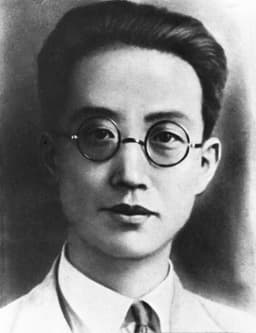
Qu Qiubai
Politician · Modern
40.8Total
Basic Information
Born
1968
1899
Died
—
1935
Era
Modern
Modern
Nationality
Syria
China
Occupation
Politician
Politician
Civilization
Middle Eastern
Eastern
Score Comparison
Military (10%)
39.4
30.1
Political (20%)
25.0
26.4
Influence (20%)
46.3
49.4
Legacy (20%)
35.8
41.7
Leadership (15%)
34.6
34.6
Strategy (15%)
45.0
58.7
TOTAL
37.9
40.8
Bachar el-Halabi — Complete Timeline
2012 AD
Participated in Syrian opposition negotiations in GenevaPolitical Action◆ Major
Bachar el-Halabi was a member of the Syrian National Council and participated in the Geneva II peace conference on Syria in 2014. He served as a negotiator for the opposition, advocating for a political transition and the removal of President Bashar al-Assad, though the talks failed to produce a ceasefire or political settlement.
Peace TalksDiplomacySyrian Civil War
Impact: regional
2015 AD
Arrested by Syrian government forcesOther◆ Major
In 2015, Bachar el-Halabi was arrested by Syrian government forces while traveling in regime-held territory. He was detained and imprisoned, reportedly subjected to torture and harsh conditions. His arrest removed a key moderate opposition figure from the negotiating table and highlighted the risks faced by opposition activists.
ArrestImprisonmentOppression
Impact: nationaltragic
2018 AD
Released from prison in prisoner exchangePolitical Action
Bachar el-Halabi was released from Syrian government custody in 2018 as part of a prisoner exchange deal mediated by Russia and opposition groups. His release came after three years of detention, but he left Syria for exile abroad, his health severely damaged by his imprisonment.
Prisoner ExchangeReleaseExile
Impact: national
Qu Qiubai — Complete Timeline
1922 AD
Joined the Chinese Communist PartyPolitical Action◆ Major
Qu Qiubai joined the Chinese Communist Party (CCP) in 1922 after being influenced by the Russian Revolution. He became a key early member and intellectual leader, translating Marxist texts and shaping early CCP ideology.
CCPEarly LeadershipIdeology
Impact: nationalconstructive
1927 AD
Led the August 7th Emergency ConferencePolitical Action
After the KMT's violent purge of communists, Qu Qiubai presided over the August 7th Emergency Conference in Hankou. The conference replaced Chen Duxiu as party leader and adopted a policy of armed insurrection against the KMT, marking a radical turn.
CCPKMT SplitArmed Struggle
Impact: national
1935 AD
Executed by the KuomintangPolitical Action◆ Major
Qu Qiubai was captured by KMT forces in Fujian in 1935. He was executed by firing squad on June 18, 1935, after refusing to renounce communism. His death made him a martyr for the CCP.
ExecutionMartyrdomKMT
Impact: nationaltragic
This comparison has not been analyzed yet.
One-time AI generation (~1 minute). Scores and timeline are already available below.
Rankings
🥇
Qu QiubaiLeader
Mil: 30.1Pol: 26.4Inf: 49.4
40.8
🥈
Bachar el-Halabi
Mil: 39.4Pol: 25.0Inf: 46.3
37.9
+2.9 behind
How This Comparison Works
Algorithm
Each figure is scored on 6 dimensions (0—100 scale) based on structured historical data: Military (10%), Political (20%), Influence (20%), Legacy (20%), Leadership (15%), Strategy (15%). The weighted total produces the final ranking.
Data Sources
Scores are computed from structured sub-indicators in the database. Scale factors adjust for era (Ancient ×0.85, Modern ×1.0) and civilization size (Eastern ×1.05, Other ×0.80) to account for differences in population and military scale.
Maximum 3 Figures
Comparisons are limited to 2—3 figures to ensure readability and statistical meaningfulness.
Error Margins
±5 points per dimension — Sub-scores are derived from historical records with inherent uncertainty. Two figures within 5 points on a dimension should be considered roughly equivalent in that area.
Total Score Accuracy
±3 points overall — The weighted combination of 6 dimensions produces a total score with approximately ±3 points of uncertainty. Differences of less than 3 points are not statistically significant— the figures are effectively tied.
Known Limitations
- Historical records are incomplete and uneven across civilizations
- Figures from oral-tradition societies may be underrepresented
- Occupation labels can misclassify multi-role figures
- Scores measure capability and impact, not moral character
- Quantitative scoring is a comparison tool, not absolute truth
Capability Radar
Military (10%) — Battles & Warfare
Battles
22
49
Win Rate
23
55
Expansion
28
59
Political (20%) — Governance & Reform
Reform
10
20
Diplomacy
25
10
Economy
5
5
Influence (20%) — Cultural & Global Reach
Cultural
5
25
Global
10
10
Legacy (20%) — Historical Impact
Historical
10
30
Longevity
5
20
Leadership (15%) — Power & Stability
Tenure
15
15
Stability
5
5
Strategy (15%) — Tactics & Innovation
Strategy
31
62
Tactics
31
62
Reform
37
64
Similar Comparisons
Comments & Discussion
No comments yet. Be the first to share your thoughts!