Loading...
Babur vs Yamagata Aritomo
Yamagata Aritomo leads by 4.4 pts · 2 figures compared
…

Babur
Emperor · Medieval
78.1Total
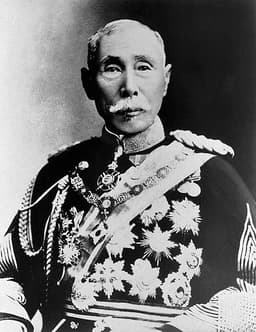
Yamagata Aritomo
General · Modern
82.5Total
Basic Information
Born
1483
1838
Died
1530
1922
Era
Medieval
Modern
Nationality
Mughal Empire
Japan
Occupation
Emperor
General
Civilization
Indian
Eastern
Score Comparison
Military (10%)
74.0
78.0
Political (20%)
72.0
82.0
Influence (20%)
88.0
80.0
Legacy (20%)
80.0
90.0
Leadership (15%)
74.0
78.0
Strategy (15%)
67.6
82.0
TOTAL
78.1
82.5
Babur — Complete Timeline
1526 AD
Battle of Panipat (1526)War
Babur led his army of about 12,000 men against the Delhi Sultanate army of Ibrahim Lodi, which numbered around 100,000. Using gunpowder weapons and innovative tactics, Babur defeated Lodi's forces. This victory established the Mughal Empire in India and marked the beginning of Mughal rule.
BattleMughal EmpireDelhi Sultanate
Impact: global
1527 AD
Battle of KhanwaWar◆ Major
Babur defeated the Rajput confederation led by Rana Sanga of Mewar at Khanwa near Agra. The Rajput army was larger and included cavalry and war elephants. Babur's use of artillery and defensive tactics secured the victory. This battle consolidated Mughal control over northern India.
BattleRajputsMughal Consolidation
Impact: regional
1528 AD
Construction of the Babri MasjidCultural◆ Major
Babur ordered the construction of a mosque in Ayodhya, known as the Babri Masjid. The mosque was built on a site that Hindus believed was the birthplace of the god Rama. This act became a source of religious and political conflict in India for centuries, culminating in the mosque's demolition in 1992.
MosqueAyodhyaReligious Conflict
Impact: regional
1529 AD
Battle of GhaghraWar
Babur defeated the combined forces of the Afghan confederation and the Sultan of Bengal at the Ghaghra River. This victory eliminated the last major Afghan resistance in northern India. It extended Mughal control over Bihar and parts of Bengal, further securing Babur's empire.
BattleAfghansBengal
Impact: regional
Yamagata Aritomo — Complete Timeline
1873 AD
Establishment of the Imperial Japanese ArmyReform
Yamagata Aritomo, as War Minister, oversaw the creation of the Imperial Japanese Army based on the Prussian model. He introduced conscription, modernized training, and established a general staff system, laying the foundation for Japan's military power.
Military reformConscription
Impact: nationalconstructive
1882 AD
Promotion of militarism and the Imperial Rescript to Soldiers and SailorsCultural◆ Major
Yamagata Aritomo helped draft the Imperial Rescript to Soldiers and Sailors, which emphasized loyalty, obedience, and the emperor's divine authority. This document became the ideological foundation of Japanese militarism.
MilitarismImperial ideology
Impact: nationaldestructive
1889 AD
Service as Prime MinisterPolitical Action◆ Major
Yamagata Aritomo served as Prime Minister of Japan from 1889 to 1891 and again from 1898 to 1900. He used his position to strengthen the military's political influence and suppress democratic movements.
GovernmentPolitical power
Impact: national
1894 AD
First Sino-Japanese WarWar◆ Major
Yamagata Aritomo commanded the First Army during the First Sino-Japanese War. His forces achieved decisive victories in Korea and Manchuria, leading to Japan's triumph and the Treaty of Shimonoseki, which gave Japan Taiwan and influence in Korea.
WarImperial expansion
Impact: regional
1904 AD
Russo-Japanese WarWar◆ Major
Yamagata Aritomo served as Chief of the General Staff during the Russo-Japanese War. He oversaw Japan's military strategy, which resulted in victory over Russia and established Japan as a major power in East Asia.
WarGreat power
Impact: global
Expert Analysis
Origins
Yamagata Aritomo was born in 1838 into a low-ranking samurai family in Hagi, domain of Chōshū. His early involvement in the sonnō jōi movement (revere the emperor, expel the barbarians) shaped his nationalist fervor. He studied Western military techniques and became a key figure in the Meiji Restoration, transitioning Japan from feudal to modern state. Babur, born in 1483 in Ferghana (modern Uzbekistan), was a descendant of Timur and Genghis Khan. He inherited a small principality but faced constant threats from rival Mongol and Turkic tribes. His early life was marked by exile and struggle, driving his ambition to conquer a new empire.
Rise to Power
Yamagata rose through military ranks by modernizing Japan's army. As War Minister, he established the Imperial Japanese Army in 1878 based on Prussian models, drafting the Imperial Rescript to Soldiers and Sailors that emphasized loyalty and militarism. He served as Prime Minister twice (1889-1891, 1898-1900), consolidating power and promoting expansionist policies. Babur's rise was more dramatic: after losing his ancestral lands, he captured Kabul in 1504 and used it as a base for Indian invasions. His victory at the First Battle of Panipat (1526) against the Delhi Sultanate's Ibrahim Lodi established Mughal rule.
Leadership & Governance
Yamagata's leadership was authoritarian and centralized. He suppressed dissent, expanded Japan's military, and influenced foreign policy, leading to wars with China and Russia. His governance prioritized national strength and imperial expansion. Babur's rule combined military prowess with cultural patronage. He introduced Persian art and architecture to India, wrote the Baburnama (autobiography), and implemented efficient administrative systems. However, his empire was still consolidated by successors.
Triumph & Tragedy
Yamagata's greatest triumphs were Japan's victories in the First Sino-Japanese War (1894-1895) and Russo-Japanese War (1904-1905), which established Japan as a world power. Yet, his promotion of militarism contributed to future disasters like World War II. Babur's triumph was founding the Mughal Empire, but his early death at 47 prevented him from solidifying control. His son Humayun lost the empire briefly, and Babur's legacy was secured through Akbar.
Character & Destiny
Yamagata was ruthless, pragmatic, and focused on national glory. His destiny was to shape Japan's imperial path. Babur was adventurous, cultured, and resilient, turning exile into empire. Both were driven by ambition and a sense of destiny.
Legacy
Yamagata is remembered as the father of Japanese militarism, his institutional reforms lasting until 1945. Babur's legacy is the Mughal Empire, which flourished for centuries, leaving architectural and cultural marks like the Babri Masjid (controversial) and gardens. In a head-to-head, Yamagata's higher scores (overall 82.6 vs 78.2) reflect his greater impact on military modernization and global power dynamics. Babur's legacy is more cultural but less sustained.
Conclusion
Yamagata Aritomo edges Babur with a score gap of 4.4. His systematic building of a modern military and successful wars demonstrate superior strategic impact. Babur's founding of an empire is monumental but less transformative in global terms. Yamagata's militarism shaped Japan's rise and fall, while Babur's dynasty left a cultural imprint. Both are titans, but Yamagata's tangible, lasting military influence gives him the edge.
**Scores:** Yamagata Aritomo: 82.6 | Babur: 78.2 (Difference: 4.4)
Rankings
🥇
Yamagata AritomoLeader
Mil: 78.0Pol: 82.0Inf: 80.0
82.5
🥈
Babur
Mil: 74.0Pol: 72.0Inf: 88.0
78.1
+4.4 behind
How This Comparison Works
Algorithm
Each figure is scored on 6 dimensions (0—100 scale) based on structured historical data: Military (10%), Political (20%), Influence (20%), Legacy (20%), Leadership (15%), Strategy (15%). The weighted total produces the final ranking.
Data Sources
Scores are computed from structured sub-indicators in the database. Scale factors adjust for era (Ancient ×0.85, Modern ×1.0) and civilization size (Eastern ×1.05, Other ×0.80) to account for differences in population and military scale.
Maximum 3 Figures
Comparisons are limited to 2—3 figures to ensure readability and statistical meaningfulness.
Error Margins
±5 points per dimension — Sub-scores are derived from historical records with inherent uncertainty. Two figures within 5 points on a dimension should be considered roughly equivalent in that area.
Total Score Accuracy
±3 points overall — The weighted combination of 6 dimensions produces a total score with approximately ±3 points of uncertainty. Differences of less than 3 points are not statistically significant— the figures are effectively tied.
Known Limitations
- Historical records are incomplete and uneven across civilizations
- Figures from oral-tradition societies may be underrepresented
- Occupation labels can misclassify multi-role figures
- Scores measure capability and impact, not moral character
- Quantitative scoring is a comparison tool, not absolute truth
Capability Radar
Military (10%) — Battles & Warfare
Battles
75
75
Win Rate
85
70
Expansion
85
80
Political (20%) — Governance & Reform
Reform
55
90
Diplomacy
70
75
Economy
50
70
Influence (20%) — Cultural & Global Reach
Cultural
70
80
Global
75
70
Legacy (20%) — Historical Impact
Historical
85
85
Longevity
80
75
Leadership (15%) — Power & Stability
Tenure
40
85
Stability
45
65
Strategy (15%) — Tactics & Innovation
Strategy
82
85
Tactics
80
80
Reform
60
95
Similar Comparisons
Comments & Discussion
No comments yet. Be the first to share your thoughts!