Loading...
Babur vs Turenne
Babur leads by 2.3 pts · 2 figures compared
…

Babur
Emperor · Medieval
78.1Total
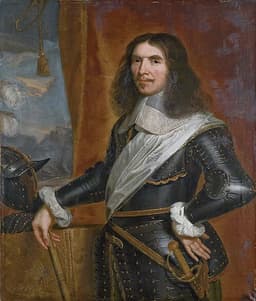
Turenne
General · Modern
75.8Total
Basic Information
Born
1483
1611
Died
1530
1675
Era
Medieval
Modern
Nationality
Mughal Empire
France
Occupation
Emperor
General
Civilization
Indian
Western
Score Comparison
Military (10%)
74.0
79.9
Political (20%)
72.0
72.0
Influence (20%)
88.0
88.0
Legacy (20%)
80.0
65.0
Leadership (15%)
74.0
77.2
Strategy (15%)
67.6
72.0
TOTAL
78.1
75.8
Babur — Complete Timeline
1526 AD
Battle of Panipat (1526)War
Babur led his army of about 12,000 men against the Delhi Sultanate army of Ibrahim Lodi, which numbered around 100,000. Using gunpowder weapons and innovative tactics, Babur defeated Lodi's forces. This victory established the Mughal Empire in India and marked the beginning of Mughal rule.
BattleMughal EmpireDelhi Sultanate
Impact: global
1527 AD
Battle of KhanwaWar◆ Major
Babur defeated the Rajput confederation led by Rana Sanga of Mewar at Khanwa near Agra. The Rajput army was larger and included cavalry and war elephants. Babur's use of artillery and defensive tactics secured the victory. This battle consolidated Mughal control over northern India.
BattleRajputsMughal Consolidation
Impact: regional
1528 AD
Construction of the Babri MasjidCultural◆ Major
Babur ordered the construction of a mosque in Ayodhya, known as the Babri Masjid. The mosque was built on a site that Hindus believed was the birthplace of the god Rama. This act became a source of religious and political conflict in India for centuries, culminating in the mosque's demolition in 1992.
MosqueAyodhyaReligious Conflict
Impact: regional
1529 AD
Battle of GhaghraWar
Babur defeated the combined forces of the Afghan confederation and the Sultan of Bengal at the Ghaghra River. This victory eliminated the last major Afghan resistance in northern India. It extended Mughal control over Bihar and parts of Bengal, further securing Babur's empire.
BattleAfghansBengal
Impact: regional
Turenne — Complete Timeline
1639 AD
Campaign in the ValtellinaWar
Turenne commanded French forces in the Valtellina during the Thirty Years' War. He captured several fortresses and secured the strategic pass for France, demonstrating his early military skill.
Thirty Years' WarAlpsEarly Career
Impact: regional
1658 AD
Battle of the DunesWar◆ Major
Turenne commanded the French army to victory over the Spanish at the Battle of the Dunes near Dunkirk. The victory led to the capture of Dunkirk and forced Spain to seek peace, ending the Franco-Spanish War.
Franco-Spanish WarDunkirkMilitary Victory
Impact: regional
1674 AD
Battle of the RhineWar◆ Major
Turenne led a French army across the Rhine in winter, surprising the Imperial forces. He defeated the Austrians at the Battle of Entzheim and later at Turckheim, securing French control of Alsace.
Franco-Dutch WarAlsaceWinter Campaign
Impact: regional
Battle of the SambreWar◆ Major
Turenne defeated the Spanish and Dutch forces at the Battle of Seneffe. The battle was costly but prevented the Allies from invading France. It demonstrated Turenne's tactical skill in defensive warfare.
Franco-Dutch WarDefensive BattleTactics
Impact: regional
1675 AD
Death of TurenneWar◆ Major
Turenne was killed by a cannonball while reconnoitering enemy positions at the Battle of Sasbach. His death was a major loss for France. He was buried with honors in the Basilica of Saint-Denis.
Death in BattleFranco-Dutch WarMilitary Loss
Impact: nationaltragic
Expert Analysis
Origins
Babur (1483–1530) was a descendant of Timur and Genghis Khan, born in present-day Uzbekistan. He inherited the Fergana Valley at age 11 and spent his youth struggling to secure his patrimony. Turenne (1611–1675) was born into French nobility, the second son of the Duke of Bouillon. His military career began under his uncles, the Princes of Orange, in the Dutch Republic.
Rise to Power
Babur's early reign was marked by constant warfare in Central Asia. After losing Samarkand multiple times, he turned his attention to India, leveraging his mobile cavalry and artillery. His victory at the **Battle of Panipat (1526)** against the Delhi Sultanate's vastly larger army established the Mughal Empire. Turenne rose through the French ranks during the Thirty Years' War, earning a reputation for strategic brilliance. His victories at the Battle of the Rhine and later at the Battle of the Dunes (1658) cemented his status as France's foremost general.
Leadership & Governance
Babur was both a military leader and a ruler. He established a centralized administration in India, promoting religious tolerance and cultural exchange. His memoirs, the Baburnama, reveal a reflective and poetic nature. Turenne was primarily a military commander, known for his strategic innovation and care for his troops. He served under Louis XIV and played a key role in the Franco-Dutch War. His leadership style emphasized maneuver and logistics over frontal assaults.
Triumph & Tragedy
Babur's greatest triumph was the conquest of northern India. His tragedies include the early death of his beloved son Humayun and his own death at age 47 from illness. Turenne's crowning achievement was the Battle of the Dunes, where he captured Dunkirk. He met a tragic end at the Battle of Sasbach (1675), killed by a cannonball while reconnoitering.
Character & Destiny
Babur was a charismatic, cultured leader who wrote poetry and loved nature. His destiny was to found an empire that would last centuries. Turenne was known for his modesty, tactical genius, and loyalty to France. His destiny was to shape modern warfare and inspire future generals like Napoleon.
Legacy
Babur's legacy is the Mughal Empire, which under later rulers like Akbar became a symbol of Indian unity and prosperity. Turenne's legacy lies in military theory; his campaigns are studied for their use of maneuver and combined arms. Both are considered among the greatest commanders of their eras.
Conclusion
While both were exceptional, Babur's broader impact as founder of a major empire gives him a slight edge. His ability to transition from a nomadic warrior to an imperial ruler, combined with his cultural contributions, places him above Turenne, who excelled primarily in the military sphere. **Scores**: Babur (78), Turenne (76).
Rankings
🥇
BaburLeader
Mil: 74.0Pol: 72.0Inf: 88.0
78.1
🥈
Turenne
Mil: 79.9Pol: 72.0Inf: 88.0
75.8
+2.3 behind
How This Comparison Works
Algorithm
Each figure is scored on 6 dimensions (0—100 scale) based on structured historical data: Military (10%), Political (20%), Influence (20%), Legacy (20%), Leadership (15%), Strategy (15%). The weighted total produces the final ranking.
Data Sources
Scores are computed from structured sub-indicators in the database. Scale factors adjust for era (Ancient ×0.85, Modern ×1.0) and civilization size (Eastern ×1.05, Other ×0.80) to account for differences in population and military scale.
Maximum 3 Figures
Comparisons are limited to 2—3 figures to ensure readability and statistical meaningfulness.
Error Margins
±5 points per dimension — Sub-scores are derived from historical records with inherent uncertainty. Two figures within 5 points on a dimension should be considered roughly equivalent in that area.
Total Score Accuracy
±3 points overall — The weighted combination of 6 dimensions produces a total score with approximately ±3 points of uncertainty. Differences of less than 3 points are not statistically significant— the figures are effectively tied.
Known Limitations
- Historical records are incomplete and uneven across civilizations
- Figures from oral-tradition societies may be underrepresented
- Occupation labels can misclassify multi-role figures
- Scores measure capability and impact, not moral character
- Quantitative scoring is a comparison tool, not absolute truth
Capability Radar
Military (10%) — Battles & Warfare
Battles
75
85
Win Rate
85
88
Expansion
85
80
Political (20%) — Governance & Reform
Reform
55
60
Diplomacy
70
75
Economy
50
55
Influence (20%) — Cultural & Global Reach
Cultural
70
65
Global
75
70
Legacy (20%) — Historical Impact
Historical
85
80
Longevity
80
75
Leadership (15%) — Power & Stability
Tenure
40
70
Stability
45
65
Strategy (15%) — Tactics & Innovation
Strategy
82
92
Tactics
80
90
Reform
60
75
Similar Comparisons
Comments & Discussion
No comments yet. Be the first to share your thoughts!