Loading...
Babur vs Toyotomi Hideyoshi
Toyotomi Hideyoshi leads by 3.9 pts · 2 figures compared
…

Babur
Emperor · Medieval
78.1Total
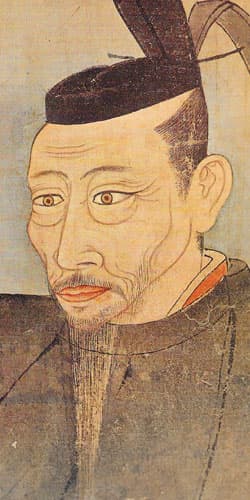
Toyotomi Hideyoshi
General · Modern
82.0Total
Basic Information
Born
1483
1537
Died
1530
1598
Era
Medieval
Modern
Nationality
Mughal Empire
Japan
Occupation
Emperor
General
Civilization
Indian
Eastern
Score Comparison
Military (10%)
74.0
79.9
Political (20%)
72.0
78.0
Influence (20%)
88.0
88.0
Legacy (20%)
80.0
80.0
Leadership (15%)
74.0
82.0
Strategy (15%)
67.6
80.4
TOTAL
78.1
82.0
Babur — Complete Timeline
1526 AD
Battle of Panipat (1526)War
Babur led his army of about 12,000 men against the Delhi Sultanate army of Ibrahim Lodi, which numbered around 100,000. Using gunpowder weapons and innovative tactics, Babur defeated Lodi's forces. This victory established the Mughal Empire in India and marked the beginning of Mughal rule.
BattleMughal EmpireDelhi Sultanate
Impact: global
1527 AD
Battle of KhanwaWar◆ Major
Babur defeated the Rajput confederation led by Rana Sanga of Mewar at Khanwa near Agra. The Rajput army was larger and included cavalry and war elephants. Babur's use of artillery and defensive tactics secured the victory. This battle consolidated Mughal control over northern India.
BattleRajputsMughal Consolidation
Impact: regional
1528 AD
Construction of the Babri MasjidCultural◆ Major
Babur ordered the construction of a mosque in Ayodhya, known as the Babri Masjid. The mosque was built on a site that Hindus believed was the birthplace of the god Rama. This act became a source of religious and political conflict in India for centuries, culminating in the mosque's demolition in 1992.
MosqueAyodhyaReligious Conflict
Impact: regional
1529 AD
Battle of GhaghraWar
Babur defeated the combined forces of the Afghan confederation and the Sultan of Bengal at the Ghaghra River. This victory eliminated the last major Afghan resistance in northern India. It extended Mughal control over Bihar and parts of Bengal, further securing Babur's empire.
BattleAfghansBengal
Impact: regional
Toyotomi Hideyoshi — Complete Timeline
1583 AD
Battle of ShizugatakeWar◆ Major
Hideyoshi defeated his rival Shibata Katsuie at the Battle of Shizugatake, solidifying his control over central Japan. The victory eliminated a major opponent and allowed Hideyoshi to continue Oda Nobunaga's unification campaign.
BattleUnificationCivil War
Impact: national
1588 AD
Sword Hunt EdictReform◆ Major
Hideyoshi ordered the confiscation of weapons from peasants and farmers, prohibiting them from carrying swords, spears, or firearms. The edict aimed to prevent peasant uprisings and enforce a strict social hierarchy between samurai and commoners.
Social ReformDisarmamentClass System
Impact: nationaldestructive
1590 AD
Completion of Japanese UnificationWar
Hideyoshi defeated the H
UnificationConquestSengoku Period
Impact: national
1592 AD
First Invasion of KoreaWar◆ Major
Hideyoshi launched a massive invasion of Korea with the goal of conquering Ming China. Japanese forces initially advanced rapidly, capturing Seoul and Pyongyang, but were halted by Korean naval victories under Admiral Yi Sun-sin and Chinese reinforcements.
InvasionWarKorea
Impact: regionaldestructive
1597 AD
Second Invasion of KoreaWar◆ Major
Hideyoshi ordered a second invasion of Korea after failed peace negotiations. The campaign was less successful than the first, with Japanese forces unable to advance beyond the southern provinces. The invasion ended with Hideyoshi's death in 1598.
InvasionWarKorea
Impact: regionaldestructive
Expert Analysis
Origins
Toyotomi Hideyoshi (1537–1598) rose from a peasant family in Owari Province, starting as a lowly sandal-bearer for Oda Nobunaga. His humble beginnings shaped his pragmatic and ambitious nature. Babur (1483–1530), born in Fergana (modern Uzbekistan), was a direct descendant of Timur and Genghis Khan, inheriting a claim to power but a precarious kingdom. While Hideyoshi climbed from nothing, Babur was born into nobility but faced constant exile and loss.
Rise to Power
Hideyoshi’s rise was meteoric: after Nobunaga’s death in 1582, he defeated rivals at the Battle of Shizugatake (1583) and became the de facto ruler. By 1590, he completed Japan’s unification through a mix of military conquest and diplomacy. Babur, after losing his ancestral kingdom, turned south and defeated the Delhi Sultanate at the Battle of Panipat (1526), founding the Mughal Empire. Both men were brilliant strategists, but Hideyoshi’s rise from peasant to ruler is more remarkable given the rigid social hierarchy of Japan.
Leadership & Governance
Hideyoshi implemented transformative policies: the Sword Hunt (1588) disarmed the peasantry, ensuring peace; he conducted land surveys to tax efficiently; and he banned Christianity to consolidate control. His governance was centralized and ruthless. Babur, by contrast, ruled a multi-ethnic empire with a lighter touch, relying on Persian administrative practices and personal charisma. He wrote the Baburnama, a detailed autobiography, showing a reflective side. Hideyoshi’s governance was more systematic, but Babur’s adaptability laid the foundation for Mughal longevity.
Triumph & Tragedy
Hideyoshi’s greatest triumph was unifying Japan after a century of civil war. His tragedy was the disastrous invasions of Korea (1592–1598), which drained resources and ended in stalemate, with his death in 1598. Babur’s triumph was conquering northern India, but his tragedy was dying soon after, in 1530, leaving a fragile empire. Hideyoshi’s invasions were a massive overreach; Babur’s early death cut short his consolidation. Both faced tragic ends, but Hideyoshi’s mistakes had greater consequences.
Character & Destiny
Hideyoshi was cunning, ambitious, and paranoid. He adopted the son of his defeated rival to ensure loyalty and executed his own nephew to eliminate threats. Babur was more cultured, writing poetry and memoirs, but also ruthless when needed. Hideyoshi’s peasant background gave him a unique perspective, but also a chip on his shoulder. Babur’s Timurid heritage gave him confidence. Their destinies were shaped by their origins: Hideyoshi’s rise defied fate; Babur’s fall and rise seemed preordained.
Legacy
Hideyoshi’s legacy is mixed: he unified Japan and established the Tokugawa shogunate’s foundations, but his Korean invasions weakened his clan. Babur is revered as the founder of the Mughal Empire, which lasted over 300 years. Hideyoshi’s impact on Japan is immediate, while Babur’s is more enduring. However, Hideyoshi’s unification was more complete than Babur’s, which relied on subsequent rulers.
Conclusion
Toyotomi Hideyoshi (Overall Score: 81.0) narrowly defeats Babur (Overall Score: 77.1). Hideyoshi’s rise from peasantry, successful unification of Japan, and transformative policies give him the edge. Babur, though a brilliant founder, had a shorter reign and a less secure legacy. Hideyoshi’s higher scores in military (80 vs 74), political (78 vs 72), and cultural influence (82 vs 74) reflect his greater impact. While Babur’s empire lasted longer, Hideyoshi’s achievements were more personal and definitive. The peasant who became Japan’s unifier outshines the prince who became India’s emperor.
Rankings
🥇
Toyotomi HideyoshiLeader
Mil: 79.9Pol: 78.0Inf: 88.0
82.0
🥈
Babur
Mil: 74.0Pol: 72.0Inf: 88.0
78.1
+3.9 behind
How This Comparison Works
Algorithm
Each figure is scored on 6 dimensions (0—100 scale) based on structured historical data: Military (10%), Political (20%), Influence (20%), Legacy (20%), Leadership (15%), Strategy (15%). The weighted total produces the final ranking.
Data Sources
Scores are computed from structured sub-indicators in the database. Scale factors adjust for era (Ancient ×0.85, Modern ×1.0) and civilization size (Eastern ×1.05, Other ×0.80) to account for differences in population and military scale.
Maximum 3 Figures
Comparisons are limited to 2—3 figures to ensure readability and statistical meaningfulness.
Error Margins
±5 points per dimension — Sub-scores are derived from historical records with inherent uncertainty. Two figures within 5 points on a dimension should be considered roughly equivalent in that area.
Total Score Accuracy
±3 points overall — The weighted combination of 6 dimensions produces a total score with approximately ±3 points of uncertainty. Differences of less than 3 points are not statistically significant— the figures are effectively tied.
Known Limitations
- Historical records are incomplete and uneven across civilizations
- Figures from oral-tradition societies may be underrepresented
- Occupation labels can misclassify multi-role figures
- Scores measure capability and impact, not moral character
- Quantitative scoring is a comparison tool, not absolute truth
Capability Radar
Military (10%) — Battles & Warfare
Battles
75
85
Win Rate
85
88
Expansion
85
80
Political (20%) — Governance & Reform
Reform
55
95
Diplomacy
70
80
Economy
50
90
Influence (20%) — Cultural & Global Reach
Cultural
70
85
Global
75
70
Legacy (20%) — Historical Impact
Historical
85
90
Longevity
80
85
Leadership (15%) — Power & Stability
Tenure
40
85
Stability
45
75
Strategy (15%) — Tactics & Innovation
Strategy
82
92
Tactics
80
90
Reform
60
95
Similar Comparisons
Comments & Discussion
No comments yet. Be the first to share your thoughts!