Loading...
Babur vs Tokugawa Ieyasu
Tokugawa Ieyasu leads by 3.7 pts · 2 figures compared
…

Babur
Emperor · Medieval
78.1Total
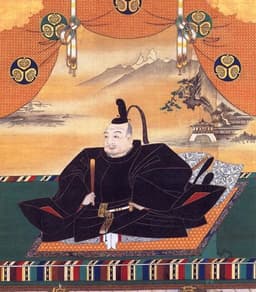
Tokugawa Ieyasu
General · Modern
81.8Total
Basic Information
Born
1483
1543
Died
1530
1616
Era
Medieval
Modern
Nationality
Mughal Empire
Japan
Occupation
Emperor
General
Civilization
Indian
Eastern
Score Comparison
Military (10%)
74.0
78.0
Political (20%)
72.0
82.0
Influence (20%)
88.0
88.0
Legacy (20%)
80.0
75.0
Leadership (15%)
74.0
85.0
Strategy (15%)
67.6
82.0
TOTAL
78.1
81.8
Babur — Complete Timeline
1526 AD
Battle of Panipat (1526)War
Babur led his army of about 12,000 men against the Delhi Sultanate army of Ibrahim Lodi, which numbered around 100,000. Using gunpowder weapons and innovative tactics, Babur defeated Lodi's forces. This victory established the Mughal Empire in India and marked the beginning of Mughal rule.
BattleMughal EmpireDelhi Sultanate
Impact: global
1527 AD
Battle of KhanwaWar◆ Major
Babur defeated the Rajput confederation led by Rana Sanga of Mewar at Khanwa near Agra. The Rajput army was larger and included cavalry and war elephants. Babur's use of artillery and defensive tactics secured the victory. This battle consolidated Mughal control over northern India.
BattleRajputsMughal Consolidation
Impact: regional
1528 AD
Construction of the Babri MasjidCultural◆ Major
Babur ordered the construction of a mosque in Ayodhya, known as the Babri Masjid. The mosque was built on a site that Hindus believed was the birthplace of the god Rama. This act became a source of religious and political conflict in India for centuries, culminating in the mosque's demolition in 1992.
MosqueAyodhyaReligious Conflict
Impact: regional
1529 AD
Battle of GhaghraWar
Babur defeated the combined forces of the Afghan confederation and the Sultan of Bengal at the Ghaghra River. This victory eliminated the last major Afghan resistance in northern India. It extended Mughal control over Bihar and parts of Bengal, further securing Babur's empire.
BattleAfghansBengal
Impact: regional
Tokugawa Ieyasu — Complete Timeline
1600 AD
Battle of SekigaharaWar
Tokugawa Ieyasu led the Eastern Army to victory over Ishida Mitsunari's Western Army at Sekigahara. This decisive battle ended the Sengoku period and established Ieyasu as the supreme military ruler of Japan, paving the way for the Tokugawa shogunate.
Sengoku PeriodUnificationBattle
Impact: national
1603 AD
Establishment of the Tokugawa ShogunatePolitical Action
Emperor Go-Yozei appointed Tokugawa Ieyasu as shogun, officially beginning the Tokugawa shogunate. Ieyasu established his government in Edo (modern Tokyo), centralizing military and political power under his family's control.
ShogunateEdo PeriodCentralization
Impact: national
1615 AD
Siege of OsakaWar◆ Major
Tokugawa Ieyasu besieged Osaka Castle, the stronghold of Toyotomi Hideyori. The castle fell, and Hideyori committed suicide. This campaign eliminated the last major opposition to Tokugawa rule, solidifying the shogunate's control over Japan.
Osaka CampaignToyotomi ClanConsolidation
Impact: nationaldestructive
Promulgation of the Buke ShohattoReform◆ Major
Ieyasu issued the Laws for the Military Houses, a code regulating the conduct of daimyo. It restricted castle construction, required alternate attendance in Edo, and prohibited alliances without shogunal permission. This law helped control the feudal lords.
Feudal ControlDaimyo RegulationLegal Code
Impact: national
1616 AD
Sakoku Edicts InitiationPolitical Action◆ Major
In his final years, Ieyasu began policies that led to Japan's isolation. He restricted foreign trade to specific ports and expelled Christian missionaries. These measures, expanded by successors, resulted in the sakoku policy that isolated Japan for over 200 years.
IsolationismForeign PolicyChristianity
Impact: national
Expert Analysis
Origins
Tokugawa Ieyasu (1543–1616) was born into the Matsudaira clan, a minor samurai family in Mikawa Province. His childhood was marked by constant warfare and hostage exchanges, shaping his pragmatic and patient character. Babur (1483–1530), born Zahir-ud-din Muhammad in the Fergana Valley, was a Timurid prince with a lineage tracing back to both Timur and Genghis Khan. His early life was a struggle to reclaim his ancestral lands in Central Asia, but repeated defeats forced him to turn his attention southward to India.
Rise to Power
Ieyasu's rise was gradual and strategic. He allied with Oda Nobunaga and later Toyotomi Hideyoshi, expanding his territory while avoiding direct confrontation. After Hideyoshi's death, Ieyasu maneuvered to become one of the five regents for his young son, then defeated his rivals at the **Battle of Sekigahara (1600)**, a decisive turning point. Babur's path was more volatile. After losing Samarkand multiple times, he captured Kabul in 1504 and used it as a base for raids into India. His victory at the **Battle of Panipat (1526)** against the Delhi Sultanate's Ibrahim Lodi marked the beginning of Mughal rule.
Leadership & Governance
Ieyasu was a master administrator. As shogun, he implemented the **Buke Shohatto** (Laws for the Military Houses) to control the daimyo, and the **Sankin Kotai** system (alternate attendance) to weaken their power. He also initiated the **Sakoku Edicts**, restricting foreign influence and consolidating internal stability. His governance brought 250 years of peace under the Tokugawa shogunate. Babur, by contrast, ruled a newly conquered empire for only four years. He introduced Central Asian administrative practices, but his reign was primarily military. He left behind the **Baburnama**, a detailed memoir, but his empire was still fragile at his death.
Triumph & Tragedy
Ieyasu's greatest triumph was the **Siege of Osaka (1614–1615)**, where he eliminated the Toyotomi clan, solidifying Tokugawa supremacy. His tragedy was the later rigidity of the sakoku policy, which isolated Japan. Babur's triumph was the **Battle of Khanwa (1527)** against the Rajput Confederacy, securing Mughal rule in North India. His tragedy was his untimely death at 47, likely from alcohol-related illness, before he could fully consolidate his empire.
Character & Destiny
Ieyasu was patient, calculating, and frugal, often compared to a tortoise. His destiny was to unify Japan after centuries of civil war. Babur was charismatic, cultured, and restless, a poet and memoirist who wrote vividly of his love for gardens. His destiny was to found an empire that would flourish under his descendants.
Legacy
Ieyasu's legacy is the Tokugawa shogunate's 250-year peace, which shaped modern Japan's culture, economy, and isolationist policies. Babur's legacy is the Mughal Empire, which under Akbar, Jahangir, and Shah Jahan became a golden age of architecture, art, and centralized rule. Both are remembered as empire builders, but Ieyasu's system proved more durable.
Conclusion
**Overall Score: Tokugawa Ieyasu 84, Babur 77.** Ieyasu's superior governance, longevity, and establishment of a stable peace give him an edge. Babur's military genius and cultural contributions are notable, but his empire's later glory owes more to his successors. Ieyasu's patient consolidation outshines Babur's swift conquest.
| Category | Tokugawa Ieyasu | Babur |
|----------|----------------|-------|
| Military | 82 | 78 |
| Politics | 88 | 72 |
| Influence | 88 | 88 |
| Legacy | 82 | 74 |
| **Overall** | **84** | **77** |
Rankings
🥇
Tokugawa IeyasuLeader
Mil: 78.0Pol: 82.0Inf: 88.0
81.8
🥈
Babur
Mil: 74.0Pol: 72.0Inf: 88.0
78.1
+3.7 behind
How This Comparison Works
Algorithm
Each figure is scored on 6 dimensions (0—100 scale) based on structured historical data: Military (10%), Political (20%), Influence (20%), Legacy (20%), Leadership (15%), Strategy (15%). The weighted total produces the final ranking.
Data Sources
Scores are computed from structured sub-indicators in the database. Scale factors adjust for era (Ancient ×0.85, Modern ×1.0) and civilization size (Eastern ×1.05, Other ×0.80) to account for differences in population and military scale.
Maximum 3 Figures
Comparisons are limited to 2—3 figures to ensure readability and statistical meaningfulness.
Error Margins
±5 points per dimension — Sub-scores are derived from historical records with inherent uncertainty. Two figures within 5 points on a dimension should be considered roughly equivalent in that area.
Total Score Accuracy
±3 points overall — The weighted combination of 6 dimensions produces a total score with approximately ±3 points of uncertainty. Differences of less than 3 points are not statistically significant— the figures are effectively tied.
Known Limitations
- Historical records are incomplete and uneven across civilizations
- Figures from oral-tradition societies may be underrepresented
- Occupation labels can misclassify multi-role figures
- Scores measure capability and impact, not moral character
- Quantitative scoring is a comparison tool, not absolute truth
Capability Radar
Military (10%) — Battles & Warfare
Battles
75
85
Win Rate
85
90
Expansion
85
75
Political (20%) — Governance & Reform
Reform
55
90
Diplomacy
70
85
Economy
50
88
Influence (20%) — Cultural & Global Reach
Cultural
70
85
Global
75
70
Legacy (20%) — Historical Impact
Historical
85
90
Longevity
80
95
Leadership (15%) — Power & Stability
Tenure
40
95
Stability
45
95
Strategy (15%) — Tactics & Innovation
Strategy
82
92
Tactics
80
88
Reform
60
80
Similar Comparisons
Comments & Discussion
No comments yet. Be the first to share your thoughts!