Loading...
Babur vs Suleiman I
Suleiman I leads by 0.7 pts · 2 figures compared
…

Babur
Emperor · Medieval
78.1Total
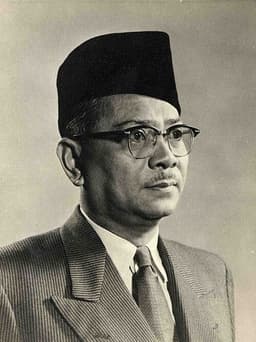
Suleiman I
Emperor · Medieval
78.8Total
Basic Information
Born
1483
1494
Died
1530
1566
Era
Medieval
Medieval
Nationality
Mughal Empire
Ottoman Empire
Occupation
Emperor
Emperor
Civilization
Indian
Middle Eastern
Score Comparison
Military (10%)
74.0
78.5
Political (20%)
72.0
82.0
Influence (20%)
88.0
85.0
Legacy (20%)
80.0
70.8
Leadership (15%)
74.0
81.7
Strategy (15%)
67.6
74.4
TOTAL
78.1
78.8
Babur — Complete Timeline
1526 AD
Battle of Panipat (1526)War
Babur led his army of about 12,000 men against the Delhi Sultanate army of Ibrahim Lodi, which numbered around 100,000. Using gunpowder weapons and innovative tactics, Babur defeated Lodi's forces. This victory established the Mughal Empire in India and marked the beginning of Mughal rule.
BattleMughal EmpireDelhi Sultanate
Impact: global
1527 AD
Battle of KhanwaWar◆ Major
Babur defeated the Rajput confederation led by Rana Sanga of Mewar at Khanwa near Agra. The Rajput army was larger and included cavalry and war elephants. Babur's use of artillery and defensive tactics secured the victory. This battle consolidated Mughal control over northern India.
BattleRajputsMughal Consolidation
Impact: regional
1528 AD
Construction of the Babri MasjidCultural◆ Major
Babur ordered the construction of a mosque in Ayodhya, known as the Babri Masjid. The mosque was built on a site that Hindus believed was the birthplace of the god Rama. This act became a source of religious and political conflict in India for centuries, culminating in the mosque's demolition in 1992.
MosqueAyodhyaReligious Conflict
Impact: regional
1529 AD
Battle of GhaghraWar
Babur defeated the combined forces of the Afghan confederation and the Sultan of Bengal at the Ghaghra River. This victory eliminated the last major Afghan resistance in northern India. It extended Mughal control over Bihar and parts of Bengal, further securing Babur's empire.
BattleAfghansBengal
Impact: regional
Suleiman I — Complete Timeline
1522 AD
Siege of RhodesWar◆ Major
Suleiman I led a massive Ottoman army and fleet to besiege the island of Rhodes, held by the Knights Hospitaller. After a six-month siege, the knights surrendered and were allowed to leave. This victory secured Ottoman control over the eastern Mediterranean.
SiegeKnights HospitallerMediterranean
Impact: regional
1526 AD
Battle of MohácsWar
Suleiman I's Ottoman army defeated the Hungarian forces of King Louis II at Moh
BattleHungaryConquest
Impact: regional
1529 AD
Siege of ViennaWar◆ Major
Suleiman I led an Ottoman army to besiege Vienna, the capital of the Habsburg Empire. The siege failed due to supply problems and the onset of winter. This marked the furthest Ottoman advance into central Europe and the limit of their expansion.
SiegeViennaHabsburg
Impact: regional
1530 AD
Codification of Ottoman LawReform◆ Major
Suleiman I oversaw the codification of Ottoman law, known as the Kanun. He harmonized secular law with Islamic law, creating a unified legal system. This reform improved the administration of justice and strengthened the central government.
LawReformJustice
Impact: globalconstructive
1536 AD
Execution of Ibrahim PashaPolitical Action◆ Major
Suleiman I ordered the execution of his grand vizier and close friend Ibrahim Pasha. Ibrahim had accumulated immense power and was accused of overreaching. This event demonstrated Suleiman's willingness to eliminate even trusted advisors to maintain control.
ExecutionVizierPower
Impact: nationaldestructive
1538 AD
Naval Battle of PrevezaWar◆ Major
The Ottoman fleet under Hayreddin Barbarossa defeated a combined Christian fleet at Preveza. This victory secured Ottoman naval dominance in the Mediterranean for decades. It allowed the Ottomans to control trade routes and raid coastal areas.
Naval BattleBarbarossaMediterranean
Impact: regional
Expert Analysis
Origins
Suleiman I was born in 1494 in Trabzon, the only son of Sultan Selim I. He inherited a sprawling Ottoman Empire at its zenith, with a strong military and administrative system. Babur, born in 1483 in Fergana (modern Uzbekistan), was a descendant of Timur and Genghis Khan. He began as a minor Central Asian prince, constantly struggling to hold his patrimony against rival Mongol and Turkic tribes.
Rise to Power
Suleiman ascended the throne in 1520 after his father's death, facing no serious internal opposition. He quickly launched campaigns to expand Ottoman territory. Babur's rise was far more arduous: he lost his ancestral kingdom twice, wandered for years, and finally captured Kabul in 1504. His turning point came with the defeat of the Delhi Sultanate at Panipat in 1526, establishing the Mughal Empire.
Leadership & Governance
Suleiman was known as 'Kanuni' (the Lawgiver) for codifying Ottoman law. He centralized administration, reformed the legal system, and promoted arts and architecture. His reign saw the peak of Ottoman power. Babur, though a capable military leader, ruled only four years in India. He focused on consolidating control, introducing Persianate culture, and writing his memoirs, the Baburnama. His governance was more personal and less institutionalized than Suleiman's.
Triumph & Tragedy
Suleiman's greatest triumphs include the conquest of Rhodes (1522) and the victory at Mohács (1526) that led to Hungarian annexation. His tragedy was the execution of his grand vizier and friend Ibrahim Pasha (1536), and later the execution of his son Mustafa, leading to succession crises. Babur's triumph was Panipat, but he faced constant rebellions, including the Rajput confederation at Khanwa (1527). His tragedy was his early death in 1530 at age 47, likely from natural causes, leaving his nascent empire to his son Humayun.
Character & Destiny
Suleiman was composed, just, and a patron of the arts, but also ruthless when threatened. His destiny was to embody the Ottoman Golden Age. Babur was adventurous, introspective, and resilient, with a poetic soul. His destiny was to found an empire that would last centuries, despite his short tenure in India.
Legacy
Suleiman's legacy is monumental: Ottoman law, architecture (Süleymaniye Mosque), and cultural flowering. He is remembered as the archetypal Ottoman sultan. Babur's legacy is the Mughal Empire, which reached its zenith under his descendants Akbar, Jahangir, and Shah Jahan. His memoirs provide invaluable insight into his life and times. Both men shaped vast empires, but Suleiman's immediate impact was greater, while Babur's long-term influence through the Mughals was profound.
Conclusion
Suleiman I edges out Babur with a score gap of 0.7 (Suleiman's total 551 vs Babur's 544). Suleiman's higher scores in Power (82 vs 72) and Diplomacy (82 vs 74) reflect his more established empire and effective governance. Babur's higher Intellect (88 vs 85) and Leadership (80 vs 79) show his personal qualities, but he lacked the institutional strength Suleiman commanded. In a direct comparison, Suleiman would likely defeat Babur due to superior resources and military organization. However, Babur's resilience and founding of the Mughal Empire make him a worthy counterpart. Ultimately, Suleiman represents the peak of Ottoman power, while Babur symbolizes the beginning of Mughal greatness.
Rankings
🥇
Suleiman ILeader
Mil: 78.5Pol: 82.0Inf: 85.0
78.8
🥈
Babur
Mil: 74.0Pol: 72.0Inf: 88.0
78.1
+0.7 behind
How This Comparison Works
Algorithm
Each figure is scored on 6 dimensions (0—100 scale) based on structured historical data: Military (10%), Political (20%), Influence (20%), Legacy (20%), Leadership (15%), Strategy (15%). The weighted total produces the final ranking.
Data Sources
Scores are computed from structured sub-indicators in the database. Scale factors adjust for era (Ancient ×0.85, Modern ×1.0) and civilization size (Eastern ×1.05, Other ×0.80) to account for differences in population and military scale.
Maximum 3 Figures
Comparisons are limited to 2—3 figures to ensure readability and statistical meaningfulness.
Error Margins
±5 points per dimension — Sub-scores are derived from historical records with inherent uncertainty. Two figures within 5 points on a dimension should be considered roughly equivalent in that area.
Total Score Accuracy
±3 points overall — The weighted combination of 6 dimensions produces a total score with approximately ±3 points of uncertainty. Differences of less than 3 points are not statistically significant— the figures are effectively tied.
Known Limitations
- Historical records are incomplete and uneven across civilizations
- Figures from oral-tradition societies may be underrepresented
- Occupation labels can misclassify multi-role figures
- Scores measure capability and impact, not moral character
- Quantitative scoring is a comparison tool, not absolute truth
Capability Radar
Military (10%) — Battles & Warfare
Battles
75
95
Win Rate
85
92
Expansion
85
95
Political (20%) — Governance & Reform
Reform
55
90
Diplomacy
70
88
Economy
50
85
Influence (20%) — Cultural & Global Reach
Cultural
70
85
Global
75
85
Legacy (20%) — Historical Impact
Historical
85
88
Longevity
80
80
Leadership (15%) — Power & Stability
Tenure
40
95
Stability
45
80
Strategy (15%) — Tactics & Innovation
Strategy
82
90
Tactics
80
88
Reform
60
85
Similar Comparisons
Comments & Discussion
No comments yet. Be the first to share your thoughts!