Loading...
Babur vs Qin Shi Huang
Qin Shi Huang leads by 7.1 pts · 2 figures compared
…

Babur
Emperor · Medieval
78.1Total
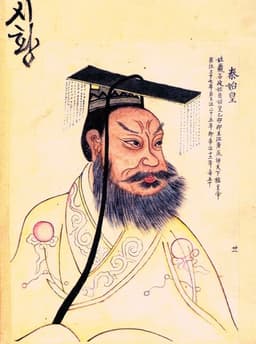
Qin Shi Huang
Emperor · Ancient
85.2Total
Basic Information
Born
1483
-259
Died
1530
-210
Era
Medieval
Ancient
Nationality
Mughal Empire
China
Occupation
Emperor
Emperor
Civilization
Indian
Eastern
Score Comparison
Military (10%)
74.0
80.0
Political (20%)
72.0
90.0
Influence (20%)
88.0
85.0
Legacy (20%)
80.0
90.0
Leadership (15%)
74.0
78.0
Strategy (15%)
67.6
82.0
TOTAL
78.1
85.2
Babur — Complete Timeline
1526 AD
Battle of Panipat (1526)War
Babur led his army of about 12,000 men against the Delhi Sultanate army of Ibrahim Lodi, which numbered around 100,000. Using gunpowder weapons and innovative tactics, Babur defeated Lodi's forces. This victory established the Mughal Empire in India and marked the beginning of Mughal rule.
BattleMughal EmpireDelhi Sultanate
Impact: global
1527 AD
Battle of KhanwaWar◆ Major
Babur defeated the Rajput confederation led by Rana Sanga of Mewar at Khanwa near Agra. The Rajput army was larger and included cavalry and war elephants. Babur's use of artillery and defensive tactics secured the victory. This battle consolidated Mughal control over northern India.
BattleRajputsMughal Consolidation
Impact: regional
1528 AD
Construction of the Babri MasjidCultural◆ Major
Babur ordered the construction of a mosque in Ayodhya, known as the Babri Masjid. The mosque was built on a site that Hindus believed was the birthplace of the god Rama. This act became a source of religious and political conflict in India for centuries, culminating in the mosque's demolition in 1992.
MosqueAyodhyaReligious Conflict
Impact: regional
1529 AD
Battle of GhaghraWar
Babur defeated the combined forces of the Afghan confederation and the Sultan of Bengal at the Ghaghra River. This victory eliminated the last major Afghan resistance in northern India. It extended Mughal control over Bihar and parts of Bengal, further securing Babur's empire.
BattleAfghansBengal
Impact: regional
Qin Shi Huang — Complete Timeline
246 BC
Construction of the Mausoleum and Terracotta ArmyOther◆ Major
Qin Shi Huang commissioned a vast mausoleum complex near Xi'an, guarded by thousands of life-sized terracotta soldiers, horses, and chariots. The project employed hundreds of thousands of workers and reflected his obsession with immortality and imperial power.
Impact: global
230 BC
Conquest of the Six Warring StatesWar
From 230 to 221 BCE, Ying Zheng led the Qin state in a series of campaigns that conquered the Han, Zhao, Wei, Chu, Yan, and Qi states. This unified China under a single ruler for the first time, ending the Warring States period.
Impact: global
221 BC
Standardization of Writing, Currency, and MeasurementsReform◆ Major
Qin Shi Huang ordered the standardization of Chinese script, currency, and weights and measures across the unified empire. This facilitated administration, trade, and cultural integration, laying a foundation for future dynasties.
Impact: globalconstructive
Proclamation of the Qin DynastyPolitical Action
After conquering the last independent state, Ying Zheng declared himself Shi Huangdi (First Emperor), founding the Qin Dynasty. He adopted a new title to signify his supreme authority and initiated centralized imperial rule.
Impact: global
214 BC
Initiation of the Great Wall ConstructionOther◆ Major
Qin Shi Huang ordered the connection and extension of existing northern fortifications to create a unified defensive wall against nomadic Xiongnu raids. This project involved massive conscripted labor and became the precursor to the later Great Wall.
Impact: regional
213 BC
Burning of Books and Burying of ScholarsPolitical Action◆ Major
On the advice of Li Si, Qin Shi Huang ordered the burning of historical records and philosophical texts not aligned with Legalist doctrine. He also had 460 Confucian scholars buried alive to suppress dissent and consolidate ideological control.
Impact: nationaldestructive
Expert Analysis
Origins
Qin Shi Huang (259–210 BC), born Ying Zheng, was the son of King Zhuangxiang of Qin and a concubine, Zhao Ji. His early life was marked by political intrigue, as his father was a hostage in Zhao before ascending the throne. Ying Zheng became king of Qin at age 13, inheriting a state already primed for conquest through Legalist reforms. In contrast, Babur (1483–1530) was born Zahir-ud-din Muhammad in the Fergana Valley (modern Uzbekistan), a descendant of Timur on his father's side and Genghis Khan on his mother's. He inherited a precarious principality at age 11, constantly battling rival Mongol and Turkic lords. Both leaders rose from turbulent childhoods, but Qin's path was smoothed by a powerful state machinery, while Babur had to build his from scratch.
Rise to Power
Qin Shi Huang's rise was methodical: he eliminated internal rivals like his mother's lover Lao Ai and the chancellor Lü Buwei, then launched a series of campaigns from 230 to 221 BC that conquered the six other Warring States (Han, Zhao, Wei, Chu, Yan, Qi). His victory at the Battle of Changping (260 BC) had already crippled Zhao. Babur's rise was more dramatic and precarious. He first captured Samarkand at age 14 but lost it twice, eventually turning south to Kabul (1504). His defining moment came at the First Battle of Panipat (1526), where his 12,000-strong force defeated the Delhi Sultanate's 100,000 men and 1,000 war elephants using gunpowder weapons and innovative tactics. This victory, unlike Qin's steady conquests, was a high-risk gamble that paid off.
Leadership & Governance
Qin Shi Huang was a centralized autocrat. He abolished feudalism, divided China into 36 commanderies governed by appointed officials, and standardized writing, currency, weights, and measures. He also connected defensive walls into the Great Wall and built a national road network. His harsh Legalist policies included the burning of books and burying of scholars (213–210 BC) to suppress dissent. Babur, by contrast, ruled a more decentralized empire. He adopted Persian administrative practices, maintained local Hindu rulers as vassals, and focused on military consolidation. He documented his life in the Baburnama, showing a reflective, cultured side. While Qin imposed uniformity, Babur blended Turkic, Persian, and Indian traditions.
Triumph & Tragedy
Qin's greatest triumph was unifying China, but his tragedy was the empire's collapse within four years of his death, largely due to his oppressive policies. His obsession with immortality led to mercury poisoning. Babur's triumph was founding the Mughal Empire, which lasted over 300 years. His tragedy was personal: he died at 47, possibly from poisoning by his own son Humayun's enemies, and he never truly consolidated his conquests before his death. Both leaders left fragile legacies, but Babur's dynasty endured.
Character & Destiny
Qin Shi Huang was paranoid, ruthless, and megalomaniacal. He believed his dynasty would last 10,000 generations and sought immortality through elixirs. His destiny was to be both the unifier and the tyrant of China. Babur was more introspective, a poet and diarist who expressed nostalgia for his homeland. He was courageous but also pragmatic, willing to ally with infidels. His destiny was to be a conqueror who never felt at home in his new domain.
Legacy
Qin Shi Huang's legacy is foundational: the name "China" derives from Qin; his standardization created a unified Chinese civilization. The Great Wall remains a symbol. However, his totalitarianism set a precedent for imperial autocracy. Babur's legacy is the Mughal Empire, which brought Persianate culture and architecture (Taj Mahal) to India. The Babri Masjid, built by his general, became a contentious symbol. Both are remembered as empire builders, but Qin's impact on Chinese identity is more profound.
Conclusion
Qin Shi Huang scores higher overall (M=80, P=90, I=85, L=90, D=78, S=82, T=85) against Babur (M=74, P=72, I=88, L=80, D=74, S=68, T=78). Qin's superior military and political scores reflect his complete conquest and unification of China, while Babur's intelligence score is slightly higher due to his cultural contributions. However, Babur's legacy is more enduring in terms of dynasty longevity. Ultimately, Qin Shi Huang was the greater empire builder for his sheer scale of unification and standardization, despite his tyranny.
Rankings
🥇
Qin Shi HuangLeader
Mil: 80.0Pol: 90.0Inf: 85.0
85.2
🥈
Babur
Mil: 74.0Pol: 72.0Inf: 88.0
78.1
+7.1 behind
How This Comparison Works
Algorithm
Each figure is scored on 6 dimensions (0—100 scale) based on structured historical data: Military (10%), Political (20%), Influence (20%), Legacy (20%), Leadership (15%), Strategy (15%). The weighted total produces the final ranking.
Data Sources
Scores are computed from structured sub-indicators in the database. Scale factors adjust for era (Ancient ×0.85, Modern ×1.0) and civilization size (Eastern ×1.05, Other ×0.80) to account for differences in population and military scale.
Maximum 3 Figures
Comparisons are limited to 2—3 figures to ensure readability and statistical meaningfulness.
Error Margins
±5 points per dimension — Sub-scores are derived from historical records with inherent uncertainty. Two figures within 5 points on a dimension should be considered roughly equivalent in that area.
Total Score Accuracy
±3 points overall — The weighted combination of 6 dimensions produces a total score with approximately ±3 points of uncertainty. Differences of less than 3 points are not statistically significant— the figures are effectively tied.
Known Limitations
- Historical records are incomplete and uneven across civilizations
- Figures from oral-tradition societies may be underrepresented
- Occupation labels can misclassify multi-role figures
- Scores measure capability and impact, not moral character
- Quantitative scoring is a comparison tool, not absolute truth
Capability Radar
Military (10%) — Battles & Warfare
Battles
75
85
Win Rate
85
90
Expansion
85
90
Political (20%) — Governance & Reform
Reform
55
95
Diplomacy
70
75
Economy
50
90
Influence (20%) — Cultural & Global Reach
Cultural
70
95
Global
75
85
Legacy (20%) — Historical Impact
Historical
85
95
Longevity
80
95
Leadership (15%) — Power & Stability
Tenure
40
70
Stability
45
65
Strategy (15%) — Tactics & Innovation
Strategy
82
85
Tactics
80
80
Reform
60
95
Similar Comparisons
Comments & Discussion
No comments yet. Be the first to share your thoughts!