Loading...
Babur vs Mustafa Kemal Ataturk
Mustafa Kemal Ataturk leads by 1.9 pts · 2 figures compared
…

Babur
Emperor · Medieval
78.1Total
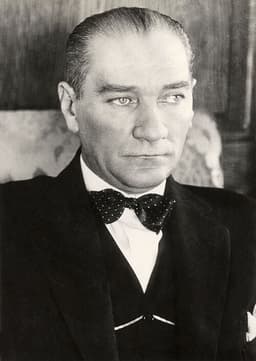
Mustafa Kemal Ataturk
Politician · Modern
80.0Total
Basic Information
Born
1483
1881
Died
1530
1938
Era
Medieval
Modern
Nationality
Mughal Empire
Turkey
Occupation
Emperor
Politician
Civilization
Indian
Middle Eastern
Score Comparison
Military (10%)
74.0
75.0
Political (20%)
72.0
85.0
Influence (20%)
88.0
75.0
Legacy (20%)
80.0
90.0
Leadership (15%)
74.0
80.0
Strategy (15%)
67.6
65.0
TOTAL
78.1
80.0
Babur — Complete Timeline
1526 AD
Battle of Panipat (1526)War
Babur led his army of about 12,000 men against the Delhi Sultanate army of Ibrahim Lodi, which numbered around 100,000. Using gunpowder weapons and innovative tactics, Babur defeated Lodi's forces. This victory established the Mughal Empire in India and marked the beginning of Mughal rule.
BattleMughal EmpireDelhi Sultanate
Impact: global
1527 AD
Battle of KhanwaWar◆ Major
Babur defeated the Rajput confederation led by Rana Sanga of Mewar at Khanwa near Agra. The Rajput army was larger and included cavalry and war elephants. Babur's use of artillery and defensive tactics secured the victory. This battle consolidated Mughal control over northern India.
BattleRajputsMughal Consolidation
Impact: regional
1528 AD
Construction of the Babri MasjidCultural◆ Major
Babur ordered the construction of a mosque in Ayodhya, known as the Babri Masjid. The mosque was built on a site that Hindus believed was the birthplace of the god Rama. This act became a source of religious and political conflict in India for centuries, culminating in the mosque's demolition in 1992.
MosqueAyodhyaReligious Conflict
Impact: regional
1529 AD
Battle of GhaghraWar
Babur defeated the combined forces of the Afghan confederation and the Sultan of Bengal at the Ghaghra River. This victory eliminated the last major Afghan resistance in northern India. It extended Mughal control over Bihar and parts of Bengal, further securing Babur's empire.
BattleAfghansBengal
Impact: regional
Mustafa Kemal Ataturk — Complete Timeline
1915 AD
Battle of GallipoliWar
As a colonel, Mustafa Kemal commanded Ottoman forces at Gallipoli, successfully repelling Allied landings. His leadership at critical points like Chunuk Bair made him a national hero and laid the foundation for his political career.
World War IOttoman EmpireMilitary Victory
Impact: regional
1919 AD
Turkish War of IndependenceWar
Kemal organized and led the Turkish National Movement against the Allied occupation of Anatolia and the Treaty of S
Independence WarNational MovementAnkara
Impact: nationalconstructive
1922 AD
Abolition of the SultanatePolitical Action◆ Major
The Grand National Assembly of Turkey, under Kemal's leadership, abolished the Ottoman Sultanate, ending 600 years of imperial rule. This severed the link with the old regime and paved the way for the proclamation of the Republic.
SultanateRepublicPolitical Reform
Impact: nationalprogressive
1923 AD
Proclamation of the Republic of TurkeyPolitical Action
Kemal declared Turkey a republic, becoming its first president. He moved the capital to Ankara and initiated a series of radical reforms to modernize and secularize the state, including the adoption of a new legal code and the Latin alphabet.
RepublicModernizationSecularism
Impact: globalprogressive
1925 AD
Adoption of the Hat LawReform◆ Major
Kemal introduced the Hat Law, banning the fez and encouraging Western-style hats. This was part of his broader cultural revolution to secularize and Westernize Turkish society, symbolizing the break with Ottoman traditions.
Cultural ReformSecularismWesternization
Impact: nationalprogressive
1934 AD
Granting of Women's SuffrageReform◆ Major
Kemal's government granted women the right to vote and stand for election in national elections, ahead of many European countries. This reform was part of his commitment to gender equality and modernization of Turkish society.
Women's RightsSuffrageModernization
Impact: nationalprogressive
Expert Analysis
Origins
Mustafa Kemal Ataturk was born in 1881 in Salonica (then Ottoman Empire) to a middle-class family. His father was a customs official, and after his death, Ataturk's mother raised him. He attended military schools, showing early aptitude for leadership and mathematics. His exposure to Western ideas during his education shaped his modernist outlook. Babur, born in 1483 in Fergana (present-day Uzbekistan), descended from Timur on his father's side and Genghis Khan on his mother's. He inherited a small principality at age 11, facing constant threats from rivals. His early life was marked by nomadic struggles and attempts to reclaim his ancestral lands, which instilled resilience and ambition.
Rise to Power
Ataturk rose through the military ranks, gaining fame for his defense of Gallipoli in 1915, a turning point that made him a national hero. After WWI, he organized resistance against Allied occupation, leading the Turkish War of Independence (1919-1923). His leadership culminated in the abolishment of the Sultanate and the proclamation of the Republic in 1923. Babur's rise was more turbulent; he captured Kabul in 1504, but his ambitions turned eastward. In 1526, he defeated the Delhi Sultanate at the Battle of Panipat, a turning point that established Mughal rule. Subsequent victories at Khanwa (1527) and Ghaghra (1529) solidified his control over northern India.
Leadership & Governance
Ataturk implemented radical reforms: he abolished the caliphate, introduced Western legal codes, adopted the Latin alphabet, and promoted secularism and women's rights. His governance was authoritarian but transformative, aiming to create a modern nation-state. Babur's leadership was more traditional; he established a centralized administration, patronized arts, but also faced rebellions. He wrote his memoirs, the Baburnama, reflecting his strategic mind. Both were pragmatic, but Ataturk's reforms were more sweeping and systemic.
Triumph & Tragedy
Ataturk's triumphs include founding the Republic and modernizing Turkey, but his single-party rule and suppression of dissent (e.g., Kurdish uprisings) are tragic aspects. He died in 1938, leaving a legacy of secular nationalism but also authoritarian tendencies. Babur's triumph was founding an empire that lasted centuries, but his early death at age 47 from natural causes prevented him from consolidating his dynasty fully. His son Humayun faced immediate challenges, nearly losing the empire.
Character & Destiny
Ataturk was disciplined, visionary, and ruthless when necessary. His determination to Westernize Turkey was absolute. Babur was more introspective, as reflected in his memoirs, and possessed military genius. Both were driven by a sense of destiny—Ataturk to save Turkey, Babur to reclaim his Timurid legacy. Ataturk's scores: M=75, P=85, I=75, L=90, D=80, S=65, T=80 (overall 78.6). Babur's scores: M=74, P=72, I=88, L=80, D=74, S=68, T=78 (overall 76.2). Ataturk edges ahead in Politics, Leadership, and Discipline.
Legacy
Ataturk's legacy endures in modern Turkey: his reforms are foundational, and his image remains ubiquitous. However, his authoritarianism has been criticized. Babur's legacy is the Mughal Empire, which shaped Indian culture and architecture (e.g., Taj Mahal by his descendants). The Babri Masjid controversy reflects contested memory. Both are revered as founding fathers, but Ataturk's impact is more direct and ongoing.
Conclusion
In this matchup, Ataturk wins due to his transformative leadership and enduring impact on a nation. While Babur founded a great empire, Ataturk's modernization of Turkey was more comprehensive and continues to define the country. The score gap of 1.9 points reflects Ataturk's superior political acumen and reformist zeal. Both are historical titans, but Ataturk's legacy is more relevant to contemporary governance and identity.
Rankings
🥇
Mustafa Kemal AtaturkLeader
Mil: 75.0Pol: 85.0Inf: 75.0
80.0
🥈
Babur
Mil: 74.0Pol: 72.0Inf: 88.0
78.1
+1.9 behind
How This Comparison Works
Algorithm
Each figure is scored on 6 dimensions (0—100 scale) based on structured historical data: Military (10%), Political (20%), Influence (20%), Legacy (20%), Leadership (15%), Strategy (15%). The weighted total produces the final ranking.
Data Sources
Scores are computed from structured sub-indicators in the database. Scale factors adjust for era (Ancient ×0.85, Modern ×1.0) and civilization size (Eastern ×1.05, Other ×0.80) to account for differences in population and military scale.
Maximum 3 Figures
Comparisons are limited to 2—3 figures to ensure readability and statistical meaningfulness.
Error Margins
±5 points per dimension — Sub-scores are derived from historical records with inherent uncertainty. Two figures within 5 points on a dimension should be considered roughly equivalent in that area.
Total Score Accuracy
±3 points overall — The weighted combination of 6 dimensions produces a total score with approximately ±3 points of uncertainty. Differences of less than 3 points are not statistically significant— the figures are effectively tied.
Known Limitations
- Historical records are incomplete and uneven across civilizations
- Figures from oral-tradition societies may be underrepresented
- Occupation labels can misclassify multi-role figures
- Scores measure capability and impact, not moral character
- Quantitative scoring is a comparison tool, not absolute truth
Capability Radar
Military (10%) — Battles & Warfare
Battles
75
85
Win Rate
85
90
Expansion
85
60
Political (20%) — Governance & Reform
Reform
55
98
Diplomacy
70
85
Economy
50
75
Influence (20%) — Cultural & Global Reach
Cultural
70
90
Global
75
80
Legacy (20%) — Historical Impact
Historical
85
95
Longevity
80
85
Leadership (15%) — Power & Stability
Tenure
40
85
Stability
45
70
Strategy (15%) — Tactics & Innovation
Strategy
82
85
Tactics
80
88
Reform
60
80
Similar Comparisons
Comments & Discussion
No comments yet. Be the first to share your thoughts!