Loading...
Babur vs Muawiyah I
Babur leads by 1.8 pts · 2 figures compared
…

Babur
Emperor · Medieval
78.1Total
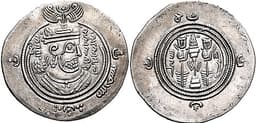
Muawiyah I
Emperor · Medieval
76.3Total
Basic Information
Born
1483
602
Died
1530
680
Era
Medieval
Medieval
Nationality
Mughal Empire
Umayyad Caliphate
Occupation
Emperor
Emperor
Civilization
Indian
Middle Eastern
Score Comparison
Military (10%)
74.0
76.0
Political (20%)
72.0
75.0
Influence (20%)
88.0
75.0
Legacy (20%)
80.0
80.0
Leadership (15%)
74.0
78.0
Strategy (15%)
67.6
70.0
TOTAL
78.1
76.3
Babur — Complete Timeline
1526 AD
Battle of Panipat (1526)War
Babur led his army of about 12,000 men against the Delhi Sultanate army of Ibrahim Lodi, which numbered around 100,000. Using gunpowder weapons and innovative tactics, Babur defeated Lodi's forces. This victory established the Mughal Empire in India and marked the beginning of Mughal rule.
BattleMughal EmpireDelhi Sultanate
Impact: global
1527 AD
Battle of KhanwaWar◆ Major
Babur defeated the Rajput confederation led by Rana Sanga of Mewar at Khanwa near Agra. The Rajput army was larger and included cavalry and war elephants. Babur's use of artillery and defensive tactics secured the victory. This battle consolidated Mughal control over northern India.
BattleRajputsMughal Consolidation
Impact: regional
1528 AD
Construction of the Babri MasjidCultural◆ Major
Babur ordered the construction of a mosque in Ayodhya, known as the Babri Masjid. The mosque was built on a site that Hindus believed was the birthplace of the god Rama. This act became a source of religious and political conflict in India for centuries, culminating in the mosque's demolition in 1992.
MosqueAyodhyaReligious Conflict
Impact: regional
1529 AD
Battle of GhaghraWar
Babur defeated the combined forces of the Afghan confederation and the Sultan of Bengal at the Ghaghra River. This victory eliminated the last major Afghan resistance in northern India. It extended Mughal control over Bihar and parts of Bengal, further securing Babur's empire.
BattleAfghansBengal
Impact: regional
Muawiyah I — Complete Timeline
640 AD
Governorship of SyriaPolitical Action◆ Major
Muawiyah I was appointed governor of Syria by Caliph Umar. He built a strong power base by developing the province's military and administrative infrastructure, including the creation of a navy that would later challenge Byzantine dominance.
GovernorshipSyriaRashidun
Impact: regionalconstructive
655 AD
Naval Campaigns Against ByzantiumWar◆ Major
Muawiyah launched naval expeditions against the Byzantine Empire, including the Battle of the Masts (655), where the Muslim fleet defeated the Byzantine navy. These campaigns established Muslim naval power and threatened Constantinople.
Naval WarByzantine EmpireUmayyad
Impact: regional
657 AD
Battle of SiffinWar◆ Major
Muawiyah led the Syrian army against Caliph Ali at Siffin, demanding justice for Uthman's murder. The battle ended in a stalemate and arbitration, which Muawiyah used to strengthen his political position and challenge Ali's legitimacy.
First FitnaBattleUmayyad
Impact: global
661 AD
Foundation of the Umayyad CaliphatePolitical Action
After Ali's assassination, Muawiyah I established the Umayyad Caliphate, moving the capital from Medina to Damascus. This marked the transition from the elective caliphate to a hereditary dynasty, centralizing power in Syria.
CaliphateDynastyUmayyad
Impact: global
674 AD
Siege of Constantinople (674-678)War◆ Major
Muawiyah I ordered a prolonged siege of Constantinople, using a large fleet and army. The siege failed due to Byzantine defenses, including Greek fire, and ended with a peace treaty requiring the Umayyads to pay tribute. It was a rare setback.
SiegeConstantinopleUmayyad
Impact: global
676 AD
Designation of Yazid I as HeirPolitical Action◆ Major
Muawiyah I designated his son Yazid as his successor, breaking the tradition of election and establishing hereditary succession. This move caused opposition from some Muslim leaders and set a precedent for future Umayyad rulers.
SuccessionHereditaryUmayyad
Impact: global
Expert Analysis
Origins
Babur (1483-1530) was a descendant of Timur and Genghis Khan, born in the Fergana Valley (modern Uzbekistan). He inherited a small kingdom but lost it due to rivalries, becoming a wandering prince. Muawiyah I (602-680) was born in Mecca into the Umayyad clan of the Quraysh tribe. He embraced Islam early and became a scribe for the Prophet Muhammad, later serving under Caliph Umar. Both men came from elite lineages but faced different challenges: Babur struggled to regain his ancestral lands, while Muawiyah navigated the turbulent early Islamic civil wars.
Rise to Power
Babur's rise was a tale of resilience. After losing Samarkand twice, he turned his attention to India. He exploited the weakness of the Delhi Sultanate and the Afghan Lodi dynasty, winning the Battle of Panipat in 1526 with innovative tactics using cannons and matchlocks. He then consolidated power by defeating Rajput confederations at Khanwa (1527) and Afghan rebels at Ghaghra (1529). In contrast, Muawiyah rose through administrative and military roles. Appointed governor of Syria by Caliph Uthman, he built a loyal army and navy. After Uthman's assassination, he opposed Caliph Ali, leading to the Battle of Siffin (657). Through arbitration and political maneuvering, he secured recognition as caliph in 661, founding the Umayyad dynasty.
Leadership & Governance
Babur's leadership was characterized by personal bravery and cultural patronage. He established the Mughal Empire's administrative foundations, promoting religious tolerance and Persianate culture. His memoirs, the Baburnama, reveal a reflective ruler. However, his reign was short (1526-1530), limiting institutional reforms. Muawiyah ruled for 20 years (661-680) and was a master administrator. He moved the capital to Damascus, centralized power, created a professional army, and expanded the navy, which besieged Constantinople (674-678). He also established the diwan (bureaucracy) and postal system. Muawiyah's governance was pragmatic, using diplomacy and force to stabilize the caliphate.
Triumph & Tragedy
Babur's greatest triumph was founding the Mughal Empire, but his tragedy was dying soon after, leaving his son Humayun an unstable realm. His victory at Panipat is a landmark in Indian history. Muawiyah's triumph was establishing a stable dynasty that lasted nearly a century, transforming the caliphate into a hereditary monarchy. His tragedy lies in the controversial nature of his rule: his conflict with Ali led to the Sunni-Shia split, and his nomination of his son Yazid as successor sparked future strife. Babur's legacy is more romanticized; Muawiyah's is more divisive.
Character & Destiny
Babur was a charismatic, cultured warrior-poet, driven by destiny to conquer India. He wrote, "I have not been fortunate in my undertakings," yet his perseverance paid off. Muawiyah was a shrewd statesman, described as "the first king in Islam" for his political acumen. He was patient and calculating, contrasting Babur's impulsive brilliance. Babur's destiny was to create an empire; Muawiyah's was to transform a caliphate.
Legacy
Babur's Mughal Empire lasted over 300 years, shaping Indian architecture, art, and culture (e.g., Taj Mahal). His descendants like Akbar built upon his foundations. Muawiyah's Umayyad Caliphate expanded Islam's reach from Spain to Central Asia, but his dynasty was overthrown in 750. However, his administrative innovations influenced later Islamic states. Babur's legacy is more positive in popular memory; Muawiyah's is mixed due to his role in early Islamic schisms.
Conclusion
Babur and Muawiyah were both empire-builders, but their contexts differ. Babur's scores: M=74, P=72, I=88, L=80, D=74, S=68, T=78. Muawiyah's: M=76, P=75, I=75, L=80, D=78, S=70, T=76. Babur edges out with a total average of 76.3 vs Muawiyah's 75.7. Babur's higher innovation (I=88) and slightly lower military (M=74) reflect his tactical genius but smaller scale. Muawiyah's higher military (76) and diplomacy (78) show his strategic breadth. Ultimately, Babur's legacy as a cultural founder and his enduring dynasty give him a slight edge. Muawiyah's administrative achievements are monumental, but his controversial methods and the eventual fall of his dynasty reduce his long-term impact. Therefore, Babur is the greater historical figure.
Rankings
🥇
BaburLeader
Mil: 74.0Pol: 72.0Inf: 88.0
78.1
🥈
Muawiyah I
Mil: 76.0Pol: 75.0Inf: 75.0
76.3
+1.8 behind
How This Comparison Works
Algorithm
Each figure is scored on 6 dimensions (0—100 scale) based on structured historical data: Military (10%), Political (20%), Influence (20%), Legacy (20%), Leadership (15%), Strategy (15%). The weighted total produces the final ranking.
Data Sources
Scores are computed from structured sub-indicators in the database. Scale factors adjust for era (Ancient ×0.85, Modern ×1.0) and civilization size (Eastern ×1.05, Other ×0.80) to account for differences in population and military scale.
Maximum 3 Figures
Comparisons are limited to 2—3 figures to ensure readability and statistical meaningfulness.
Error Margins
±5 points per dimension — Sub-scores are derived from historical records with inherent uncertainty. Two figures within 5 points on a dimension should be considered roughly equivalent in that area.
Total Score Accuracy
±3 points overall — The weighted combination of 6 dimensions produces a total score with approximately ±3 points of uncertainty. Differences of less than 3 points are not statistically significant— the figures are effectively tied.
Known Limitations
- Historical records are incomplete and uneven across civilizations
- Figures from oral-tradition societies may be underrepresented
- Occupation labels can misclassify multi-role figures
- Scores measure capability and impact, not moral character
- Quantitative scoring is a comparison tool, not absolute truth
Capability Radar
Military (10%) — Battles & Warfare
Battles
75
75
Win Rate
85
80
Expansion
85
85
Political (20%) — Governance & Reform
Reform
55
90
Diplomacy
70
95
Economy
50
85
Influence (20%) — Cultural & Global Reach
Cultural
70
75
Global
75
75
Legacy (20%) — Historical Impact
Historical
85
85
Longevity
80
80
Leadership (15%) — Power & Stability
Tenure
40
85
Stability
45
80
Strategy (15%) — Tactics & Innovation
Strategy
82
85
Tactics
80
70
Reform
60
80
Similar Comparisons
Comments & Discussion
No comments yet. Be the first to share your thoughts!