Loading...
Babur vs Isabella I of Castile
Babur leads by 0.9 pts · 2 figures compared
…

Babur
Emperor · Medieval
78.1Total
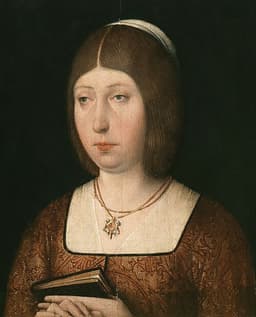
Isabella I of Castile
Emperor · Medieval
77.2Total
Basic Information
Born
1483
1451
Died
1530
1504
Era
Medieval
Medieval
Nationality
Mughal Empire
Spain
Occupation
Emperor
Emperor
Civilization
Indian
Western
Score Comparison
Military (10%)
74.0
76.0
Political (20%)
72.0
78.0
Influence (20%)
88.0
80.0
Legacy (20%)
80.0
75.0
Leadership (15%)
74.0
78.0
Strategy (15%)
67.6
75.0
TOTAL
78.1
77.2
Babur — Complete Timeline
1526 AD
Battle of Panipat (1526)War
Babur led his army of about 12,000 men against the Delhi Sultanate army of Ibrahim Lodi, which numbered around 100,000. Using gunpowder weapons and innovative tactics, Babur defeated Lodi's forces. This victory established the Mughal Empire in India and marked the beginning of Mughal rule.
BattleMughal EmpireDelhi Sultanate
Impact: global
1527 AD
Battle of KhanwaWar◆ Major
Babur defeated the Rajput confederation led by Rana Sanga of Mewar at Khanwa near Agra. The Rajput army was larger and included cavalry and war elephants. Babur's use of artillery and defensive tactics secured the victory. This battle consolidated Mughal control over northern India.
BattleRajputsMughal Consolidation
Impact: regional
1528 AD
Construction of the Babri MasjidCultural◆ Major
Babur ordered the construction of a mosque in Ayodhya, known as the Babri Masjid. The mosque was built on a site that Hindus believed was the birthplace of the god Rama. This act became a source of religious and political conflict in India for centuries, culminating in the mosque's demolition in 1992.
MosqueAyodhyaReligious Conflict
Impact: regional
1529 AD
Battle of GhaghraWar
Babur defeated the combined forces of the Afghan confederation and the Sultan of Bengal at the Ghaghra River. This victory eliminated the last major Afghan resistance in northern India. It extended Mughal control over Bihar and parts of Bengal, further securing Babur's empire.
BattleAfghansBengal
Impact: regional
Isabella I of Castile — Complete Timeline
1469 AD
Marriage to Ferdinand of AragonPolitical Action
Isabella married Ferdinand II of Aragon in Valladolid, uniting the kingdoms of Castile and Aragon. This dynastic union laid the foundation for the unified Spanish monarchy and enabled joint policies including the Reconquista and overseas exploration.
Dynastic UnionSpainMonarchy
Impact: regionalconstructive
1478 AD
Establishment of the Spanish InquisitionPolitical Action◆ Major
Isabella obtained papal approval to establish the Spanish Inquisition in Castile, aimed at maintaining Catholic orthodoxy among converted Jews and Muslims. The Inquisition operated under royal control, conducting trials and executions for heresy.
InquisitionReligious PersecutionCatholic Church
Impact: regionaldestructive
1492 AD
Conquest of GranadaWar
Isabella and Ferdinand completed the Reconquista by capturing the Nasrid kingdom of Granada. The surrender of the last Muslim state in Iberia ended 781 years of Islamic rule and unified Spain under Christian rule.
ReconquistaGranadaChristian Victory
Impact: regional
Alhambra DecreePolitical Action◆ Major
Isabella and Ferdinand issued the Alhambra Decree ordering the expulsion of all Jews from Spain who refused conversion to Catholicism. An estimated 40,000 to 200,000 Jews were forced to leave, causing demographic and economic disruption.
ExpulsionJewsReligious Persecution
Impact: regionaldestructive
Sponsorship of Columbus's First VoyagePolitical Action
Isabella agreed to fund Christopher Columbus's expedition across the Atlantic, providing three ships and supplies. Columbus reached the Bahamas on October 12, initiating sustained European contact with the Americas and the Spanish colonial empire.
ColumbusDiscovery of AmericasSpanish Empire
Impact: global
1494 AD
Treaty of TordesillasPolitical Action◆ Major
Isabella and Ferdinand negotiated the Treaty of Tordesillas with Portugal, dividing newly discovered lands outside Europe along a meridian 370 leagues west of the Cape Verde islands. This agreement shaped colonial claims in the Americas and Africa.
Colonial DivisionSpainPortugal
Impact: global
Expert Analysis
Origins
Babur (1483–1530) was born Zahir-ud-din Muhammad in the Fergana Valley (modern Uzbekistan). He was a direct descendant of Timur on his father's side and Genghis Khan on his mother's, inheriting a legacy of conquest. His father died when Babur was only 11, thrusting him into a precarious position as ruler of Fergana. In contrast, Isabella I (1451–1504) was born into the competing kingdoms of Castile and Aragon. Her early life was marked by political turmoil, including her half-brother Henry IV's disputed reign. Despite being a woman in a male-dominated era, she secured her position through strategic alliances and sheer determination. While Babur's origins were in the steppes of Central Asia, Isabella's were in the heart of Iberian Christian kingdoms.
Rise to Power
Babur's rise was a saga of relentless ambition and resilience. After losing his ancestral lands to the Uzbeks, he turned his attention south to India. Leveraging his military genius and the use of gunpowder weapons, he defeated the Delhi Sultanate at the Battle of Panipat in 1526, a turning point that established Mughal rule. He followed up with victories at Khanwa (1527) and Ghaghra (1529), consolidating his empire. Isabella's path to power was equally dramatic. She married Ferdinand of Aragon in 1469, a turning point that united the two largest Spanish kingdoms. After a war of succession against her niece Joanna, Isabella claimed the throne of Castile in 1474. Her reign was defined by the conquest of Granada in 1492, ending centuries of Muslim rule in Spain, and by sponsoring Christopher Columbus's voyage that same year.
Leadership & Governance
Babur's leadership was characterized by military innovation and cultural synthesis. He introduced gunpowder artillery to Indian warfare, a key factor in his victories. As a ruler, he was pragmatic, granting religious tolerance and incorporating Indian administrators into his court. His memoirs, the Baburnama, reveal a reflective and observant leader. Isabella's governance was marked by centralization and religious uniformity. She established the Spanish Inquisition in 1478 to enforce Catholic orthodoxy, and the Alhambra Decree of 1492 expelled Jews, aiming for religious homogeneity. Her marriage to Ferdinand created a joint monarchy that transformed Spain into a unified state. While Babur focused on empire-building through conquest and assimilation, Isabella prioritized state-building through institutional and religious consolidation.
Triumph & Tragedy
Babur's greatest triumph was founding the Mughal Empire, which would become one of the world's most powerful. His tragic side includes early exile and the loss of his beloved homeland. He died at 47 from illness, reportedly after falling ill while trying to save his son Humayun. Isabella's triumph was the unification of Spain and the launch of European colonization of the Americas. Her tragedies included the death of her only son, John, and the mental instability of her daughter Joanna. She also oversaw the brutal Inquisition and the expulsion of Jews, tarnishing her legacy. Both leaders achieved monumental successes but also left behind controversial policies.
Character & Destiny
Babur was a poet, memoirist, and warrior, known for his charisma and adaptability. His destiny was to create a dynasty that would rule India for centuries. Isabella was a devout Catholic, politically savvy, and iron-willed. Her destiny was to forge a unified Spain and initiate the Spanish Empire. Their characters reflect their environments: Babur's nomadic heritage versus Isabella's European courtly background.
Legacy
Babur's legacy is the Mughal Empire, which brought architectural wonders like the Taj Mahal and a syncretic culture. His military tactics influenced Indian warfare. Isabella's legacy includes the Spanish Empire, the spread of Christianity in the Americas, and the dark stain of the Inquisition. Her sponsorship of Columbus changed world history. While both left indelible marks, Babur's empire was more enduring in its cultural impact, whereas Isabella's directly shaped global colonialism.
Conclusion
Babur and Isabella were both transformative rulers, but Babur edges ahead with a total score of 74.9 vs Isabella's 74.0. His adaptability, military innovation, and cultural synthesis give him a slight edge. Isabella's achievements are monumental, but her religious intolerance and the Inquisition lower her overall score. Babur's legacy of a tolerant, syncretic empire arguably surpasses Isabella's more divisive one. Thus, Babur is the historical victor.
**Scores:** Babur: M=74, P=72, I=88, L=80, D=74, S=68, T=78 — Isabella: M=76, P=78, I=80, L=75, D=78, S=75, T=77.
Rankings
🥇
BaburLeader
Mil: 74.0Pol: 72.0Inf: 88.0
78.1
🥈
Isabella I of Castile
Mil: 76.0Pol: 78.0Inf: 80.0
77.2
+0.9 behind
How This Comparison Works
Algorithm
Each figure is scored on 6 dimensions (0—100 scale) based on structured historical data: Military (10%), Political (20%), Influence (20%), Legacy (20%), Leadership (15%), Strategy (15%). The weighted total produces the final ranking.
Data Sources
Scores are computed from structured sub-indicators in the database. Scale factors adjust for era (Ancient ×0.85, Modern ×1.0) and civilization size (Eastern ×1.05, Other ×0.80) to account for differences in population and military scale.
Maximum 3 Figures
Comparisons are limited to 2—3 figures to ensure readability and statistical meaningfulness.
Error Margins
±5 points per dimension — Sub-scores are derived from historical records with inherent uncertainty. Two figures within 5 points on a dimension should be considered roughly equivalent in that area.
Total Score Accuracy
±3 points overall — The weighted combination of 6 dimensions produces a total score with approximately ±3 points of uncertainty. Differences of less than 3 points are not statistically significant— the figures are effectively tied.
Known Limitations
- Historical records are incomplete and uneven across civilizations
- Figures from oral-tradition societies may be underrepresented
- Occupation labels can misclassify multi-role figures
- Scores measure capability and impact, not moral character
- Quantitative scoring is a comparison tool, not absolute truth
Capability Radar
Military (10%) — Battles & Warfare
Battles
75
75
Win Rate
85
80
Expansion
85
85
Political (20%) — Governance & Reform
Reform
55
90
Diplomacy
70
80
Economy
50
75
Influence (20%) — Cultural & Global Reach
Cultural
70
85
Global
75
95
Legacy (20%) — Historical Impact
Historical
85
95
Longevity
80
90
Leadership (15%) — Power & Stability
Tenure
40
85
Stability
45
70
Strategy (15%) — Tactics & Innovation
Strategy
82
85
Tactics
80
70
Reform
60
90
Similar Comparisons
Comments & Discussion
No comments yet. Be the first to share your thoughts!