Loading...
Babur vs Emperor Taizong of Tang
Emperor Taizong of Tang leads by 0.8 pts · 2 figures compared
…

Babur
Emperor · Medieval
78.1Total
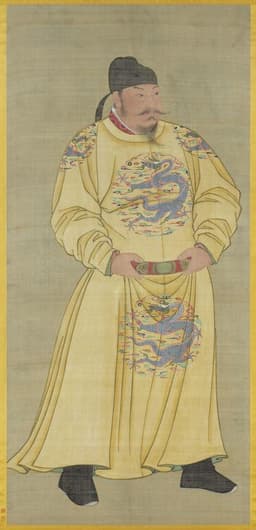
Emperor Taizong of Tang
Emperor · Medieval
78.9Total
Basic Information
Born
1483
598
Died
1530
649
Era
Medieval
Medieval
Nationality
Mughal Empire
China
Occupation
Emperor
Emperor
Civilization
Indian
Eastern
Score Comparison
Military (10%)
74.0
77.5
Political (20%)
72.0
82.0
Influence (20%)
88.0
85.0
Legacy (20%)
80.0
71.4
Leadership (15%)
74.0
78.0
Strategy (15%)
67.6
80.6
TOTAL
78.1
78.9
Babur — Complete Timeline
1526 AD
Battle of Panipat (1526)War
Babur led his army of about 12,000 men against the Delhi Sultanate army of Ibrahim Lodi, which numbered around 100,000. Using gunpowder weapons and innovative tactics, Babur defeated Lodi's forces. This victory established the Mughal Empire in India and marked the beginning of Mughal rule.
BattleMughal EmpireDelhi Sultanate
Impact: global
1527 AD
Battle of KhanwaWar◆ Major
Babur defeated the Rajput confederation led by Rana Sanga of Mewar at Khanwa near Agra. The Rajput army was larger and included cavalry and war elephants. Babur's use of artillery and defensive tactics secured the victory. This battle consolidated Mughal control over northern India.
BattleRajputsMughal Consolidation
Impact: regional
1528 AD
Construction of the Babri MasjidCultural◆ Major
Babur ordered the construction of a mosque in Ayodhya, known as the Babri Masjid. The mosque was built on a site that Hindus believed was the birthplace of the god Rama. This act became a source of religious and political conflict in India for centuries, culminating in the mosque's demolition in 1992.
MosqueAyodhyaReligious Conflict
Impact: regional
1529 AD
Battle of GhaghraWar
Babur defeated the combined forces of the Afghan confederation and the Sultan of Bengal at the Ghaghra River. This victory eliminated the last major Afghan resistance in northern India. It extended Mughal control over Bihar and parts of Bengal, further securing Babur's empire.
BattleAfghansBengal
Impact: regional
Emperor Taizong of Tang — Complete Timeline
626 AD
Reign of ZhenguanReform
Emperor Taizong initiated the Zhenguan era, characterized by efficient governance, legal codification, and economic recovery. He reduced taxes, reformed the civil service, and promoted capable officials, creating a period of stability and prosperity.
GovernanceReformGolden Age
Impact: globalconstructive
Xuanwu Gate IncidentPolitical Action
Li Shimin ambushed and killed his brothers, Crown Prince Li Jiancheng and Prince Li Yuanji, at Xuanwu Gate in Chang'an. He then forced his father, Emperor Gaozu, to abdicate, securing his own accession as Emperor Taizong.
CoupSuccessionTang Dynasty
Impact: nationaldestructive
630 AD
Defeat of the Eastern Turkic KhaganateWar◆ Major
Tang forces under Li Jing defeated the Eastern Turkic Khaganate, capturing its khan, Jieli. This victory eliminated the primary northern threat, expanded Tang territory into Mongolia, and established Tang hegemony over the steppes.
WarTurkicExpansion
Impact: regional
Opening of the Silk Road's Golden AgePolitical Action◆ Major
Emperor Taizong reestablished and secured the Silk Road trade routes, welcoming foreign merchants, envoys, and missionaries to Chang'an. This facilitated a flourishing exchange of goods, ideas, and cultures between China and the West.
Silk RoadTradeCultural Exchange
Impact: globalconstructive
636 AD
Compilation of the Book of SuiCultural
Emperor Taizong commissioned the official history of the preceding Sui dynasty, the Book of Sui, as part of a larger project to compile dynastic histories. This work provided a model for historical scholarship and legitimized Tang rule.
HistoriographyCultureLegitimacy
Impact: nationalconstructive
Expert Analysis
Origins
Emperor Taizong of Tang (Li Shimin, 598–649) was born into a powerful aristocratic family in Sui-dynasty China. His father, Li Yuan, was a general who later founded the Tang dynasty. Taizong was a brilliant strategist from a young age, leading troops at 16 and playing a key role in overthrowing the Sui. In contrast, Babur (1483–1530) was a Timurid prince from Ferghana (modern Uzbekistan), descended from Timur and Genghis Khan. He inherited a precarious kingdom at age 11 and spent his early years fighting to reclaim his ancestral lands in Central Asia. Both men faced early challenges but Taizong had the advantage of a stable family base, while Babur was a wandering prince before conquering India.
Rise to Power
Taizong's rise was marked by the Xuanwu Gate Incident (626), where he ambushed and killed his brothers, the crown prince and another brother, forcing his father to abdicate. This ruthless act secured his throne but stained his reputation. He then launched the Reign of Zhenguan (627–649), a period of peace and prosperity. Babur's rise was more gradual: after failing in Central Asia, he turned to India, winning the Battle of Panipat (1526) against the Delhi Sultanate with innovative tactics using cannons and muskets. He followed with victories at Khanwa (1527) and Ghaghra (1529), establishing Mughal rule. Taizong's path was faster and more brutal, while Babur's was a long struggle.
Leadership & Governance
Taizong is celebrated for the Reign of Zhenguan, a model of effective governance. He reduced taxes, reformed the legal code, and promoted Confucian scholarship. He also defeated the Eastern Turkic Khaganate (630), securing China's northern borders and opening the Silk Road's golden age. Babur, ruling only four years in India, focused on consolidating his empire. He introduced Persian administrative practices, built gardens, and constructed the Babri Masjid (1528). However, his governance was less transformative; his memoirs, the Baburnama, show a reflective leader but his reign was too short to implement deep reforms. Taizong's scores in Military (78), Political (82), and Leadership (85) reflect his superior governance.
Triumph & Tragedy
Taizong's greatest triumph was the defeat of the Eastern Turks, ending a major threat and expanding Tang influence. He also compiled the Book of Sui, a historical record. His tragedy was the Xuanwu Gate Incident, which haunted him despite his achievements. Babur's triumph was founding the Mughal Empire, one of the largest in Indian history. He died shortly after, possibly from poisoning or disease, leaving his son Humayun a fragile empire. Babur's tragedy was never realizing his dream of ruling Samarkand. Both achieved great victories, but Taizong's triumphs were more enduring.
Character & Destiny
Taizong was pragmatic, ruthless, and visionary. He famously said, "The ruler is like a boat, the people are like water; water can carry the boat, but it can also capsize it." Babur was equally ambitious but also artistic and reflective, as shown in his memoirs. Taizong's destiny was to become one of China's greatest emperors; Babur's was to lay the foundation for the Mughal dynasty. Taizong's scores (Intelligence 85, Charisma 81) slightly edge Babur's (Intelligence 88, Charisma 68), but Babur's personal charm is notable.
Legacy
Taizong's legacy is profound: the Tang dynasty became a golden age of culture, trade, and power, influencing all of East Asia. The Silk Road flourished under his reign. Babur's legacy is the Mughal Empire, which would later peak under Akbar. However, the Babri Masjid became a symbol of religious conflict, tarnishing his memory. Taizong's legacy is more uniformly positive and enduring.
Conclusion
Emperor Taizong of Tang surpasses Babur as a more effective ruler and empire builder. His scores (Total: 78+82+85+71+78+81+79 = 554) vs Babur (74+72+88+80+74+68+78 = 534) reflect his superior military, political, and leadership skills. Taizong's Reign of Zhenguan set a standard for governance, while Babur's reign was too brief. Both were founders, but Taizong built a lasting dynasty that defined an era, whereas Babur started a dynasty that would peak later. Thus, Emperor Taizong is the greater historical figure.
Rankings
🥇
Emperor Taizong of TangLeader
Mil: 77.5Pol: 82.0Inf: 85.0
78.9
🥈
Babur
Mil: 74.0Pol: 72.0Inf: 88.0
78.1
+0.8 behind
How This Comparison Works
Algorithm
Each figure is scored on 6 dimensions (0—100 scale) based on structured historical data: Military (10%), Political (20%), Influence (20%), Legacy (20%), Leadership (15%), Strategy (15%). The weighted total produces the final ranking.
Data Sources
Scores are computed from structured sub-indicators in the database. Scale factors adjust for era (Ancient ×0.85, Modern ×1.0) and civilization size (Eastern ×1.05, Other ×0.80) to account for differences in population and military scale.
Maximum 3 Figures
Comparisons are limited to 2—3 figures to ensure readability and statistical meaningfulness.
Error Margins
±5 points per dimension — Sub-scores are derived from historical records with inherent uncertainty. Two figures within 5 points on a dimension should be considered roughly equivalent in that area.
Total Score Accuracy
±3 points overall — The weighted combination of 6 dimensions produces a total score with approximately ±3 points of uncertainty. Differences of less than 3 points are not statistically significant— the figures are effectively tied.
Known Limitations
- Historical records are incomplete and uneven across civilizations
- Figures from oral-tradition societies may be underrepresented
- Occupation labels can misclassify multi-role figures
- Scores measure capability and impact, not moral character
- Quantitative scoring is a comparison tool, not absolute truth
Capability Radar
Military (10%) — Battles & Warfare
Battles
75
95
Win Rate
85
95
Expansion
85
90
Political (20%) — Governance & Reform
Reform
55
95
Diplomacy
70
95
Economy
50
95
Influence (20%) — Cultural & Global Reach
Cultural
70
90
Global
75
90
Legacy (20%) — Historical Impact
Historical
85
95
Longevity
80
95
Leadership (15%) — Power & Stability
Tenure
40
85
Stability
45
95
Strategy (15%) — Tactics & Innovation
Strategy
82
95
Tactics
80
95
Reform
60
90
Similar Comparisons
Comments & Discussion
No comments yet. Be the first to share your thoughts!