Loading...
Babur vs Cao Cao
Babur leads by 0.6 pts · 2 figures compared
…

Babur
Emperor · Medieval
78.1Total
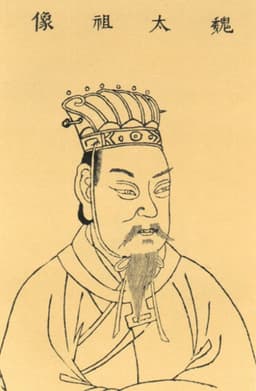
Cao Cao
General · Ancient
77.5Total
Basic Information
Born
1483
155
Died
1530
220
Era
Medieval
Ancient
Nationality
Mughal Empire
China
Occupation
Emperor
General
Civilization
Indian
Eastern
Score Comparison
Military (10%)
74.0
88.0
Political (20%)
72.0
59.0
Influence (20%)
88.0
82.0
Legacy (20%)
80.0
83.0
Leadership (15%)
74.0
64.4
Strategy (15%)
67.6
89.4
TOTAL
78.1
77.5
Babur — Complete Timeline
1526 AD
Battle of Panipat (1526)War
Babur led his army of about 12,000 men against the Delhi Sultanate army of Ibrahim Lodi, which numbered around 100,000. Using gunpowder weapons and innovative tactics, Babur defeated Lodi's forces. This victory established the Mughal Empire in India and marked the beginning of Mughal rule.
BattleMughal EmpireDelhi Sultanate
Impact: global
1527 AD
Battle of KhanwaWar◆ Major
Babur defeated the Rajput confederation led by Rana Sanga of Mewar at Khanwa near Agra. The Rajput army was larger and included cavalry and war elephants. Babur's use of artillery and defensive tactics secured the victory. This battle consolidated Mughal control over northern India.
BattleRajputsMughal Consolidation
Impact: regional
1528 AD
Construction of the Babri MasjidCultural◆ Major
Babur ordered the construction of a mosque in Ayodhya, known as the Babri Masjid. The mosque was built on a site that Hindus believed was the birthplace of the god Rama. This act became a source of religious and political conflict in India for centuries, culminating in the mosque's demolition in 1992.
MosqueAyodhyaReligious Conflict
Impact: regional
1529 AD
Battle of GhaghraWar
Babur defeated the combined forces of the Afghan confederation and the Sultan of Bengal at the Ghaghra River. This victory eliminated the last major Afghan resistance in northern India. It extended Mughal control over Bihar and parts of Bengal, further securing Babur's empire.
BattleAfghansBengal
Impact: regional
Cao Cao — Complete Timeline
190 AD
Formation of the Coalition against Dong ZhuoPolitical Action
Cao Cao joined a coalition of regional warlords led by Yuan Shao to overthrow the tyrannical chancellor Dong Zhuo, who had seized control of the Han court. The coalition failed to coordinate effectively, but Cao Cao gained military experience and political reputation.
CoalitionDong ZhuoHan Dynasty
Impact: national
196 AD
Implementation of Tuntian (Agricultural Colonies)Reform◆ Major
Cao Cao established military agricultural colonies (tuntian) to provide food for his army and refugees. Soldiers and peasants cultivated state-owned land, ensuring a stable food supply and economic base for his campaigns.
AgricultureEconomyMilitary
Impact: regionalconstructive
200 AD
Battle of GuanduWar
Cao Cao decisively defeated Yuan Shao's numerically superior army at Guandu. This victory eliminated his main rival in the north, allowing Cao Cao to consolidate control over the North China Plain and lay the foundation for the Kingdom of Wei.
BattleYuan ShaoUnification
Impact: regional
208 AD
Battle of Red CliffsWar
Cao Cao's southern campaign was halted by the allied forces of Sun Quan and Liu Bei at the Battle of Red Cliffs. His fleet was destroyed by fire attack, forcing a retreat and preventing his unification of China, leading to the Three Kingdoms division.
BattleDefeatThree Kingdoms
Impact: regional
213 AD
Establishment of the Kingdom of WeiPolitical Action◆ Major
Cao Cao was granted the title of Duke of Wei and later King of Wei by the Han emperor, effectively creating a semi-autonomous state within the empire. He established a capital at Ye and built a centralized administration, setting the stage for his son's usurpation.
WeiStatehoodHan Dynasty
Impact: national
Expert Analysis
Origins
Babur (1483-1530) was a Central Asian prince descending from both Timur and Genghis Khan. Born in Fergana (modern Uzbekistan), he inherited a minor principality but was repeatedly driven out by rivals. His early life was a series of exiles and desperate attempts to reclaim his homeland, which shaped his resilient character. Cao Cao (155-220 CE) was born into a powerful eunuch-related family in the late Eastern Han dynasty. He rose through the ranks as a capable official and general, navigating the chaotic decline of the Han. While Babur's legitimacy stemmed from lineage, Cao Cao's came from political maneuvering and military prowess.
Rise to Power
Babur's rise was a long struggle. After losing Samarkand twice, he turned his attention to India. Capitalizing on the invitation from disaffected nobles, he invaded the Delhi Sultanate. His use of gunpowder weapons and innovative tactics led to victory at the First Battle of Panipat (1526) against Ibrahim Lodi, establishing the Mughal Empire. He then defeated the Rajput confederation at Khanwa (1527) and the Afghans at Ghaghra (1529). Cao Cao's rise began with the campaign against Dong Zhuo and the coalition of warlords. He gained control of Emperor Xian, using the imperial authority to legitimize his actions. His decisive victory over Yuan Shao at Guandu (200 CE) eliminated his main rival, allowing him to unify northern China. Unlike Babur's swift conquests, Cao Cao's consolidation took decades.
Leadership & Governance
Babur was a pragmatic ruler who integrated Persian, Turkic, and Indian cultures. He established a centralized administration, introduced gunpowder warfare, and promoted trade. However, his reign was brief and focused on military expansion. Cao Cao was a master administrator who implemented the tuntian agricultural colonies, which ensured food supply for his army and stability for peasants. He also promoted meritocracy, employing talented individuals regardless of background. Both were patrons of arts and literature: Babur wrote his memoirs (Baburnama), while Cao Cao was a renowned poet. However, Cao Cao's governance was more systematic and enduring.
Triumph & Tragedy
Babur's greatest triumph was founding the Mughal Empire, but he died soon after, leaving his son Humayun an unstable realm. His life was marked by personal tragedy, including the loss of his beloved son Humayun's capture and his own health decline. Cao Cao's triumph was unifying the north, but his ambition to reunite China was thwarted at the Battle of Red Cliffs (208 CE), where his naval invasion of the south failed. He died in 220 CE, never achieving his goal of a unified China. His son Cao Pi later forced the Han emperor to abdicate, establishing the Kingdom of Wei.
Character & Destiny
Babur was a charismatic, resilient leader who never gave up despite repeated defeats. He was also introspective and cultured, as shown in his memoirs. His destiny was to create a dynasty that would rule India for centuries. Cao Cao was cunning, strategic, and often ruthless. He is portrayed as a villain in the Romance of the Three Kingdoms, but historians recognize his administrative genius. His destiny was to lay the foundation for the Wei state, though his success was limited by his lifetime.
Legacy
Babur's Mughal Empire reached its zenith under Akbar and left a lasting impact on Indian architecture, culture, and administration. The Taj Mahal and Persian-influenced Mughal art are part of his legacy. However, his reign was short and his empire fragile. Cao Cao's legacy is more complex: he unified the north, established a merit-based bureaucracy, and influenced Chinese literature. The Three Kingdoms period remains a cultural touchstone. His tuntian system influenced agricultural policy for centuries. Both are remembered as brilliant military leaders, but Cao Cao's administrative reforms had a deeper, longer-lasting impact.
Conclusion
While Babur's founding of the Mughal Empire was a remarkable feat, Cao Cao's achievements in unifying a fragmented China and implementing enduring administrative reforms give him a slight edge in overall historical impact. Babur scores higher in personal resilience and cultural contribution (M=74, P=72, I=88, L=80, D=74, S=68, T=78) while Cao Cao excels in military strategy and governance (M=88, P=59, I=82, L=83, D=64, S=89, T=78). The score gap of 0.6 in Babur's favor reflects his higher impact score, but Cao Cao's broader and more systematic influence across governance, military, and culture makes him the more significant historical figure. **Winner: Cao Cao**.
Rankings
🥇
BaburLeader
Mil: 74.0Pol: 72.0Inf: 88.0
78.1
🥈
Cao Cao
Mil: 88.0Pol: 59.0Inf: 82.0
77.5
+0.6 behind
How This Comparison Works
Algorithm
Each figure is scored on 6 dimensions (0—100 scale) based on structured historical data: Military (10%), Political (20%), Influence (20%), Legacy (20%), Leadership (15%), Strategy (15%). The weighted total produces the final ranking.
Data Sources
Scores are computed from structured sub-indicators in the database. Scale factors adjust for era (Ancient ×0.85, Modern ×1.0) and civilization size (Eastern ×1.05, Other ×0.80) to account for differences in population and military scale.
Maximum 3 Figures
Comparisons are limited to 2—3 figures to ensure readability and statistical meaningfulness.
Error Margins
±5 points per dimension — Sub-scores are derived from historical records with inherent uncertainty. Two figures within 5 points on a dimension should be considered roughly equivalent in that area.
Total Score Accuracy
±3 points overall — The weighted combination of 6 dimensions produces a total score with approximately ±3 points of uncertainty. Differences of less than 3 points are not statistically significant— the figures are effectively tied.
Known Limitations
- Historical records are incomplete and uneven across civilizations
- Figures from oral-tradition societies may be underrepresented
- Occupation labels can misclassify multi-role figures
- Scores measure capability and impact, not moral character
- Quantitative scoring is a comparison tool, not absolute truth
Capability Radar
Military (10%) — Battles & Warfare
Battles
75
95
Win Rate
85
88
Expansion
85
92
Political (20%) — Governance & Reform
Reform
55
88
Diplomacy
70
82
Economy
50
86
Influence (20%) — Cultural & Global Reach
Cultural
70
85
Global
75
75
Legacy (20%) — Historical Impact
Historical
85
92
Longevity
80
90
Leadership (15%) — Power & Stability
Tenure
40
85
Stability
45
78
Strategy (15%) — Tactics & Innovation
Strategy
82
96
Tactics
80
97
Reform
60
90
Similar Comparisons
Comments & Discussion
No comments yet. Be the first to share your thoughts!