Loading...
B. J. Vorster vs Binyamin Netanyahu
Binyamin Netanyahu leads by 0.8 pts · 2 figures compared
…

B. J. Vorster
Politician · Modern
55.5Total
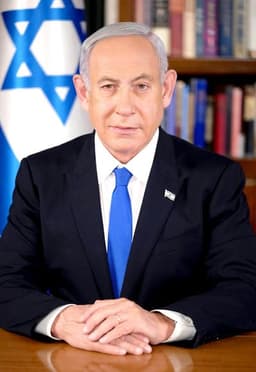
Binyamin Netanyahu
Politician · Modern
56.3Total
Basic Information
Born
1915
1949
Died
1983
—
Era
Modern
Modern
Nationality
South Africa
Israel
Occupation
Politician
Politician
Civilization
Other
Middle Eastern
Score Comparison
Military (10%)
39.9
21.2
Political (20%)
68.0
65.0
Influence (20%)
60.0
58.3
Legacy (20%)
56.0
58.0
Leadership (15%)
53.2
78.0
Strategy (15%)
43.3
36.8
TOTAL
55.5
56.3
B. J. Vorster — Complete Timeline
1961 AD
Appointed Minister of JusticePolitical Action◆ Major
Vorster was appointed Minister of Justice in Hendrik Verwoerd's government. He oversaw the expansion of security legislation, including the Terrorism Act, which allowed for detention without trial and suppression of anti-apartheid opposition.
ApartheidSecurity LegislationRepression
Impact: nationaldestructive
1966 AD
Became Prime Minister of South AfricaPolitical Action◆ Major
Vorster succeeded Verwoerd as Prime Minister after Verwoerd's assassination. He continued apartheid policies but also pursued a 'outward' foreign policy, seeking d
ApartheidPrime MinisterForeign Policy
Impact: nationaldestructive
1976 AD
Soweto Uprising ResponsePolitical Action◆ Major
Vorster's government responded to the Soweto student protests against Afrikaans language instruction with police violence, killing hundreds. The uprising intensified international condemnation and internal resistance to apartheid.
Soweto UprisingApartheidRepression
Impact: nationaldestructive
1978 AD
Resigned as Prime MinisterPolitical Action◆ Major
Vorster resigned as Prime Minister amid the 'Muldergate' scandal involving misuse of public funds for propaganda. He was succeeded by P.W. Botha, marking the end of his political career.
ScandalResignationApartheid
Impact: nationaltragic
Binyamin Netanyahu — Complete Timeline
1996 AD
First Term as Prime Minister of IsraelPolitical Action◆ Major
Netanyahu became the youngest person to serve as Prime Minister of Israel after winning the 1996 election. His first term was marked by a slowdown in the Oslo peace process and increased settlement construction in the West Bank.
Israeli PoliticsElectionPeace Process
Impact: regional
1998 AD
Signed the Wye River MemorandumPolitical Action◆ Major
Netanyahu signed the Wye River Memorandum with Yasser Arafat, which outlined further Israeli withdrawals from the West Bank and security cooperation. The agreement was never fully implemented due to political opposition in Israel.
Israeli-Palestinian PeaceWye RiverNegotiations
Impact: regional
2012 AD
Addressed the United Nations General Assembly on Iran Nuclear ThreatPolitical Action◆ Major
Netanyahu delivered a speech at the UN General Assembly where he drew a red line on a diagram of a bomb to illustrate the point at which Iran's nuclear program would become irreversible. This speech was a major diplomatic effort to pressure the international community to take action against Iran.
Iran Nuclear ProgramUN SpeechDiplomacy
Impact: global
2019 AD
Became Longest-Serving Prime Minister of IsraelPolitical Action◆ Major
Netanyahu surpassed David Ben-Gurion's record to become Israel's longest-serving prime minister. His tenure was characterized by political stability, economic growth, and a rightward shift in Israeli politics, but also by corruption investigations and political polarization.
Israeli PoliticsRecordLongevity
Impact: national
Indicted for CorruptionPolitical Action◆ Major
Israel's Attorney General indicted Netanyahu on charges of bribery, fraud, and breach of trust in three separate cases. The indictments led to ongoing legal proceedings and political crises, including multiple elections and a power-sharing government.
CorruptionLegal ProceedingsPolitical Crisis
Impact: nationaldestructive
2020 AD
Normalization Agreements with UAE, Bahrain, Morocco, SudanPolitical Action
Under the Abraham Accords brokered by the United States, Netanyahu's government signed normalization agreements with the United Arab Emirates, Bahrain, Morocco, and Sudan. These were the first Arab-Israeli peace deals since 1994.
Abraham AccordsNormalizationDiplomacy
Impact: globalconstructive
Expert Analysis
Origins
Balthazar Johannes Vorster was born on December 13, 1915, in Jamestown, South Africa, into an Afrikaner farming family. His father was a sheep farmer and a supporter of the National Party. Vorster studied law at Stellenbosch University, where he became involved in Afrikaner nationalism and joined the Ossewabrandwag, a radical organization opposed to South African participation in World War II. During the war, he was interned by the government for his pro-Nazi sympathies. After the war, he practiced law and entered politics, winning a seat in Parliament in 1953 for the National Party.
Binyamin Netanyahu was born on October 21, 1949, in Tel Aviv, Israel, to a secular Jewish family. His father, Benzion Netanyahu, was a professor of Jewish history and a prominent revisionist Zionist. Netanyahu spent part of his childhood in the United States, where his father taught. He returned to Israel for military service, joining an elite commando unit, Sayeret Matkal. He participated in several operations, including the rescue of hostages at Sabena Flight 572 in 1972. After military service, he studied architecture at MIT and later earned an MBA. He also pursued a degree in political science.
Rise to Power
Vorster rose through the ranks of the National Party, becoming Deputy Minister of Education in 1958 and Minister of Justice in 1961 under Prime Minister Hendrik Verwoerd. As Justice Minister, he expanded security laws, including the Terrorism Act of 1967, which allowed indefinite detention without trial. After Verwoerd's assassination in 1966, Vorster was elected Prime Minister by the party caucus. He consolidated power by balancing the interests of the Afrikaner establishment and the security apparatus, while also reaching out to English-speaking whites and foreign governments with his 'outward' foreign policy.
Netanyahu's rise was shaped by his diplomatic career and family legacy. After military service, he served as Israel's deputy chief of mission in Washington (1982-1984) and then as ambassador to the United Nations (1984-1988). He entered the Knesset in 1988 for the Likud party and quickly became a prominent critic of the Oslo Accords. In 1993, he was elected leader of Likud. Following the assassination of Prime Minister Yitzhak Rabin in 1995, Netanyahu won the 1996 prime ministerial election, becoming the youngest person to hold the office at age 46. His campaign focused on security and skepticism of the peace process.
Leadership & Governance
Vorster's leadership was defined by the enforcement of apartheid. He continued the system of racial segregation and white minority rule, but also sought to improve South Africa's international standing through a 'détente' policy with African states and dialogue with black leaders like Chief Mangosuthu Buthelezi. Domestically, he expanded the security state, creating the Bureau of State Security (BOSS) and using the Terrorism Act to suppress opposition. His government's response to the Soweto Uprising in 1976, where police fired on student protesters, resulted in hundreds of deaths and international condemnation. Vorster scored 53.2 in Leadership, reflecting his ability to maintain power but at great human cost.
Netanyahu's governance style is marked by his hawkish security stance and political longevity. He served as prime minister for a total of 15 years (1996-1999 and 2009-2021), making him Israel's longest-serving leader. His policies included expansion of Israeli settlements in the West Bank, opposition to the Iran nuclear deal, and the promotion of high-tech economic growth. He also oversaw the Abraham Accords in 2020, normalizing relations with four Arab states. However, his tenure was also marked by corruption scandals and political gridlock, leading to multiple elections. His Leadership score of 78.0 is notably higher than Vorster's, reflecting his ability to navigate Israeli politics.
Triumph & Tragedy
Vorster's greatest success was arguably his 'outward' foreign policy, which established diplomatic relations with several African states and improved South Africa's isolation. However, his greatest failure was the Soweto Uprising and its aftermath, which deepened internal resistance and international sanctions. The 'Muldergate' scandal, involving misuse of funds for propaganda, forced his resignation in 1978, tarnishing his legacy.
Netanyahu's triumphs include the Abraham Accords, which broke decades of Arab-Israeli diplomatic deadlock, and his success in thwarting the Iran nuclear deal, though the latter remains contentious. His tragedies include the failed peace process, with no resolution to the Israeli-Palestinian conflict, and his indictment on charges of bribery, fraud, and breach of trust in 2019, leading to political instability. His military score of 21.2 reflects his lack of direct combat command, but his strategic influence is evident.
Character & Destiny
Vorster was a calculating and pragmatic leader within the apartheid framework. He was known for his calm demeanor and ability to manage internal party disputes. However, his willingness to use state violence and his refusal to reform apartheid sealed his destiny as a figure of oppression. Historians often view him as a consolidator of apartheid rather than an innovator.
Netanyahu is a charismatic and combative figure, skilled in media and diplomacy. His character is defined by a deep-seated belief in Israeli security and a suspicion of external agreements. His destiny has been to dominate Israeli politics for decades, but also to face legal troubles and polarization. His Influence score of 58.3 and Political score of 65.0 reflect his impact on Israeli and global politics.
Legacy
Vorster's legacy is overwhelmingly negative: he is remembered as an apartheid enforcer who resisted change. His policies contributed to South Africa's pariah status and the eventual collapse of apartheid. His score of 56.0 in Legacy reflects his impact, but it is a legacy of repression.
Netanyahu's legacy is more complex. He reshaped Israeli politics, moved the country to the right, and expanded settlements. The Abraham Accords may be his most positive achievement, but his failure to achieve peace and his corruption charges will define his historical reputation. His Legacy score of 58.0 is slightly higher than Vorster's.
Conclusion
In comparing B.J. Vorster and Binyamin Netanyahu, the total scores show Netanyahu slightly ahead (56.3 vs 55.5), but the nature of their impact differs vastly. Vorster's impact was entirely negative, entrenching a system of racial oppression that eventually failed. Netanyahu's impact is more ambiguous, with achievements in diplomacy and economic growth offset by political divisiveness and lack of peace. While both were skilled politicians, Netanyahu's longer tenure and influence on a global stage give him a greater, though contested, legacy. The data supports that Netanyahu had a more significant impact on world affairs, despite his flaws. Vorster's legacy is a cautionary tale of authoritarian governance, while Netanyahu's is a story of resilience and controversy in a democratic setting.
Rankings
🥇
Binyamin NetanyahuLeader
Mil: 21.2Pol: 65.0Inf: 58.3
56.3
🥈
B. J. Vorster
Mil: 39.9Pol: 68.0Inf: 60.0
55.5
+0.8 behind
How This Comparison Works
Algorithm
Each figure is scored on 6 dimensions (0—100 scale) based on structured historical data: Military (10%), Political (20%), Influence (20%), Legacy (20%), Leadership (15%), Strategy (15%). The weighted total produces the final ranking.
Data Sources
Scores are computed from structured sub-indicators in the database. Scale factors adjust for era (Ancient ×0.85, Modern ×1.0) and civilization size (Eastern ×1.05, Other ×0.80) to account for differences in population and military scale.
Maximum 3 Figures
Comparisons are limited to 2—3 figures to ensure readability and statistical meaningfulness.
Error Margins
±5 points per dimension — Sub-scores are derived from historical records with inherent uncertainty. Two figures within 5 points on a dimension should be considered roughly equivalent in that area.
Total Score Accuracy
±3 points overall — The weighted combination of 6 dimensions produces a total score with approximately ±3 points of uncertainty. Differences of less than 3 points are not statistically significant— the figures are effectively tied.
Known Limitations
- Historical records are incomplete and uneven across civilizations
- Figures from oral-tradition societies may be underrepresented
- Occupation labels can misclassify multi-role figures
- Scores measure capability and impact, not moral character
- Quantitative scoring is a comparison tool, not absolute truth
Capability Radar
Military (10%) — Battles & Warfare
Battles
22
10
Win Rate
23
15
Expansion
28
35
Political (20%) — Governance & Reform
Reform
40
60
Diplomacy
50
75
Economy
55
70
Influence (20%) — Cultural & Global Reach
Cultural
30
50
Global
60
70
Legacy (20%) — Historical Impact
Historical
60
65
Longevity
50
60
Leadership (15%) — Power & Stability
Tenure
70
85
Stability
30
55
Strategy (15%) — Tactics & Innovation
Strategy
33
25
Tactics
31
20
Reform
34
30
Similar Comparisons
Comments & Discussion
No comments yet. Be the first to share your thoughts!