Loading...
This comparison has not been analyzed yet.
One-time AI generation (~1 minute). Scores and timeline are already available below.
Ayaz Mutalibov vs Choi Kyu-hah
Choi Kyu-hah leads by 0.3 pts · 2 figures compared
…

Ayaz Mutalibov
Politician · Modern
39.6Total
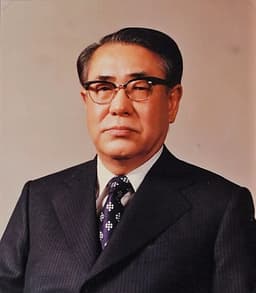
Choi Kyu-hah
Politician · Modern
39.9Total
Basic Information
Born
1938
1919
Died
—
2006
Era
Modern
Modern
Nationality
Azerbaijan
South Korea
Occupation
Politician
Politician
Civilization
Middle Eastern
Eastern
Score Comparison
Military (10%)
45.7
14.2
Political (20%)
27.9
30.8
Influence (20%)
47.1
48.6
Legacy (20%)
36.7
39.2
Leadership (15%)
38.1
55.3
Strategy (15%)
42.2
35.8
TOTAL
39.6
39.9
Ayaz Mutalibov — Complete Timeline
1990 AD
Membership in the Soviet PolitburoPolitical Action
Mutalibov was appointed as a member of the Soviet Politburo, the highest decision-making body of the Communist Party. This position gave him influence in Moscow and facilitated his rise to leadership in Azerbaijan during the final years of the USSR.
Soviet UnionPolitburoCommunist Party
Impact: national
1991 AD
Election as First President of Independent AzerbaijanPolitical Action◆ Major
Ayaz Mutalibov was elected the first President of independent Azerbaijan after the dissolution of the Soviet Union. He was a former Communist Party leader and faced the challenge of establishing a new state while managing the Nagorno-Karabakh conflict.
IndependenceElectionAzerbaijan
Impact: national
1992 AD
Resignation after Khojaly MassacrePolitical Action◆ Major
Mutalibov resigned as president following the Khojaly massacre, where Armenian forces killed hundreds of Azerbaijani civilians. The massacre sparked massive protests in Baku, with Mutalibov blamed for failing to prevent the tragedy, leading to his resignation.
ResignationKhojaly MassacreNagorno-Karabakh
Impact: nationaltragic
Failed Coup Attempt to Regain PowerPolitical Action◆ Major
Mutalibov attempted to regain power through a coup d'
CoupExileAzerbaijan
Impact: nationaldestructive
Choi Kyu-hah — Complete Timeline
1979 AD
Appointment as Acting President after Park Chung-hee's AssassinationPolitical Action◆ Major
Choi Kyu-hah, as Prime Minister, became Acting President following the assassination of Park Chung-hee on October 26, 1979. He oversaw a brief period of political liberalization known as the 'Seoul Spring'.
SuccessionPark Chung-heePolitical Transition
Impact: national
Election as President of South KoreaPolitical Action◆ Major
Choi Kyu-hah was elected as the fourth President of South Korea in December 1979 under the Yushin Constitution. His presidency was marked by efforts to democratize, but he faced pressure from the military.
ElectionFourth RepublicDemocratization
Impact: national
1980 AD
Overthrow by Chun Doo-hwan's CoupPolitical Action◆ Major
Choi Kyu-hah was forced to resign on August 16, 1980, after General Chun Doo-hwan seized power through a military coup. This ended the brief democratic interlude and led to the establishment of the Fifth Republic under Chun.
Military CoupChun Doo-hwanEnd of Democracy
Impact: nationaldestructive
This comparison has not been analyzed yet.
One-time AI generation (~1 minute). Scores and timeline are already available below.
Rankings
🥇
Choi Kyu-hahLeader
Mil: 14.2Pol: 30.8Inf: 48.6
39.9
🥈
Ayaz Mutalibov
Mil: 45.7Pol: 27.9Inf: 47.1
39.6
+0.3 behind
How This Comparison Works
Algorithm
Each figure is scored on 6 dimensions (0—100 scale) based on structured historical data: Military (10%), Political (20%), Influence (20%), Legacy (20%), Leadership (15%), Strategy (15%). The weighted total produces the final ranking.
Data Sources
Scores are computed from structured sub-indicators in the database. Scale factors adjust for era (Ancient ×0.85, Modern ×1.0) and civilization size (Eastern ×1.05, Other ×0.80) to account for differences in population and military scale.
Maximum 3 Figures
Comparisons are limited to 2—3 figures to ensure readability and statistical meaningfulness.
Error Margins
±5 points per dimension — Sub-scores are derived from historical records with inherent uncertainty. Two figures within 5 points on a dimension should be considered roughly equivalent in that area.
Total Score Accuracy
±3 points overall — The weighted combination of 6 dimensions produces a total score with approximately ±3 points of uncertainty. Differences of less than 3 points are not statistically significant— the figures are effectively tied.
Known Limitations
- Historical records are incomplete and uneven across civilizations
- Figures from oral-tradition societies may be underrepresented
- Occupation labels can misclassify multi-role figures
- Scores measure capability and impact, not moral character
- Quantitative scoring is a comparison tool, not absolute truth
Capability Radar
Military (10%) — Battles & Warfare
Battles
25
13
Win Rate
24
19
Expansion
26
19
Political (20%) — Governance & Reform
Reform
15
15
Diplomacy
25
25
Economy
10
20
Influence (20%) — Cultural & Global Reach
Cultural
10
10
Global
10
10
Legacy (20%) — Historical Impact
Historical
15
15
Longevity
5
10
Leadership (15%) — Power & Stability
Tenure
20
20
Stability
5
30
Strategy (15%) — Tactics & Innovation
Strategy
30
22
Tactics
31
25
Reform
35
31
Similar Comparisons
Comments & Discussion
No comments yet. Be the first to share your thoughts!