Loading...
Axayacatl vs Qin Shi Huang
Qin Shi Huang leads by 28.5 pts · 2 figures compared
…
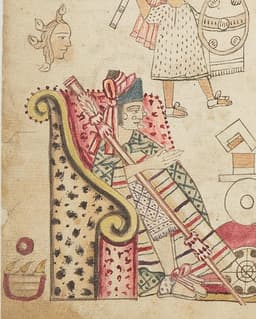
Axayacatl
Emperor · Medieval
56.7Total
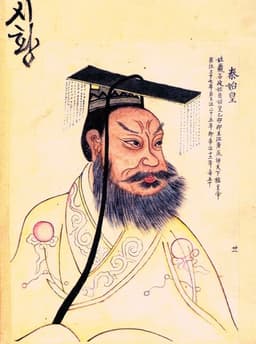
Qin Shi Huang
Emperor · Ancient
85.2Total
Basic Information
Born
1449
-259
Died
1481
-210
Era
Medieval
Ancient
Nationality
Aztec Empire
China
Occupation
Emperor
Emperor
Civilization
Western
Eastern
Score Comparison
Military (10%)
70.0
80.0
Political (20%)
54.7
90.0
Influence (20%)
56.4
85.0
Legacy (20%)
47.5
90.0
Leadership (15%)
65.0
78.0
Strategy (15%)
57.5
82.0
TOTAL
56.7
85.2
Axayacatl — Complete Timeline
1469 AD
Coronation as Tlatoani of TenochtitlanPolitical Action◆ Major
Axayacatl succeeded his grandfather Moctezuma I as the sixth tlatoani of Tenochtitlan. His coronation campaign against the Matlatzinca was successful, capturing many prisoners for sacrifice and establishing his military credentials.
Impact: national
1473 AD
Conquest of TlatelolcoWar◆ Major
Axayacatl led Tenochtitlan forces against the neighboring city-state of Tlatelolco, which had rebelled against Aztec dominance. The war ended with the defeat of Tlatelolco and the death of its tlatoani Moquihuix, incorporating Tlatelolco into Tenochtitlan.
Impact: regionaldestructive
1478 AD
Campaign against the Tarascan EmpireWar◆ Major
Axayacatl led a large Aztec army into the Tarascan Empire (Pur
Impact: regionaldestructive
1481 AD
Construction of the Great Temple of TenochtitlanCultural◆ Major
Axayacatl oversaw the expansion of the Templo Mayor in Tenochtitlan, dedicating a new phase of construction. The temple was the religious center of the Aztec Empire, and this expansion included new sculptures and offerings.
Impact: nationalconstructive
Death of AxayacatlOther
Axayacatl died after a short illness, possibly from a disease or complications from wounds. His death led to the succession of his brother Tizoc, whose weak reign contrasted with Axayacatl's earlier successes.
Impact: national
Qin Shi Huang — Complete Timeline
246 BC
Construction of the Mausoleum and Terracotta ArmyOther◆ Major
Qin Shi Huang commissioned a vast mausoleum complex near Xi'an, guarded by thousands of life-sized terracotta soldiers, horses, and chariots. The project employed hundreds of thousands of workers and reflected his obsession with immortality and imperial power.
Impact: global
230 BC
Conquest of the Six Warring StatesWar
From 230 to 221 BCE, Ying Zheng led the Qin state in a series of campaigns that conquered the Han, Zhao, Wei, Chu, Yan, and Qi states. This unified China under a single ruler for the first time, ending the Warring States period.
Impact: global
221 BC
Standardization of Writing, Currency, and MeasurementsReform◆ Major
Qin Shi Huang ordered the standardization of Chinese script, currency, and weights and measures across the unified empire. This facilitated administration, trade, and cultural integration, laying a foundation for future dynasties.
Impact: globalconstructive
Proclamation of the Qin DynastyPolitical Action
After conquering the last independent state, Ying Zheng declared himself Shi Huangdi (First Emperor), founding the Qin Dynasty. He adopted a new title to signify his supreme authority and initiated centralized imperial rule.
Impact: global
214 BC
Initiation of the Great Wall ConstructionOther◆ Major
Qin Shi Huang ordered the connection and extension of existing northern fortifications to create a unified defensive wall against nomadic Xiongnu raids. This project involved massive conscripted labor and became the precursor to the later Great Wall.
Impact: regional
213 BC
Burning of Books and Burying of ScholarsPolitical Action◆ Major
On the advice of Li Si, Qin Shi Huang ordered the burning of historical records and philosophical texts not aligned with Legalist doctrine. He also had 460 Confucian scholars buried alive to suppress dissent and consolidate ideological control.
Impact: nationaldestructive
Expert Analysis
axayacatl-vs-qin-shi-huang
# The First Emperor and the Sixth Tlatoani: Two Visions of Power
On a winter morning in 221 BC, Ying Zheng stood before his assembled generals in the captured palace of the last independent kingdom, the state of Qi. The world he had conquered stretched from the Yellow Sea to the Tibetan plateau, a territory larger than any Chinese ruler had ever commanded. He declared himself *Shi Huangdi*—the First Emperor—and set about remaking civilization itself. Half a world away and seventeen centuries later, another ruler climbed the steps of a pyramid rising from a lake-bound island city. Axayacatl, the sixth tlatoani of the Aztecs, had just crushed the rebellion of Tlatelolco, and his warriors danced in the plaza with the severed heads of his enemies. Both men sought to forge empires from fractured worlds. One succeeded beyond measure; the other left a legacy of ambition cut short.
Origins
Qin Shi Huang was born in 259 BC, the son of a prince who had been a hostage in the neighboring kingdom of Zhao. His childhood was one of political danger and calculated survival. The Warring States period had torn China apart for two centuries, and Ying Zheng inherited a state that had already begun to consolidate power through legalist reforms—a philosophy that prized order and obedience above all. His mother, a former concubine, and his regent, Lü Buwei, navigated a court rife with intrigue. The boy learned early that trust was a luxury no ruler could afford.
Axayacatl, born in 1449, came of age in a world equally violent but differently structured. The Aztec Empire was a triple alliance of city-states—Tenochtitlan, Texcoco, and Tlacopan—held together by tribute and terror. His grandfather, Moctezuma I, had expanded Aztec dominion, but the empire remained a loose network of conquered peoples who paid tribute under duress. Axayacatl was raised in the calmecac, the elite school for noble youth, where he learned the arts of war, religion, and governance. The Aztec cosmos demanded blood to sustain the sun, and every tlatoani was expected to provide it through conquest.
Rise to Power
Ying Zheng ascended the throne of Qin at thirteen, in 246 BC. For eight years, he ruled through regents, but in 238 BC, at twenty-one, he crushed a rebellion led by his mother’s lover, the eunuch Lao Ai, and exiled his own mother for her complicity. The purge was ruthless and complete. He then turned on his former mentor Lü Buwei, forcing him to commit suicide. By 230 BC, Ying Zheng was ready. Over the next nine years, he unleashed a campaign of systematic conquest—annexing Han, Zhao, Wei, Chu, Yan, and finally Qi in 221 BC. Each kingdom fell to a combination of military brilliance, diplomatic manipulation, and sheer ruthlessness. His general Wang Jian was a master of siege warfare; his chancellor Li Si was a legalist architect of total control.
Axayacatl’s path was shorter and narrower. He was crowned in 1469, succeeding his grandfather, but his coronation campaign—a ritual necessity for every Aztec ruler—was a disaster. He attacked the small city of Chalco and was repulsed, a humiliation that forced him to return without prisoners for sacrifice. It was an inauspicious start, but Axayacatl learned from failure. In 1473, when Tlatelolco, the sister city of Tenochtitlan, rebelled under its ruler Moquihuix, Axayacatl moved decisively. He led his warriors across the causeways, stormed the market square, and killed Moquihuix personally. The bodies of the defeated were left to rot in the sun, a warning to all who might defy Tenochtitlan.
Leadership & Governance
Qin Shi Huang governed through absolute standardization. He ordered the unification of writing, currency, and weights and measures across his empire. The script that had varied from kingdom to kingdom was reduced to a single system; the bronze spade coins of Qin replaced regional currencies; the cart axles of every vehicle were made to a uniform gauge, so that roads could be built to a single width. He divided the empire into thirty-six commanderies, each governed by appointed officials who reported directly to him—a radical break from the feudal past. The First Emperor also ordered the connection of existing northern fortifications into what would become the Great Wall, a project that consumed millions of lives. His legalist philosophy demanded absolute obedience: laws were harsh, punishments severe, and dissent was not tolerated.
Axayacatl ruled through a system of tribute and terror. The Aztec Empire did not seek to unify its subjects culturally or administratively. Conquered cities retained their own rulers, their own gods, and their own customs—as long as they paid tribute in gold, jade, cacao, cotton, and, above all, human captives for sacrifice. Axayacatl expanded the Templo Mayor in Tenochtitlan, dedicating a new phase of construction that towered above the lake. The temple was the physical center of Aztec cosmology, a place where the earthly and divine met. But his governance was fragile. The empire was a patchwork of resentful subjects, held together by fear and the promise of shared plunder.
Triumph & Tragedy
Qin Shi Huang’s greatest triumph was the creation of a unified Chinese state that would endure, in its essential form, for more than two thousand years. But his greatest tragedy was his obsession with immortality. He sent expeditions to find the elixir of life, consulted alchemists, and swallowed mercury pills that likely hastened his death. When he died in 210 BC during an eastern inspection tour, his death was kept secret for weeks, and his body was transported back to the capital in a wagon of salted fish to mask the smell. His mausoleum, guarded by the Terracotta Army of thousands of life-sized soldiers, remains unopened, a monument to his ambition and his fear.
Axayacatl’s triumph was the conquest of Tlatelolco, which cemented Aztec dominance in the Valley of Mexico. But his tragedy came in 1478, when he led a massive army—perhaps forty thousand men—against the Tarascan Empire to the west. The Tarascans, who had developed their own bronze-working and fortifications, crushed the Aztec forces. Axayacatl barely escaped with his life, and the defeat was so devastating that the Aztecs never again attempted to expand westward. He died three years later, in 1481, after a short illness—perhaps from wounds, perhaps from disease. He was thirty-two years old.
Character & Destiny
Qin Shi Huang was a paranoid genius, a man who saw order as the highest good and dissent as the greatest threat. He burned books and buried scholars alive to erase alternative histories and philosophies. He built roads and canals to bind his empire together, but he also built a labyrinth of tunnels beneath his tomb to confuse grave robbers. His personality—cold, calculating, visionary—drove him to create a state that could survive his own mortality, even as he desperately sought to escape it.
Axayacatl was a warrior-king in a warrior culture. He was brave, ambitious, and religiously devout. But he lacked the institutional vision of the First Emperor. He expanded the empire’s reach, but he did not transform its structure. He built temples, but he did not build a bureaucracy. His destiny was to be a link in a chain—the father of Montezuma II, the ruler who would face the Spanish—rather than a founder in his own right.
Legacy
Qin Shi Huang’s legacy is the very idea of China as a unified empire. The Qin Dynasty itself fell within four years of his death, but the administrative framework he created—the commanderies, the standardized script, the unified currency—became the foundation for every subsequent Chinese dynasty. He is remembered as both a tyrant and a unifier, a man whose cruelty was inseparable from his greatness.
Axayacatl is remembered primarily as the father of Montezuma II and the conqueror of Tlatelolco. His defeat by the Tarascans is a cautionary tale, his reign a footnote in the larger story of Aztec rise and fall. The Templo Mayor he expanded was destroyed by the Spanish in 1521, its stones reused for a cathedral. But his name survives in the chronicles of the conquered, a reminder that even in an empire of blood and fire, some rulers are destined to be remembered only for what they failed to achieve.
Conclusion
Standing on the causeways of Tenochtitlan, Axayacatl could see the smoke rising from Tlatelolco. He had won his war, but he had not changed the world. Forty years after his death, the Spanish would arrive, and the Aztec Empire would crumble in two years. Qin Shi Huang, lying in his unopened tomb, had built something more enduring: a civilization that would outlast his own dynasty, his own name, and even his own memory. The difference between them was not ambition—both men wanted everything—but vision. The First Emperor understood that power must be institutionalized to survive. The Sixth Tlatoani understood only that power must be demonstrated. In the end, one built a state that would last for millennia; the other built a temple that would be torn down.
Rankings
🥇
Qin Shi HuangLeader
Mil: 80.0Pol: 90.0Inf: 85.0
85.2
🥈
Axayacatl
Mil: 70.0Pol: 54.7Inf: 56.4
56.7
+28.5 behind
How This Comparison Works
Algorithm
Each figure is scored on 6 dimensions (0—100 scale) based on structured historical data: Military (10%), Political (20%), Influence (20%), Legacy (20%), Leadership (15%), Strategy (15%). The weighted total produces the final ranking.
Data Sources
Scores are computed from structured sub-indicators in the database. Scale factors adjust for era (Ancient ×0.85, Modern ×1.0) and civilization size (Eastern ×1.05, Other ×0.80) to account for differences in population and military scale.
Maximum 3 Figures
Comparisons are limited to 2—3 figures to ensure readability and statistical meaningfulness.
Error Margins
±5 points per dimension — Sub-scores are derived from historical records with inherent uncertainty. Two figures within 5 points on a dimension should be considered roughly equivalent in that area.
Total Score Accuracy
±3 points overall — The weighted combination of 6 dimensions produces a total score with approximately ±3 points of uncertainty. Differences of less than 3 points are not statistically significant— the figures are effectively tied.
Known Limitations
- Historical records are incomplete and uneven across civilizations
- Figures from oral-tradition societies may be underrepresented
- Occupation labels can misclassify multi-role figures
- Scores measure capability and impact, not moral character
- Quantitative scoring is a comparison tool, not absolute truth
Capability Radar
Military (10%) — Battles & Warfare
Battles
55
85
Win Rate
60
90
Expansion
60
90
Political (20%) — Governance & Reform
Reform
45
95
Diplomacy
50
75
Economy
45
90
Influence (20%) — Cultural & Global Reach
Cultural
40
95
Global
30
85
Legacy (20%) — Historical Impact
Historical
45
95
Longevity
40
95
Leadership (15%) — Power & Stability
Tenure
50
70
Stability
50
65
Strategy (15%) — Tactics & Innovation
Strategy
55
85
Tactics
50
80
Reform
40
95
Similar Comparisons
Comments & Discussion
TIREless_Skeptic6/17/2026
Qin Shi Huang wins this comparison on sheer surviving impact. Standardizing script, weights, measures, laws across all of China is staggering—try that with the Aztec tribute system which collapsed within decades. Axayacatl never commanded a single coin or written law beyond Tenochtitlan's walls. One man built a template that endured 2,000 years; the other got crushed by 600 Spaniards with horses. No contest historically.
Tlahuizcalpantecuhtli6/17/2026
拿秦始皇跟阿萨亚卡特尔比,根本就是欺负人。阿兹特克帝国的所谓“征服”不过是把城邦打个半残、逼它们交贡品,哪像始皇搞郡县、修驰道、铸十二金人统一天下。阿萨亚卡特尔打特拉特洛尔科那种内战死了三万多人,结果十九年后西班牙人来了说翻就翻。别把部落酋长跟创造文明的皇帝相提并论。
LostTranslation6/17/2026
The comparison is flawed from the start—it conflates technological transmission with genius. Qin Shi Huang inherited centuries of Chinese bureaucratic evolution, Legalist theory from Shang Yang, and a war machine perfected by his predecessors. Axayacatl inherited an elaborate Triple Alliance system with no bronze tools, no writing system for administration, and didn't live to see Cortés. Apples and obsidian hand-axes. Each was impressive within his constraints, not equivalent.
OrchidPavilion6/17/2026
作为古典史学爱好者,我必须说:秦始皇的地上功业远超阿萨亚卡特尔。他派徐福东渡求仙、修灵渠通岭南、建直道贯北疆,这些都是跨山脉跨流域的工程极限。阿萨亚卡特尔呢?建了个大庙墙头插骷髅?技术实力差了不止一个数量级。帝国不是靠吃人心献祭来维持的——靠的是文字、道路和 bureaucracy。
CihuacoatlCoyolxauhqui6/17/2026
你们都在吹秦始皇的“持久影响”,那你闻过阿兹特克帝国那种血腥窒息的美吗?阿萨亚卡特尔在1469年砍了特拉特洛尔科国王的脑袋,把叛军尸体喂秃鹫,这才是真正的权力教育。秦始皇靠法律条文、度量衡标准化来驯服民心?虚伪!阿萨亚卡特尔让敌人亲眼看见自己的心在祭司手中跳动。两种帝国,一种靠恐惧活在当下,一种靠规则闷死后世——我选血与火。